People routinely lie when asked sensitive questions about tax cheating, drug use, or criminal behavior; Stanley Warner invented a private coin-flipping technique that gives every survey respondent total legal plausible deniability while allowing pollsters to measure the exact truth. Published in 1965, Warner’s "Randomized Response" became the foundational mathematical ancestor of modern Differential Privacy—the core algorithm protecting data privacy in Apple iPhones, Google search, and the US Census.

In polling and social science, getting honest answers about sensitive topics—like tax fraud, illegal drug use, or marital infidelity—was historically impossible: respondents either refuse to answer or lie to protect their privacy and avoid legal trouble.
Statistician Stanley Warner designed an ingenious privacy shield. Before answering "Yes" or "No", the respondent secretly flips a coin that the surveyor cannot see: if it lands Heads, they tell the absolute truth; if it lands Tails, they simply answer "Yes." Because no one knows whether a "Yes" was forced by the coin or represents the truth, the respondent has total plausible deniability, while simple probability math allows the researcher to subtract the coin flips and calculate the true population percentage.
Warner’s method unlocked honest social polling and founded modern cybersecurity. By protecting survey respondents from legal exposure, by inspiring differential privacy in tech giants like Apple and Google, and by securing the US Census, randomized response protects digital privacy.
Randomized Response: A Survey Technique for Eliminating Evasive Answer Bias
For various reasons individuals in a sample survey may prefer not to confide to the interviewer the correct answers to certain questions. In such cases the individuals may elect not to reply at all or to reply with incorrect answers. The resulting evasive answer bias is ordinarily difficult to assess. In this paper it is argued that such bias is potentially removable through allowing the interviewee to maintain privacy through the device of randomizing his response. A randomized response method for estimating a population proportion is presented as an example. Unbiased maximum likelihood estimates are obtained and their mean square errors are compared with the mean square errors of conventional estimates under various assumptions about the underlying population.


Philosophy taught that human reason was an immaculate engine of pure logic and objective truth; Amos Tversky and Daniel Kahneman proved that our daily decisions are run by quick mental shortcuts that systematically trick our brains into predictable cognitive illusions. Published in Science in 1974, "Judgment under Uncertainty" mapped the universal cognitive biases governing the human mind, revolutionizing behavioral psychology, courtroom legal jury decisions, and medical diagnostics.


When financial analysts analyze thousands of stocks with limited historical data, pure random noise masquerades as fake trading patterns; Vladimir Marchenko and Leonid Pastur calculated the exact mathematical boundary where random noise stops and true signal begins. Published in Soviet mathematics in 1967, the Marchenko-Pastur Law is now the universal filter used by quantitative hedge funds, telecommunication engineers, and neural network researchers to purge noise from high-dimensional datasets.


For over three hundred and fifty years, Fermat’s Last Theorem stood as the most tantalizing unsolved riddle in human history; Andrew Wiles conquered the mystery by proving that every geometric donut-shaped elliptic curve mirrors a symmetric modular clock form. Working in complete isolation for seven years, Wiles unified arithmetic geometry with modular forms, slaying Fermat’s dragon and delivering the greatest mathematical triumph of the twentieth century.


Calculating the number of ways to break large numbers into smaller pieces once required weeks of grueling manual additions; G. H. Hardy and Srinivasa Ramanujan invented the Circle Method to calculate exact partitions in fractions of a second. Published in 1918 from their legendary Cambridge collaboration, this masterwork founded analytic additive number theory and is the mathematical engine calculating black hole entropy in modern quantum string theory.
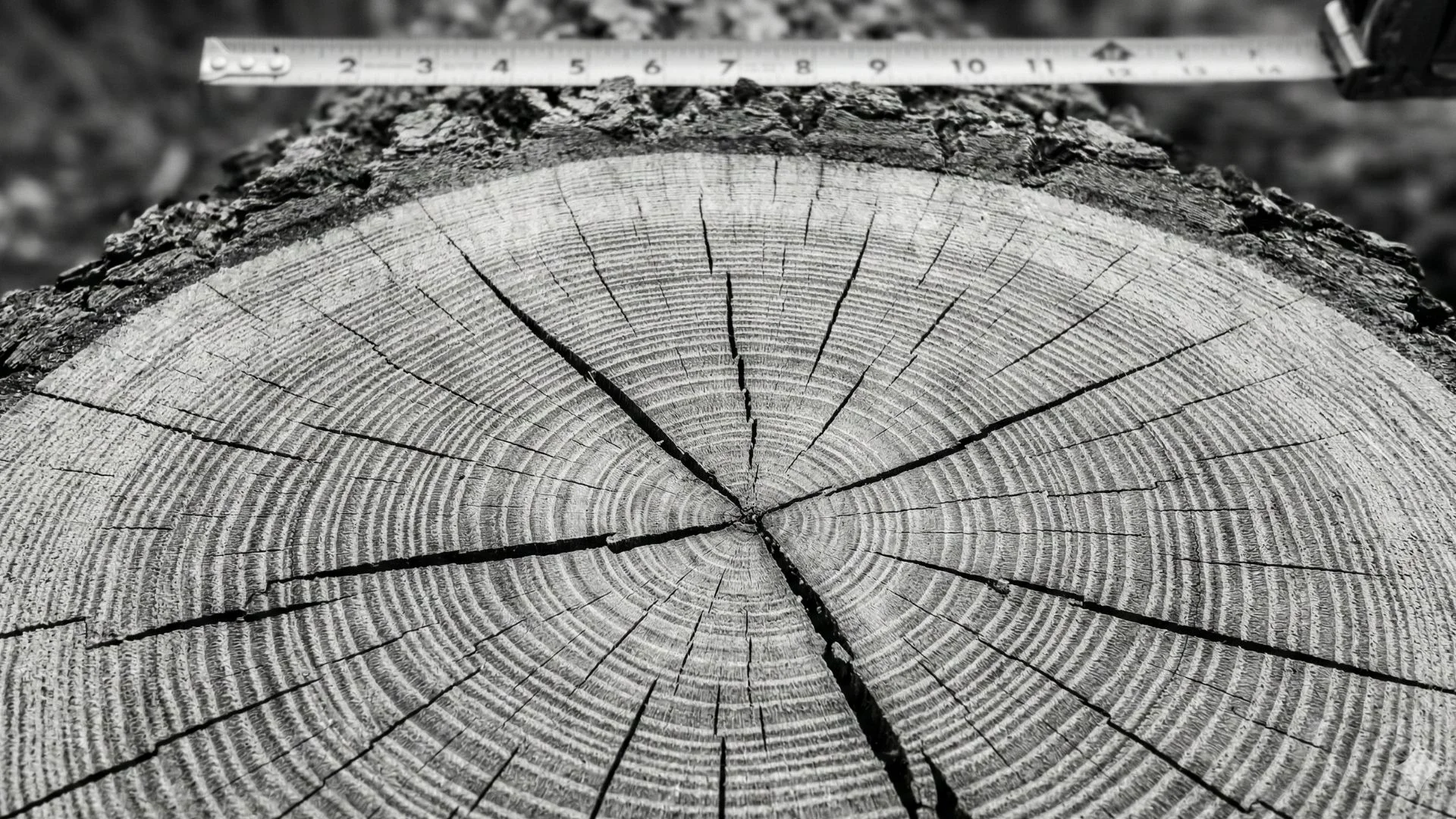

Network scientists long treated complex real-world graphs as abstract topological webs in flat space; mapping complex networks into negative-curvature hyperbolic space explains their natural scale-free hierarchies and clustering.


Classical Bell tests were strictly confined to simple two-level qubit pairs; the Collins-Gisin-Linden-Massar-Popescu (CGLMP) inequality extends quantum nonlocality verification to arbitrarily high-dimensional entangled states.
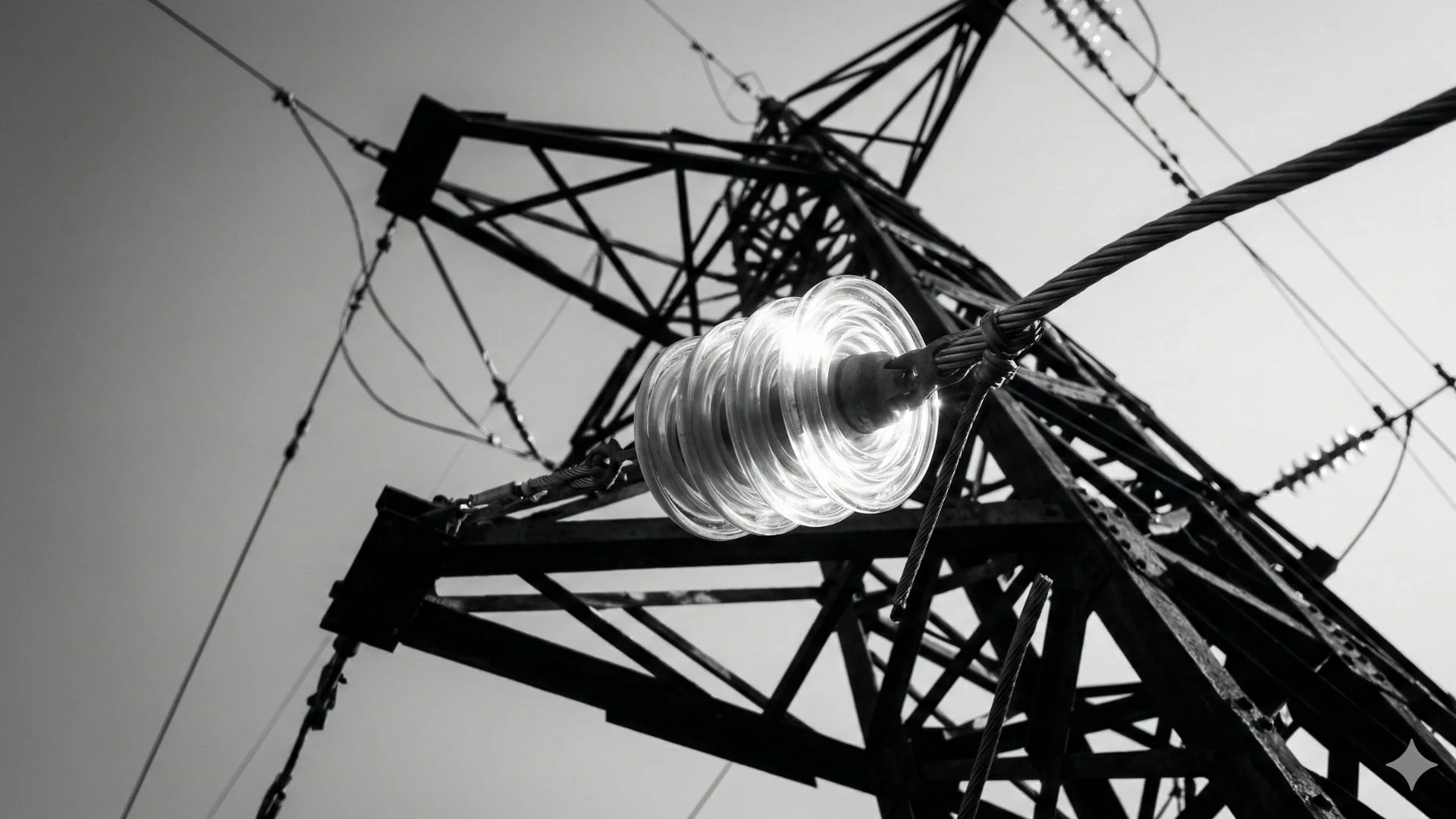
Einstein's General Relativity inevitably fractures into infinite, unphysical singularities at black hole centers and the cosmic dawn; infinite-derivative nonlocal gravity smooths out short-distance curvature without introducing destructive ghost instabilities.

Calculating the quantum probability of colliding subatomic particles once required drawing thousands of pages of tedious Feynman diagrams; Alexander Postnikov mapped multi-dimensional geometric shapes whose volume directly gives particle scattering probabilities. Published in Advances in Mathematics, Postnikov’s positive Grassmannian cells became the mathematical foundation of the Amplituhedron, suggesting that space and time are emergent illusions of pure geometry.
Ask this paper your own questions, or keep browsing the verified research catalogue.