Solid-state lithium batteries promised double the energy density of liquid cells but suffered from high interfacial resistance and ceramic grain boundary cracking; sintering additives enable dense, low-temperature ceramic electrolyte fabrication.
Liquid electrolyte lithium-ion batteries are reaching their theoretical energy density ceiling while presenting persistent fire risks in electric vehicles, driving a global race to commercialize all-solid-state ceramic batteries.
Ceramic solid electrolytes like LLZO require extreme sintering temperatures above 1100°C, causing volatile lithium evaporation, micro-crack formation, and sluggish lithium-ion transport across rigid solid-solid interfaces.
This engineering research demonstrates that adding low-melting sintering aids forms a liquid-phase flux during processing that densifies the ceramic electrolyte at significantly lower temperatures, creating seamless, crack-free grain boundaries with room-temperature ionic conductivity exceeding .
Lowering sintering thermal budgets while engineering cohesive solid-state interfaces removes the principal manufacturing hurdle preventing commercial mass-production of safe, ultra-dense solid-state electric vehicle batteries.
Solid-State Battery Interface Engineering through Sintering Additives for Li-Garnet Electrolyte and Composite Cathode
Abstract Precise control of densification behavior and co-sintering compatibility is essential for the scalable fabrication and integration of oxide-based solid-state batteries. Here, the influence of sintering additives on the densification kinetics, phase evolution, microstructure, and ionic conductivity of Li7La3Zr2O12 (LLZO) electrolytes is systematically investigated, while their effect on densification and shrinkage behavior with LiCoO2-LLZO composite cathodes is evaluated to assess co-sintering compatibility. Among the investigated additives in LLZO, MgO and Li2O enable relative densities exceeding 96% while preserving high ionic conductivity and suppressing electronic conductivity. Microstructural and dilatometric analyses reveal distinct additive-dependent sintering behaviors, demonstrating the critical role of additive chemistry in governing densification and microstructural evolution. Importantly, LiOH- and Li2O-MgO-modified systems reduce the shrinkage mismatch between composite cathode and electrolyte layers from ∼14% to ∼2.5–3.5% at 1050 °C, significantly improving shrinkage compatibility. These findings demonstrate that tailored sintering additive strategies enable shrinkage compatibility while preserving electrolyte performance, representing a key step toward realizing mechanically robust oxide-based solid-state batteries.
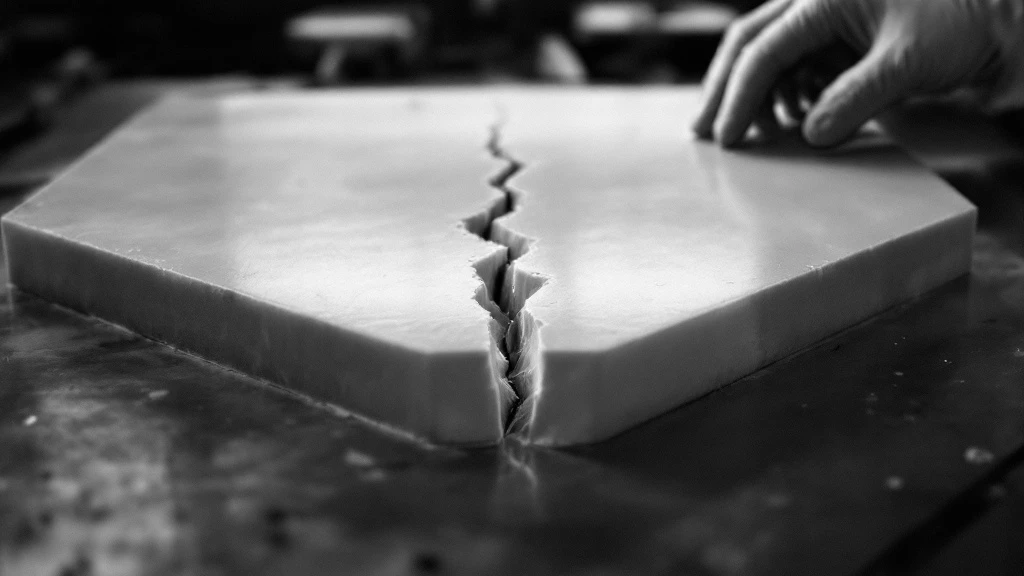

Solid ceramic batteries were engineered to physically block explosive metal spikes; microscopic electrical charges at crystal grain boundaries inadvertently guide lithium needles straight through the solid electrolyte. By uncovering this hidden electronic short-circuit mechanism, MIT materials engineers solved the central roadblock stalling commercial solid-state electric vehicle batteries.
Ask this paper your own questions, or keep browsing the verified research catalogue.