Deep reinforcement learning agents achieve superhuman control but frequently violate physical safety constraints during exploration; control barrier functions and control-affine dynamics provide mathematically certifiable safety guarantees for autonomous robotics.
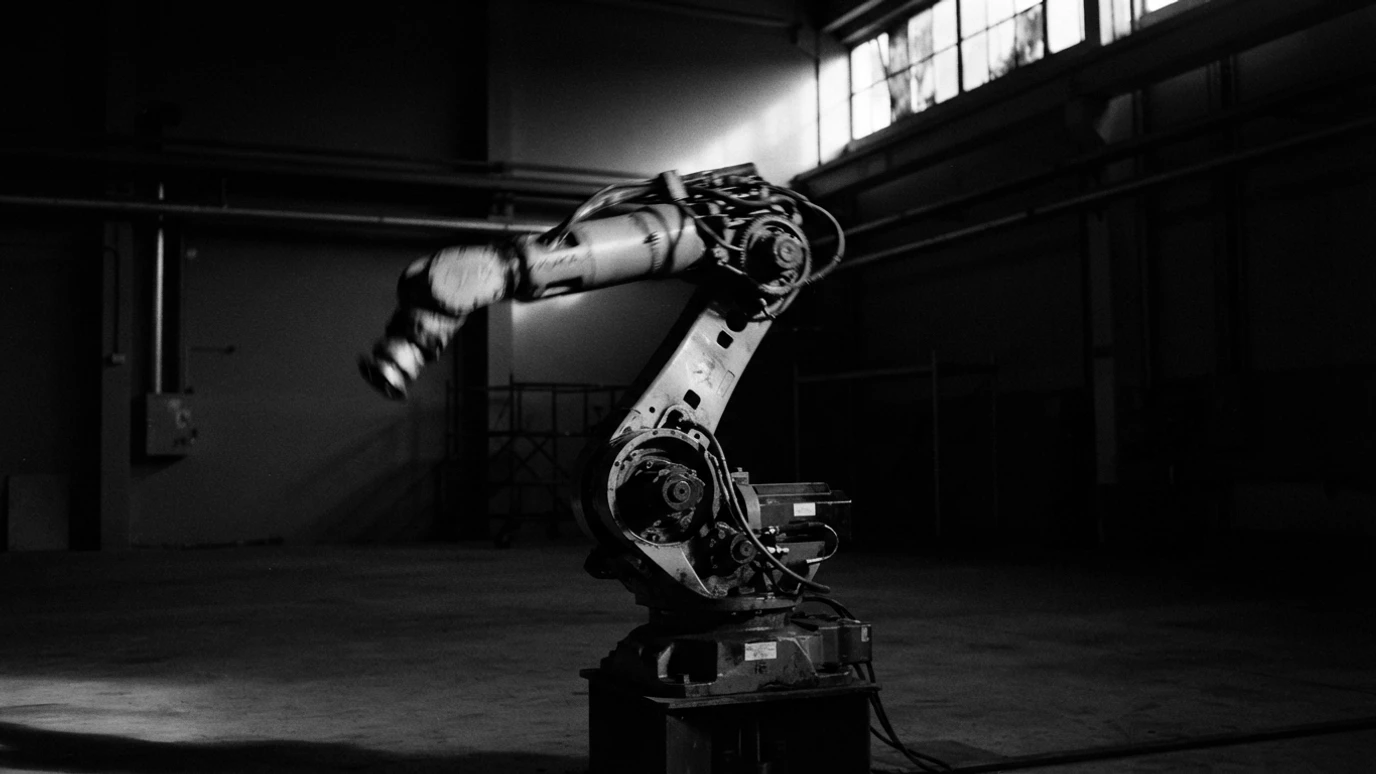
Deep reinforcement learning enables autonomous quadcopters and robotic manipulators to master agile, complex maneuvers through trial-and-error interaction with physical environments.
However, standard neural network exploration is dangerous: an autonomous car or industrial robotic arm learning via unconstrained reinforcement learning will inevitably crash into walls or pedestrians during training.
This robotics engineering paper develops a certifiable model-based reinforcement learning framework incorporating control-affine system dynamics and Control Barrier Functions (CBFs). By projecting policy actions onto forward-invariant safe sets, the framework guarantees that the system never breaches safety boundaries during learning.
Mathematical safety certificates remove the primary barrier preventing the deployment of deep reinforcement learning in real-world autonomous vehicles, surgical robotics, and commercial drone delivery.
Certifiable Safe Model-Based Reinforcement Learning with Control-Affine Dynamics Approximation
Safe model-based reinforcement learning (RL) often bridges control-theoretic analysis and RL for robots to safely explore (partially) unknown system dynamics while deriving control actions for task efficiency. The control performance and safety assurance typically rely on prior knowledge of partially modeled nominal system dynamics and the data-driven models that compensate for residual model uncertainties. However, existing methods often overlook the structure of residual model uncertainties (e.g., components affine in control), which could lead to overly conservative robot behaviors or invalid safety guarantees under the safe learning-based controllers. This paper proposes a safe reinforcement learning framework that learns control-affine dynamics with a certifiable data-driven safe policy using control barrier functions (CBF). Specifically, we first use Control-Affine Random Fourier Features (ARFF) to model robot dynamics in a control-affine form, which offers computational efficiency that scales with dataset size and reduces potential model bias for model-based reinforcement learning. Then, a model-free, efficient uncertainty quantification method using adaptive conformal prediction (ACP) is applied to quantify the uncertainty in the safety constraint arising from the learned control-affine dynamics. This allows for data-driven safety assurance amenable to principled and efficient controller synthesis with CBF. Simulation results on the cartpole and the 3D quadrotor platforms demonstrate the effectiveness of the proposed framework.

Telecommunication engineers believed that static noise permanently corrupted electrical signals; Claude Shannon proved that information can be transmitted with zero errors across noisy channels by converting meaning into binary bits. Published in 1948, Shannon’s masterwork founded information theory and created the digital language of the modern world.


Physical sensors in rockets and satellites are constantly corrupted by noise, vibration, and sensor drift; Rudolf Kalman developed an optimal mathematical filter that predicts true position by fusing imperfect sensor readings with equations of motion in real time. Published in 1960, the Kalman Filter guided the Apollo spacecraft to the Moon and is the mathematical brain powering every GPS receiver, autonomous drone, and commercial jetliner on Earth.


Computer scientists believed that mastering the ancient game of Go required human intuition that machines would not achieve for decades; DeepMind’s AlphaGo paired deep neural networks with Monte Carlo tree search to defeat the world champion. Published in 2016, AlphaGo proved that deep reinforcement learning could exhibit genuine creative intuition, sparking the modern Artificial General Intelligence revolution.

For thousands of years, secret communication required sending a physical key via a trusted courier before a message could be sent; Whitfield Diffie and Martin Hellman proved that two total strangers can agree on a shared secret over a compromised public channel. Published in 1976, this mathematical breakthrough invented public-key cryptography and made secure global e-commerce possible.


Multiplying two massive prime numbers takes a fraction of a second on a computer; factoring that product back into its original primes takes millions of years. By anchoring asymmetric encryption to the asymmetry of prime numbers, Ron Rivest, Adi Shamir, and Leonard Adleman created RSA—the cryptographic algorithm that encrypts every browser connection, banking transfer, and software update on Earth.


Albert Einstein spent his final decades insisting that quantum entanglement was an incomplete illusion masking hidden common-sense variables; John Stewart Bell devised a single mathematical inequality that allowed laboratory experiments to test whether Einstein or quantum mechanics was right. Published in an obscure, short-lived journal in 1964, Bell’s Theorem proved that the physical universe is fundamentally non-local—founding modern quantum computing, quantum cryptography, and quantum teleportation.

Physical clocks drift out of sync across distributed computer networks because electrical signals cannot travel faster than the speed of light; Leslie Lamport defined time through cause-and-effect causality rather than ticking seconds. Published in 1978, Lamport’s logical clock paper is the most cited work in distributed systems, establishing the foundational physics of cloud computing.
Storing millions of search queries in computer memory wastes vast amounts of expensive hardware; Bloom filters verify whether a record exists using a tiny fraction of a single bit per item. Published in 1970 to speed up hyphenation in typesetting machines, Burton Bloom’s compact data structure now speeds up every Google search query and Bitcoin transaction on Earth.
Ask this paper your own questions, or keep browsing the verified research catalogue.