Physical sensors in rockets and satellites are constantly corrupted by noise, vibration, and sensor drift; Rudolf Kalman developed an optimal mathematical filter that predicts true position by fusing imperfect sensor readings with equations of motion in real time. Published in 1960, the Kalman Filter guided the Apollo spacecraft to the Moon and is the mathematical brain powering every GPS receiver, autonomous drone, and commercial jetliner on Earth.

In the dawn of the Space Race, NASA engineers faced an impossible navigation challenge: radar signals and onboard gyroscopes were filled with noisy electronic errors. If an Apollo spacecraft relied on raw sensor readings to land on the Moon, navigational errors would cause it to crash into lunar craters.
Hungarian-American mathematician Rudolf Kalman designed an optimal recursive filter. The algorithm acts like an experienced ship captain in a thick fog: by constantly comparing where the spacecraft's physics says it should be against what the noisy sensors are seeing, it computes the mathematically perfect estimate of true position in real time.
The Kalman Filter became the most famous algorithm in aerospace history. By guiding the Apollo 11 lunar module safely to the surface, by positioning every smartphone via GPS satellites, and by stabilizing autonomous self-driving cars, Kalman filtering navigates modern aerospace.
A New Approach to Linear Filtering and Prediction Problems
The classical filtering and prediction problem is re-examined using the Bode-Shannon representation of random processes and the “state-transition” method of analysis of dynamic systems. New results are: (1) The formulation and methods of solution of the problem apply without modification to stationary and nonstationary statistics and to growing-memory and infinite-memory filters. (2) A nonlinear difference (or differential) equation is derived for the covariance matrix of the optimal estimation error. From the solution of this equation the co-efficients of the difference (or differential) equation of the optimal linear filter are obtained without further calculations. (3) The filtering problem is shown to be the dual of the noise-free regulator problem. The new method developed here is applied to two well-known problems, confirming and extending earlier results. The discussion is largely self-contained and proceeds from first principles; basic concepts of the theory of random processes are reviewed in the Appendix.


Albert Einstein spent his final decades insisting that quantum entanglement was an incomplete illusion masking hidden common-sense variables; John Stewart Bell devised a single mathematical inequality that allowed laboratory experiments to test whether Einstein or quantum mechanics was right. Published in an obscure, short-lived journal in 1964, Bell’s Theorem proved that the physical universe is fundamentally non-local—founding modern quantum computing, quantum cryptography, and quantum teleportation.

Computer engineers thought that data was an abstract mathematical concept with zero physical weight; Rolf Landauer proved that erasing a single bit of digital memory produces an unavoidable puff of physical heat. Published in 1961 in an IBM research bulletin, Landauer’s Principle united information theory with the laws of thermodynamics, slaying the 100-year-old "Maxwell’s Demon" paradox and defining the ultimate physical speed and energy limits of modern microchips.

Classical physics assumed physical interactions must obey local realism; quantum nonlocality proves entangled particles share correlations that shatter classical causal limits without signaling.


Network scientists long treated complex real-world graphs as abstract topological webs in flat space; mapping complex networks into negative-curvature hyperbolic space explains their natural scale-free hierarchies and clustering.

Classical Bell tests were strictly confined to simple two-level qubit pairs; the Collins-Gisin-Linden-Massar-Popescu (CGLMP) inequality extends quantum nonlocality verification to arbitrarily high-dimensional entangled states.
Legacy networks optimized exclusively for high throughput or low packet delay; the Age of Information (AoI) metric revolutionizes cyberphysical communication by quantifying the timeliness and freshness of data at the destination monitor.
Building global quantum networks requires converting stationary atomic quantum memories into flying photonic messengers; this breakthrough demonstrates high-fidelity spin-photon entanglement using a single neutral atom inside an optical cavity.
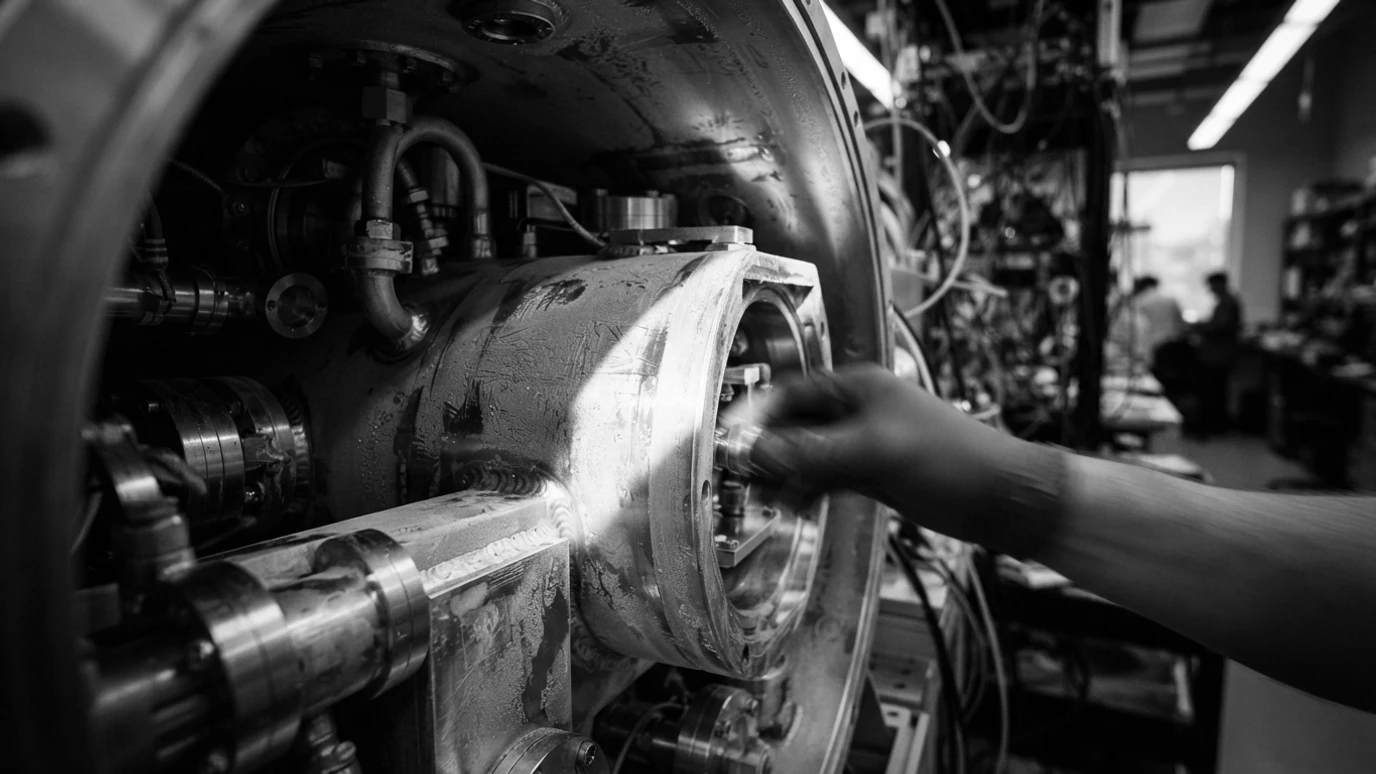
Quantum hardware has achieved multi-qubit coherence in laboratory environments, yet industrial translation remains bottlenecked; this strategic roadmap charts the critical path to scalable quantum utility across chemistry, logistics, and materials science.
Ask this paper your own questions, or keep browsing the verified research catalogue.