Chat
ChatEarly nucleotide analysis relied on slow radioactive degradation techniques that could only decipher a dozen genetic letters per year; Fred Sanger designed chemical "terminator" nucleotides that freeze DNA replication at precise atomic coordinates. By sorting the resulting fragments by length on a gel, Sanger sequencing allowed scientists to read the exact chemical sequence of entire genomes.
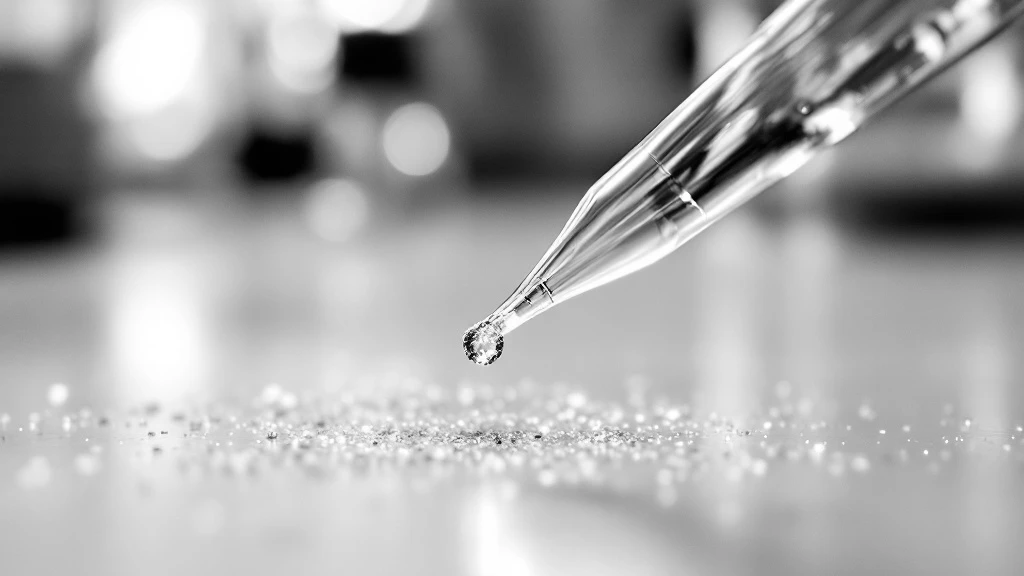
Following the discovery of the DNA double helix, scientists were completely blind to the actual order of the billions of chemical letters inside living genes. Deciphering even a short viral gene required years of dangerous radioactive degradation that destroyed DNA samples.
Fred Sanger solved this by designing defective DNA building blocks that acted like molecular roadblocks. By lacking a chemical hook, these terminator bases freeze DNA copying the moment they are incorporated, creating a complete ladder of genetic fragments sorted letter by letter.
Sanger sequencing catalyzed the modern genomic age and the Human Genome Project. By decoding the genetic roots of hereditary illnesses, by empowering personalized cancer oncology, and by enabling modern forensic DNA testing, chemical sequencing transformed human medicine.
DNA sequencing with chain-terminating inhibitors
A new method for determining nucleotide sequences in DNA is described. It is similar to the "plus and minus" method [Sanger, F. & Coulson, A. R. (1975) J. Mol. Biol. 94, 441-448] but makes use of the 2',3'-dideoxy and arabinonucleoside analogues of the normal deoxynucleoside triphosphates, which act as specific chain-terminating inhibitors of DNA polymerase. The technique has been applied to the DNA of bacteriophage varphiX174 and is more rapid and more accurate than either the plus or the minus method.

Mysterious repeating DNA sequences in bacteria were dismissed for decades as useless junk DNA; Francisco Mojica discovered that bacteria store stolen snippets of viral DNA like a "Most Wanted" gallery to recognize and destroy invading viruses. Published in 2005 after being rejected by four leading journals, Mojica’s paper unlocked the biological secret of CRISPR, unleashing the greatest gene-editing revolution in human history.


Precision medicine built polygenic risk scores that evaluated inherited DNA while ignoring socioeconomic deprivation; integrated multi-modal models prove that combining social determinants with genetics dramatically improves cardiovascular risk prediction.
Obtaining versatile human stem cells once required the destruction of human embryos and was locked in fierce ethical battles; Shinya Yamanaka discovered that injecting just four genetic factors can turn ordinary adult skin cells into embryonic-like stem cells. Awarded the 2012 Nobel Prize in Medicine just six years after publication, Yamanaka’s discovery of "induced pluripotent stem cells" created a cellular time machine, revolutionizing regenerative medicine, drug testing, and personalized organ generation.

Multiplying two massive prime numbers takes a fraction of a second on a computer; factoring that product back into its original primes takes millions of years. By anchoring asymmetric encryption to the asymmetry of prime numbers, Ron Rivest, Adi Shamir, and Leonard Adleman created RSA—the cryptographic algorithm that encrypts every browser connection, banking transfer, and software update on Earth.

Detecting a single viral gene or defective hereditary mutation in a blood sample was like finding a single needle in an ocean of biological noise; the Polymerase Chain Reaction amplifies a specific target DNA sequence into billions of identical copies in just a few hours. This thermal cycling discovery became the bedrock of modern medical diagnostics, forensic crime analysis, and pandemic response.


Building peptides in liquid solution required painstaking, months-long crystallization after every single amino acid addition; Bruce Merrifield anchored growing peptide chains to insoluble plastic beads, allowing unreacted chemicals to be washed away in seconds. This ingenious solid-phase paradigm automated the chemical assembly of proteins and laid the foundation for modern peptide therapeutics like GLP-1 weight-loss drugs.
Central biological dogma dictated that every infectious disease on Earth must carry genetic DNA or RNA to reproduce; Stanley Prusiner proved that a misfolded shape of a normal human protein can act like an infectious zombie, converting healthy brain proteins into lethal brain-destroying amyloids. Awarded the 1997 Nobel Prize in Medicine after enduring a decade of intense scientific ridicule, Prusiner’s discovery of "prions" solved Mad Cow disease and unlocked the unified protein-folding mechanism behind Alzheimer’s and Parkinson’s diseases.
Injecting synthetic mRNA was thought to trigger lethal immune inflammation that killed the host before making any medicine; Katalin Karikó and Drew Weissman swapped a single chemical letter to camouflage mRNA so it slipped past cellular alarms undetected. Published in 2005 after facing career demotions and grant rejections, this discovery won the 2023 Nobel Prize in Medicine and saved tens of millions of lives during the COVID-19 pandemic.
Ask this paper your own questions, or keep browsing the verified research catalogue.