Assembling dozens of chiplets into an advanced package risks massive manufacturing yield losses if a single die is defective; formal reliability screening protocols guarantee Known Good Die (KGD) standards before packaging.

In advanced multi-chiplet microprocessors, packaging twenty separate silicon dies onto a single substrate creates an unforgiving probability trap: if each individual die has a ninety-five percent yield, the assembled package yield collapses to just thirty-five percent.
Testing bare silicon dies prior to packaging is notoriously difficult because probing microscopic micro-bumps can physically damage the interconnects before final substrate bonding.
This semiconductor manufacturing paper establishes formal mathematical foundations for Known Good Die (KGD) screening. By combining statistical fault modeling, automated test pattern generation, and non-destructive electrical stress screening, the methodology guarantees ultra-high die reliability prior to packaging.
Formal KGD screening provides the essential quality control foundation required for commercial semiconductor foundries to manufacture high-yield AI superchips, automotive processors, and cloud computing engines.
Formal Foundations for Known Good Reliable Die Screening in Chiplet-Based AI Systems-on-Chip
The rapid growth of chiplet-based artificial intelligence systems-on-chip (SoCs) has exposed a fundamental gap in semiconductor test methodology. Existing Known Good Die (KGD) screening guarantees pre-assembly functional correctness, yet it offers no probabilistic assurance of post-assembly reliability lifetime. To address this limitation, the present work formalizes the transition from KGD to Known Good Reliable Die (KGRD) screening as a constrained inference problem over incomplete pre-assembly observability. Building upon this formulation, four interlocking contributions are presented: (i) a Bayesian probabilistic risk model that maps pre-assembly telemetry to post-assembly failure likelihood with a quantified observability bias bound; (ii) a safety-gated decision architecture that provides a provable post-assembly failure probability guarantee; (iii) uncertainty-aware disposition boundaries derived from Bayes-optimal decision theory; and (iv) a constrained closed-loop feedback mechanism that delivers consistent model improvement without violating reliability constraints. A Monte Carlo simulation study on N = 4,000 synthetic dies verifies all four theoretical properties and confirms that the safety guarantee holds uniformly across the full range of tested gate threshold.


Telecommunication engineers believed that static noise permanently corrupted electrical signals; Claude Shannon proved that information can be transmitted with zero errors across noisy channels by converting meaning into binary bits. Published in 1948, Shannon’s masterwork founded information theory and created the digital language of the modern world.

Error-correcting codes were invented to clean static noise from radio broadcasts; Elwyn Berlekamp and Robert McEliece proved that deliberately scrambling error-correcting codes creates an NP-complete cryptographic lock. Published in 1978 and sidelined for decades due to large key sizes, the McEliece code-based cryptosystem has never been broken in nearly fifty years, standing today as NIST’s premier quantum-resistant encryption standard (Classic McEliece).

Early computer networks were isolated corporate islands that could not speak to one another; Vint Cerf and Bob Kahn designed an open universal protocol that connects any computer on Earth regardless of hardware. Published in 1974, TCP/IP created the architecture of the Internet, allowing billions of devices to communicate seamlessly across a unified global network.
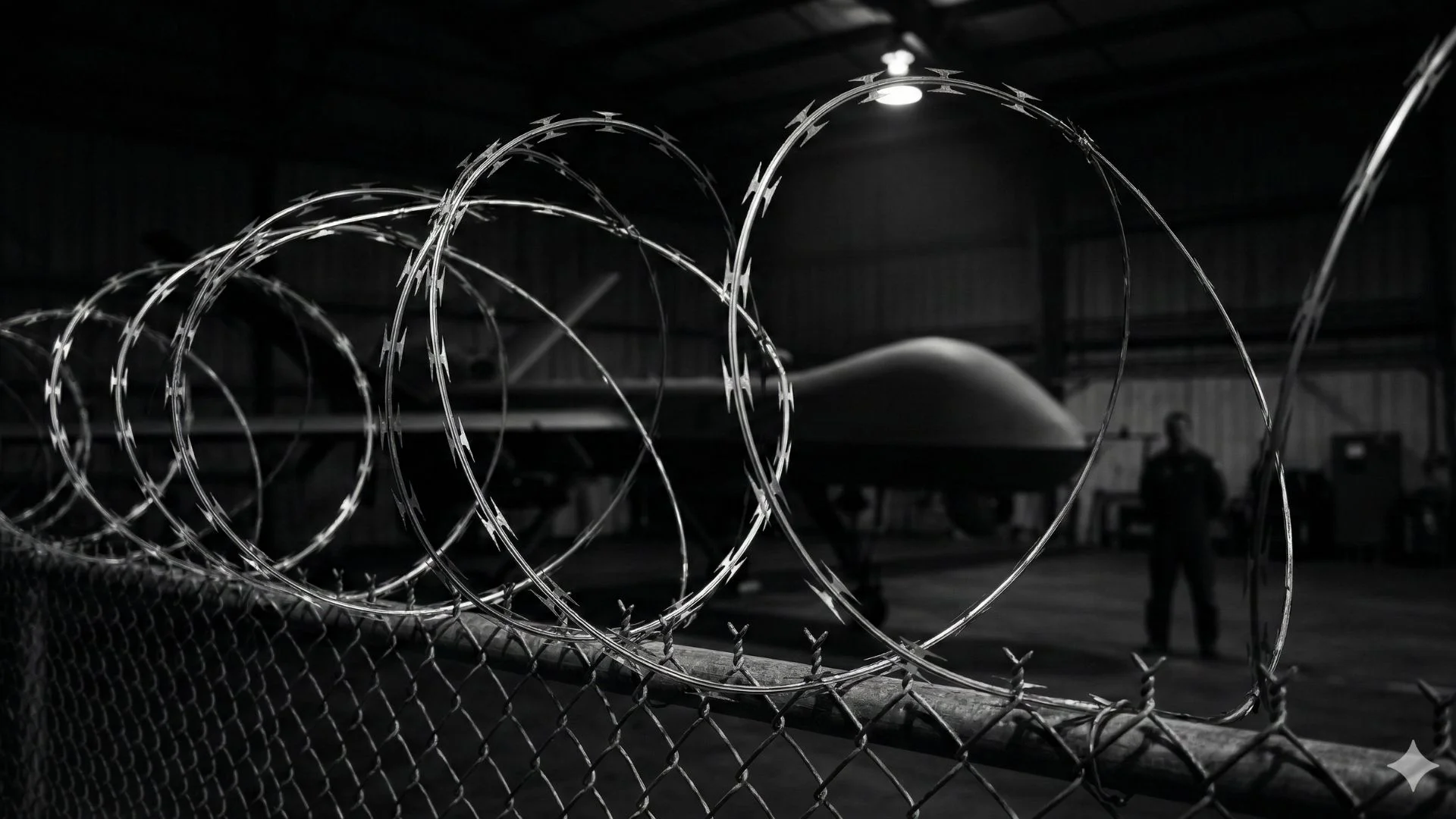

Early unmanned aerial vehicles were restricted to rigid, radio-tethered military reconnaissance; modern autonomous UAV architectures integrate micro-avionics, sensor fusion, and swarm intelligence to revolutionize civilian skies.


Smart city initiatives frequently imported glossy foreign technological blueprints that failed in regional municipal governments; empirical ICT auditing maps local technological capabilities to design realistic e-government roadmaps.


Computer scientists spent forty-four years convinced that a 1976 algorithm was the absolute mathematical limit for finding the shortest delivery route; Anna Karlin, Nathan Klein, and Shayan Oveis Gharan broke the 3/2 barrier using high-dimensional geometry and random spanning trees. Awarded the Best Paper at STOC, this historic breakthrough shattered the most famous stagnation in theoretical computer science.


Isolated security benchmarks test whether AI can write single malicious scripts; CyberBench measures whether autonomous software agents can execute multi-day corporate cyber attacks from start to finish. By stress-testing AI models on complex, realistic enterprise penetration scenarios, cybersecurity researchers established the first realistic yardstick for autonomous digital threats.


Centralized drone fleets crash whenever their central controller signal is jammed; bio-inspired drone swarms coordinate locally like flocks of birds without any central leader. By synthesizing breakthroughs in decentralized mesh communication and obstacle avoidance, robotics engineers have created resilient aerial swarms capable of mapping disaster zones and locating wildfire survivors autonomously.
Ask this paper your own questions, or keep browsing the verified research catalogue.