Individual quantum bits are so fragile that stray thermal vibrations destroy calculations in microseconds; surface-code error correction clusters dozens of noisy physical qubits into a single indestructible logical qubit. By proving that adding more qubits suppresses overall computational error rates, quantum physicists have crossed the historic fault-tolerance threshold.
For thirty years, the promise of quantum computers simulating complex medicines and cracking modern encryption was held back by extreme physical fragility. Individual quantum bits are so sensitive to environmental heat that a tiny vibration ruins the entire mathematical calculation in milliseconds.
Quantum engineers broke through this barrier by grouping dozens of fragile physical qubits into a single "logical" quantum bit. Much like a chorus singing in unison can drown out an off-key singer, the surface-code network continuously spots and repairs individual qubit errors before they can corrupt the calculation.
This breakthrough crosses the fault-tolerance threshold for quantum hardware. By reducing overall error rates as more qubits are added, by enabling deep mathematical simulations of room-temperature superconductors, and by laying the engineering foundation for commercial quantum supercomputers, quantum error correction unlocks computing’s next frontier.
Improved quantum processor logical error rates via correction and detection
Performing quantum algorithms for critical problems in physics and chemistry requires substantially lower error rates than the physical error rates of present quantum computers. Achieving such low logical error rates requires quantum error correction and physical error rates below a critical threshold value. We experimentally demonstrate on a trapped-ion quantum charge-coupled device (QCCD) improvements in logical error rates ranging from 11× to 800× compared with several physical circuit baselines, including quantum computation on multiple qubits. Our results hinge on two quantum error correction code constructions optimized for an ion-trap processor: a 12-qubit code encoding two qubits inspired by Knill and a 16-qubit tesseract colour code encoding four qubits. These constructions are combined with a scalable method of error detection and post-selection to achieve reduced logical error rates. Our results show that state-of-the-art quantum devices are already able to make use of fault tolerance and error correction to strongly suppress errors in non-trivial quantum circuit computations.

Telecommunication engineers believed that static noise permanently corrupted electrical signals; Claude Shannon proved that information can be transmitted with zero errors across noisy channels by converting meaning into binary bits. Published in 1948, Shannon’s masterwork founded information theory and created the digital language of the modern world.
Error-correcting codes were invented to clean static noise from radio broadcasts; Elwyn Berlekamp and Robert McEliece proved that deliberately scrambling error-correcting codes creates an NP-complete cryptographic lock. Published in 1978 and sidelined for decades due to large key sizes, the McEliece code-based cryptosystem has never been broken in nearly fifty years, standing today as NIST’s premier quantum-resistant encryption standard (Classic McEliece).
Early computer networks were isolated corporate islands that could not speak to one another; Vint Cerf and Bob Kahn designed an open universal protocol that connects any computer on Earth regardless of hardware. Published in 1974, TCP/IP created the architecture of the Internet, allowing billions of devices to communicate seamlessly across a unified global network.
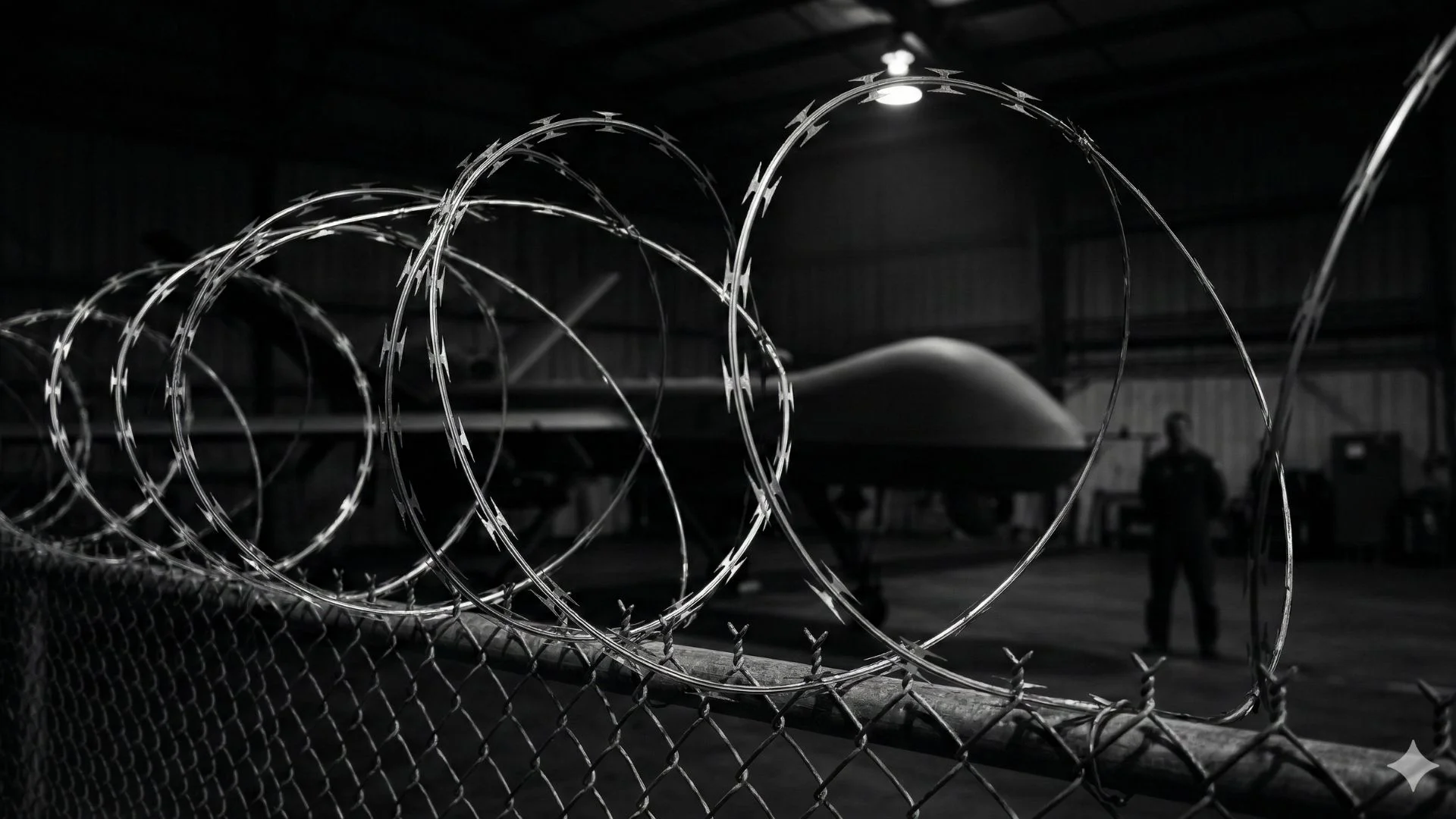

Early unmanned aerial vehicles were restricted to rigid, radio-tethered military reconnaissance; modern autonomous UAV architectures integrate micro-avionics, sensor fusion, and swarm intelligence to revolutionize civilian skies.

Smart city initiatives frequently imported glossy foreign technological blueprints that failed in regional municipal governments; empirical ICT auditing maps local technological capabilities to design realistic e-government roadmaps.

Computer scientists spent forty-four years convinced that a 1976 algorithm was the absolute mathematical limit for finding the shortest delivery route; Anna Karlin, Nathan Klein, and Shayan Oveis Gharan broke the 3/2 barrier using high-dimensional geometry and random spanning trees. Awarded the Best Paper at STOC, this historic breakthrough shattered the most famous stagnation in theoretical computer science.

Isolated security benchmarks test whether AI can write single malicious scripts; CyberBench measures whether autonomous software agents can execute multi-day corporate cyber attacks from start to finish. By stress-testing AI models on complex, realistic enterprise penetration scenarios, cybersecurity researchers established the first realistic yardstick for autonomous digital threats.
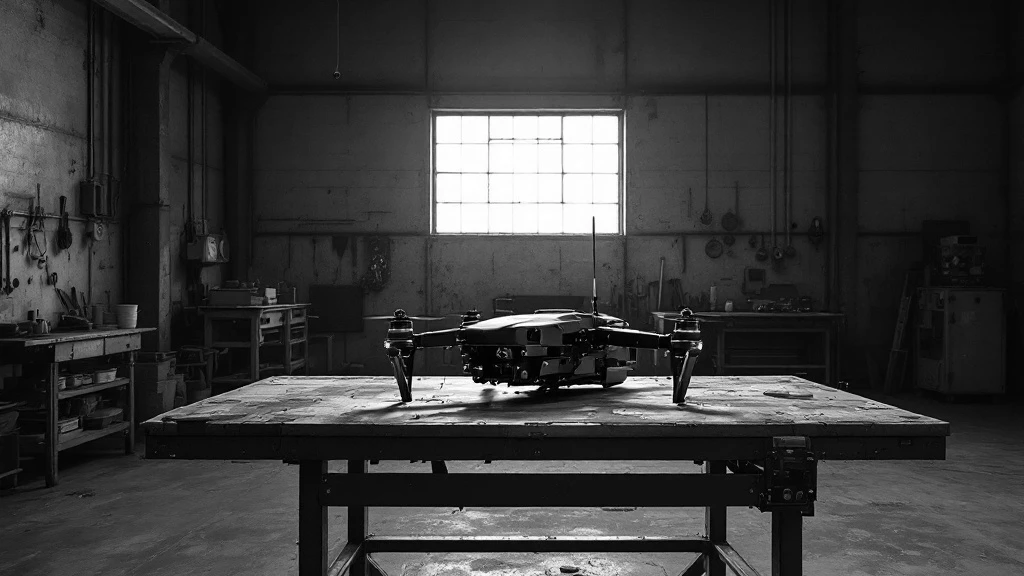

Centralized drone fleets crash whenever their central controller signal is jammed; bio-inspired drone swarms coordinate locally like flocks of birds without any central leader. By synthesizing breakthroughs in decentralized mesh communication and obstacle avoidance, robotics engineers have created resilient aerial swarms capable of mapping disaster zones and locating wildfire survivors autonomously.
Ask this paper your own questions, or keep browsing the verified research catalogue.