Factory engineers once tuned automatic industrial valves through stressful trial-and-error that frequently blew out boilers and ruined chemical batches; John Ziegler and Nathaniel Nichols created simple mathematical formulas to tune PID controllers for optimal stability. Published in 1942, the Ziegler-Nichols tuning rules established the operational foundation for modern industrial automation, controlling over ninety percent of all automated factory loops, chemical plants, and thermostats in the world.
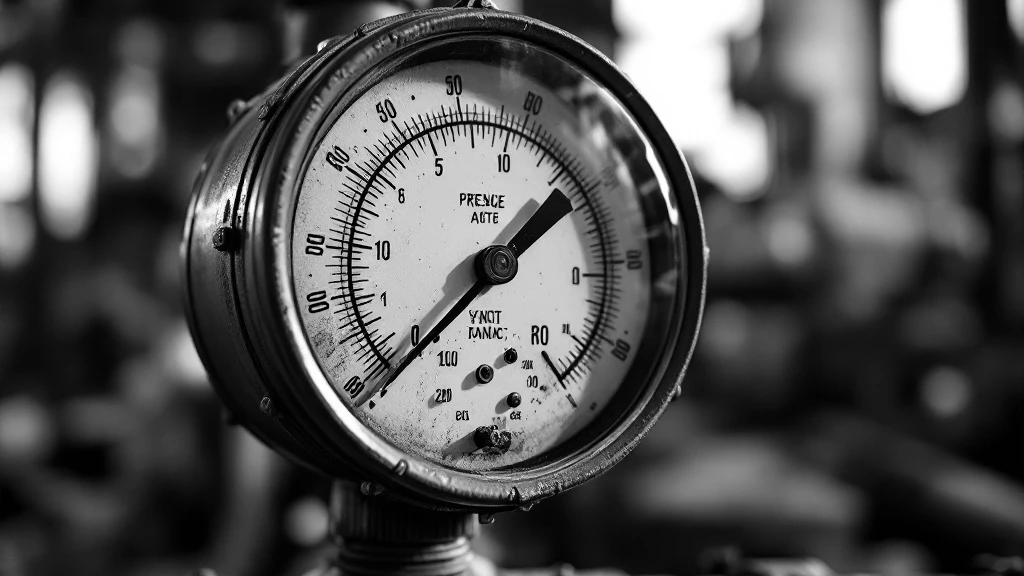
In the massive factory build-up of World War II, automated pneumatic controllers were introduced to regulate temperatures in oil refineries and steam pressures in chemical reactors. However, setting the knobs on these automatic controllers was pure guesswork—if an engineer turned a knob too far, the boiler went into violent oscillations and exploded.
Engineers John Ziegler and Nathaniel Nichols discovered two practical tuning shortcuts. By pushing a controller just to the brink of continuous oscillation and measuring that single critical frequency, their simple table of mathematical formulas instantly tells the engineer the exact knob settings needed to stabilize the machine with a graceful quarter-decay response.
Ziegler-Nichols tuning became the most famous rule of thumb in industrial automation. By regulating furnace temperatures in steel mills, by maintaining precise flight speeds in aircraft cruise control, and by controlling life-support systems in hospitals, PID tuning keeps modern industry running smoothly.
Optimum Settings for Automatic Controllers
Abstract In this paper, the three principal control effects found in present controllers are examined and practical names and units of measurement are proposed for each effect. Corresponding units are proposed for a classification of industrial processes in terms of the two principal characteristics affecting their controllability. Formulas are given which enable the controller settings to be determined from the experimental or calculated values of the lag and unit reaction rate of the process to be controlled. These units form the basis of a quick method for adjusting a controller on the job. The effect of varying each controller setting is shown in a series of chart records. It is believed that the conceptions of control presented in this paper will be of assistance in the adjustment of existing controller applications and in the design of new installations.


Classical fuzzy sets struggled to model real-world problems containing active contradictions and indeterminate information; single-valued neutrosophic relations provide a rigorous mathematical framework to compute truth, indeterminacy, and falsity independently.


Telecommunication engineers believed that static noise permanently corrupted electrical signals; Claude Shannon proved that information can be transmitted with zero errors across noisy channels by converting meaning into binary bits. Published in 1948, Shannon’s masterwork founded information theory and created the digital language of the modern world.


Neoclassical economists spent two centuries assuming that humans calculate money like rational, emotionless computing robots; Daniel Kahneman and Amos Tversky proved that the human brain feels the pain of losing 100. Awarded the 2002 Nobel Prize in Economics, Prospect Theory shattered rational-choice theory and founded Behavioral Economics, revolutionizing financial markets, consumer design, and government policy worldwide.


Mechanical scotch-tape peeling produces only microscopic flakes of pristine graphene; William Hummers’ 1958 chemical recipe exfoliates bulk graphite into tons of water-dispersible two-dimensional sheets. Dormant for nearly half a century, "Hummers' Method" is now the indispensable global manufacturing route for 2D water-purification membranes and conductive composites.


Philosophy taught that human reason was an immaculate engine of pure logic and objective truth; Amos Tversky and Daniel Kahneman proved that our daily decisions are run by quick mental shortcuts that systematically trick our brains into predictable cognitive illusions. Published in Science in 1974, "Judgment under Uncertainty" mapped the universal cognitive biases governing the human mind, revolutionizing behavioral psychology, courtroom legal jury decisions, and medical diagnostics.


Theoretical physics predicted that glass and steel should withstand millions of pounds of pressure; Alan Arnold Griffith proved that microscopic surface scratches focus mechanical stress into catastrophic fractures. Published in 1921, Griffith’s energy balance theorem founded the discipline of fracture mechanics, explaining why Liberty Ships snapped in half during World War II and teaching modern engineers how to build shatter-proof materials.

Traditional mass spectrometry used harsh electron beams that shattered delicate biological proteins into unrecognizable debris; John Fenn used an electrified mist to gently levitate giant biomolecules intact into the vacuum chamber. By generating multiply charged ions from liquid droplets, Electrospray Ionization enabled precision mass spectrometry of entire intact proteins and founded modern proteomics.


Economists once believed that human competition was a pure zero-sum fight where one person’s win required another’s total loss; John Nash proved in a single page of mathematics that all competing systems reach a stable state of mutual balance. Published in 1950 when Nash was just twenty-one, the Nash Equilibrium earned him the Nobel Prize and created the strategic grammar governing global economics, geopolitics, and evolutionary biology.
Ask this paper your own questions, or keep browsing the verified research catalogue.