Simulating electronic structures of complex molecules historically stalled under crushing computational scaling bottlenecks; ORCA 5.0 unlocks multi-scale quantum chemistry through domain-based pair natural orbitals and ultra-fast linear-scaling solvers.

Computing the quantum behavior of electrons across large chemical systems has long represented an intractable computational wall. Traditional wave-function methods like coupled cluster scale exponentially with system size, forcing chemists to choose between fast but crude empirical approximations and high-accuracy simulations restricted to microscopic diatomic models.
The core conflict in computational chemistry lies in calculating electron correlation across hundreds of interacting atoms without crashing cluster memory or requiring months of continuous compute time. Without accurate correlation energies, predicting reaction barriers, enzymatic catalysis, and transition-metal spectra remains guesswork.
ORCA 5.0 resolves this standoff by integrating domain-based local pair natural orbital (DLPNO) algorithms, multi-level compound methods, and optimized density functional theory engines. By screening out negligible distant electron interactions and utilizing tensor-accelerated matrix operations, ORCA achieves near-coupled-cluster accuracy on systems containing thousands of atoms in mere hours.
This computational leap transforms molecular modeling from an explanatory post-mortem tool into an active predictive engine for battery electrolytes, biocatalysis, and targeted pharmaceutical design, allowing chemists to synthesize optimized molecules before ever entering the wet lab.
Software update: The ORCA program system—Version 5.0
Version 5.0 of the ORCA quantum chemistry program suite was released in July 2021. ORCA 5.0 represents a major improvement over all previous versions of ORCA and features (1) highly improved performance, (2) increased numerical robustness, (3) a host of new functionality, and (4) greatly improved user friendliness. The article describes the most salient features of the program.


Traditional porous minerals like zeolites were limited by rigid silicon geometries; Bernard Hoskins and Richard Robson envisioned infinite crystalline lattices built from modular metal nodes and organic struts. Ignored for a decade as an impractical chemical oddity, this 1990 paper provided the structural foundation for modern metal-organic frameworks that trap carbon directly from thin air.

Silicon solar panels require expensive, energy-intensive cleanrooms and high-temperature furnaces; hybrid organic-inorganic perovskites absorb light across the entire solar spectrum and can be printed like ink. Published in 1978 as a basic crystallographic record, Dieter Weber’s hybrid crystal is now the fastest-advancing solar technology in history.


Liquid battery electrolytes risk explosive fires when punctured; solid ceramic conductors crack under repetitive charge cycles. By blending flexible metal-organic frameworks into conductive solid glasses, chemical engineers have created non-flammable solid electrolytes that shuttle ions as fast as liquid solvents.

Fuel cell catalyst development focused almost exclusively on transition metal coordination centers; this surface chemistry study proves that non-coordinated edge carbon sites drive surprisingly high oxygen reduction reaction activity.

Chemical reactions traditionally required thousands of liters of toxic liquid solvents to bring molecules into contact; mechanical ball-milling generates sheer physical force that triggers self-accelerating autocatalysis in completely dry reaction mixtures.
Mechanical scotch-tape peeling produces only microscopic flakes of pristine graphene; William Hummers’ 1958 chemical recipe exfoliates bulk graphite into tons of water-dispersible two-dimensional sheets. Dormant for nearly half a century, "Hummers' Method" is now the indispensable global manufacturing route for 2D water-purification membranes and conductive composites.
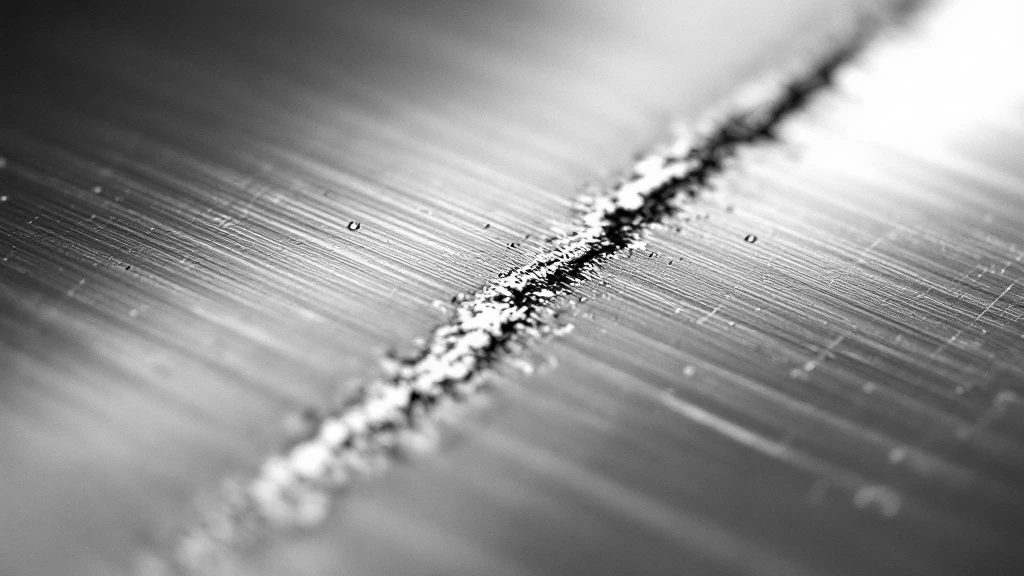

Theoretical physics predicted that glass and steel should withstand millions of pounds of pressure; Alan Arnold Griffith proved that microscopic surface scratches focus mechanical stress into catastrophic fractures. Published in 1921, Griffith’s energy balance theorem founded the discipline of fracture mechanics, explaining why Liberty Ships snapped in half during World War II and teaching modern engineers how to build shatter-proof materials.

Building peptides in liquid solution required painstaking, months-long crystallization after every single amino acid addition; Bruce Merrifield anchored growing peptide chains to insoluble plastic beads, allowing unreacted chemicals to be washed away in seconds. This ingenious solid-phase paradigm automated the chemical assembly of proteins and laid the foundation for modern peptide therapeutics like GLP-1 weight-loss drugs.
Ask this paper your own questions, or keep browsing the verified research catalogue.