People intuitively assume that shuffling a deck of cards makes it slightly more random with every single shuffle; Persi Diaconis proved that card decks remain largely predictable until precisely the seventh shuffle, where randomness suddenly snaps into place like a light switch. In this comprehensive new proof, Diaconis and Saloff-Coste established that this abrupt "cutoff cliff" is a universal law governing all realistic card-shuffling styles and probability networks.
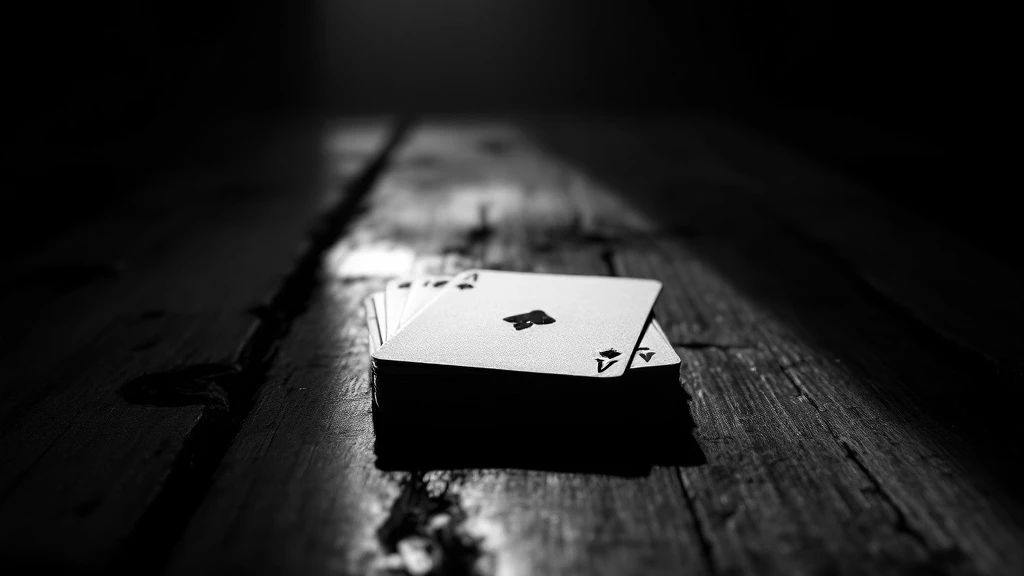
In casino gambling and statistical physics, understanding how quickly chaotic physical systems mix into pure randomness is critical. For centuries, card players believed that shuffling a deck gradually randomized cards in a slow, smooth curve from 0% to 100%.
Stanford mathematician and former professional magician Persi Diaconis proved that randomness does not arrive gradually—it drops off a cliff. For a standard 52-card deck, the cards remain statistically ordered through five and six shuffles, until exactly shuffle number seven, where the total variation distance abruptly plunges to total randomness.
This paper proves that this cutoff cliff occurs across all asymmetric shuffling styles. By securing casino card-deck security protocols, by modeling how heat diffuses through turbulent liquids, and by accelerating computer simulation algorithms, card-shuffling probability mathematics explains how randomness is born.
Universality of Cutoff for Riffle Shuffling
A Gilbert-Shannon-Reeds (GSR) shuffle is performed on a deck of cards by cutting the top cards and interleaving the two resulting piles uniformly at random. The celebrated "Seven shuffles suffice" theorem of [Bayer-Diaconis '92] established cutoff for this Markov chain: to leading order, total variation mixing occurs after precisely shuffles. Later work of [Lalley '00] and [Sellke '22] extended this result to asymmetric binomial cuts for all . These results relied heavily on the binomial condition and many natural chains were left open, including uniformly random cuts and exact bisections. We establish cutoff for riffle shuffles with general pile size distribution. Namely, suppose the cut sizes are IID and the convergence in distribution holds for some probability measure on the interval . Then the mixing time satisfies for an explicit constant . The same result holds for any (deterministic or random) sequence of pile sizes with empirical distribution converging to on all macroscopic time intervals (of length ). It also extends to multi-partite shuffles where the deck is cut into more than piles in each step. Qualitatively, we find that the "cold spot" phenomenon identified by [Lalley '00] characterizes the mixing time of riffle shuffling in great generality.

Network scientists long treated complex real-world graphs as abstract topological webs in flat space; mapping complex networks into negative-curvature hyperbolic space explains their natural scale-free hierarchies and clustering.


Classical Bell tests were strictly confined to simple two-level qubit pairs; the Collins-Gisin-Linden-Massar-Popescu (CGLMP) inequality extends quantum nonlocality verification to arbitrarily high-dimensional entangled states.

Einstein's General Relativity inevitably fractures into infinite, unphysical singularities at black hole centers and the cosmic dawn; infinite-derivative nonlocal gravity smooths out short-distance curvature without introducing destructive ghost instabilities.
First-order cosmological phase transitions in the early universe expand as seething vacuum bubbles whose speed determines gravitational wave signatures; first-principles hydrodynamic calculations establish exact bubble wall velocity benchmarks without phenomenological friction.


People assumed that close friends and family members were the most important allies for finding a new job and getting ahead in life; Mark Granovetter proved that casual acquaintances you barely talk to are the single most valuable source of new career opportunities and fresh ideas. Published in 1973, "The Strength of Weak Ties" is one of the most influential sociology papers in history, providing the network blueprint that built LinkedIn and modern professional networking.


Physical sensors in rockets and satellites are constantly corrupted by noise, vibration, and sensor drift; Rudolf Kalman developed an optimal mathematical filter that predicts true position by fusing imperfect sensor readings with equations of motion in real time. Published in 1960, the Kalman Filter guided the Apollo spacecraft to the Moon and is the mathematical brain powering every GPS receiver, autonomous drone, and commercial jetliner on Earth.


Philosophy taught that human reason was an immaculate engine of pure logic and objective truth; Amos Tversky and Daniel Kahneman proved that our daily decisions are run by quick mental shortcuts that systematically trick our brains into predictable cognitive illusions. Published in Science in 1974, "Judgment under Uncertainty" mapped the universal cognitive biases governing the human mind, revolutionizing behavioral psychology, courtroom legal jury decisions, and medical diagnostics.
Adam Smith taught that individuals acting in pure rational self-interest would automatically enrich society; Garrett Hardin proved that when everyone acts in their own self-interest on shared public land, they inevitably destroy the shared resource for everyone. Published in Science in 1968, "The Tragedy of the Commons" became the defining environmental manifesto of the modern era, guiding global ocean fisheries quotas, clean air regulations, and international climate agreements.
Ask this paper your own questions, or keep browsing the verified research catalogue.