Heavy nickel and cobalt cathodes limit the flight range of electric aircraft; abundant elemental sulfur offers five times the theoretical energy storage capacity at a fraction of the cost. Ignored for three decades due to rapid polysulfide dissolution, this 1979 paper laid the electrochemical blueprint for lightweight aviation batteries.

In the quest to build electric regional airplanes and long-haul trucks, battery packs are weighed down by heavy, mined metals like cobalt and nickel. Lithium-ion batteries are simply too heavy to get passenger planes off the ground for long journeys.
In 1979, battery researchers discovered that abundant, lightweight yellow sulfur could store five times more electrical energy than cobalt. The early challenge was that sulfur dissolved into battery fluids like sugar in tea, but this paper laid out the exact chemical ether solvents needed to stabilize sulfur ions.
Awakened by the electric flight race, sulfur electrochemistry is making zero-emission flight a reality. By eliminating reliance on scarce cobalt mines, by slashing battery manufacturing costs by half, and by cutting battery weight by sixty percent, lithium-sulfur chemistry unlocks electric aviation.
A Lithium/Dissolved Sulfur Battery with an Organic Electrolyte
Prototype cells of the configuration Li/∼5M S as , THF, have been characterized with regard to capacity, rate, and rechargeability. Virtually 100% of the theoretical capacity could be realized at 50°C at rates below 1.0 mA/cm 2 . In high rate cell configurations, 75% cathode utilization is possible at ∼4 mA/cm 2 (C/3–C/4 rate). The capacities at high rate are enhanced by Lewis acids, although the ultimate cause of rate limitation is passivation of the current collector by discharge products. The self‐discharge rates of Li in contact with 4–5M S (as ) solutions reveal capacity losses of 0.5%/day at 25°C to 4.4%/day at 71°C. Based on the experimental results, a practical energy density of ∼300 W‐hr kg −1 is possible using a standard cell design. Results on the battery's rechargeability are briefly reviewed.


Telecommunication engineers believed that static noise permanently corrupted electrical signals; Claude Shannon proved that information can be transmitted with zero errors across noisy channels by converting meaning into binary bits. Published in 1948, Shannon’s masterwork founded information theory and created the digital language of the modern world.


Mechanical scotch-tape peeling produces only microscopic flakes of pristine graphene; William Hummers’ 1958 chemical recipe exfoliates bulk graphite into tons of water-dispersible two-dimensional sheets. Dormant for nearly half a century, "Hummers' Method" is now the indispensable global manufacturing route for 2D water-purification membranes and conductive composites.


Theoretical physics predicted that glass and steel should withstand millions of pounds of pressure; Alan Arnold Griffith proved that microscopic surface scratches focus mechanical stress into catastrophic fractures. Published in 1921, Griffith’s energy balance theorem founded the discipline of fracture mechanics, explaining why Liberty Ships snapped in half during World War II and teaching modern engineers how to build shatter-proof materials.


Traditional mass spectrometry used harsh electron beams that shattered delicate biological proteins into unrecognizable debris; John Fenn used an electrified mist to gently levitate giant biomolecules intact into the vacuum chamber. By generating multiply charged ions from liquid droplets, Electrospray Ionization enabled precision mass spectrometry of entire intact proteins and founded modern proteomics.

Standard automated flight and robotic controllers crash when unexpected external winds alter machine parameters; sliding mode control clamps the system’s behavior onto an unshakeable mathematical guardrail that ignores external disturbances. Developed in the Soviet Union and translated in 1977 by Vadim Utkin, this robust control architecture is the mathematical backbone steering rocket thrusters, robot arms, and industrial electric motors worldwide.
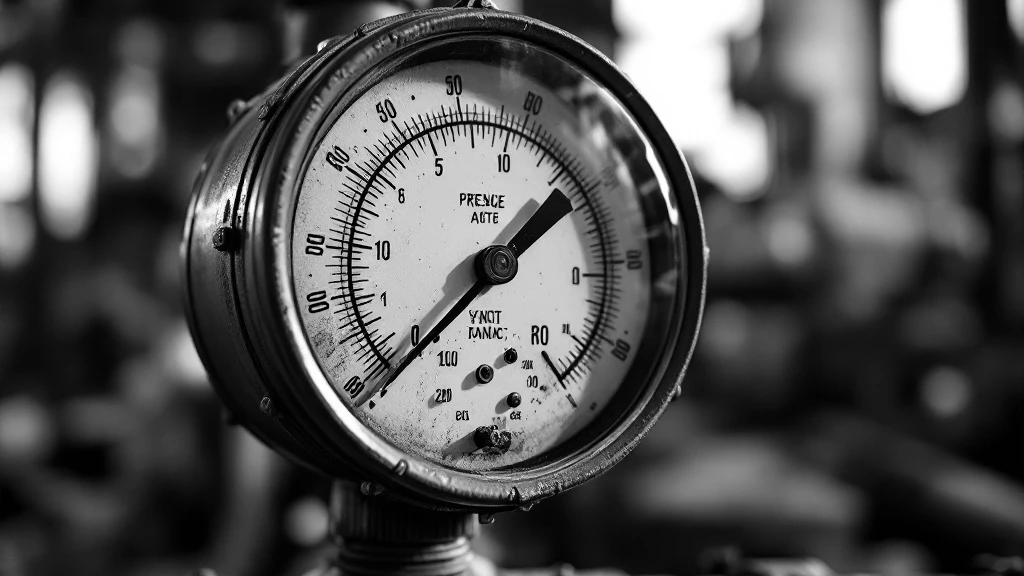

Factory engineers once tuned automatic industrial valves through stressful trial-and-error that frequently blew out boilers and ruined chemical batches; John Ziegler and Nathaniel Nichols created simple mathematical formulas to tune PID controllers for optimal stability. Published in 1942, the Ziegler-Nichols tuning rules established the operational foundation for modern industrial automation, controlling over ninety percent of all automated factory loops, chemical plants, and thermostats in the world.

Calculating the position of complex robotic joints in 3D space once required messy trigonometry that became impossible as mechanical links were added; Jacques Denavit and Richard Hartenberg standardized all mechanical motion into four elegant numbers per joint. Published in 1955 before modern robotics even existed, the Denavit-Hartenberg convention is the universal mathematical grammar controlling every industrial robotic arm, surgical manipulator, and planetary rover in existence.
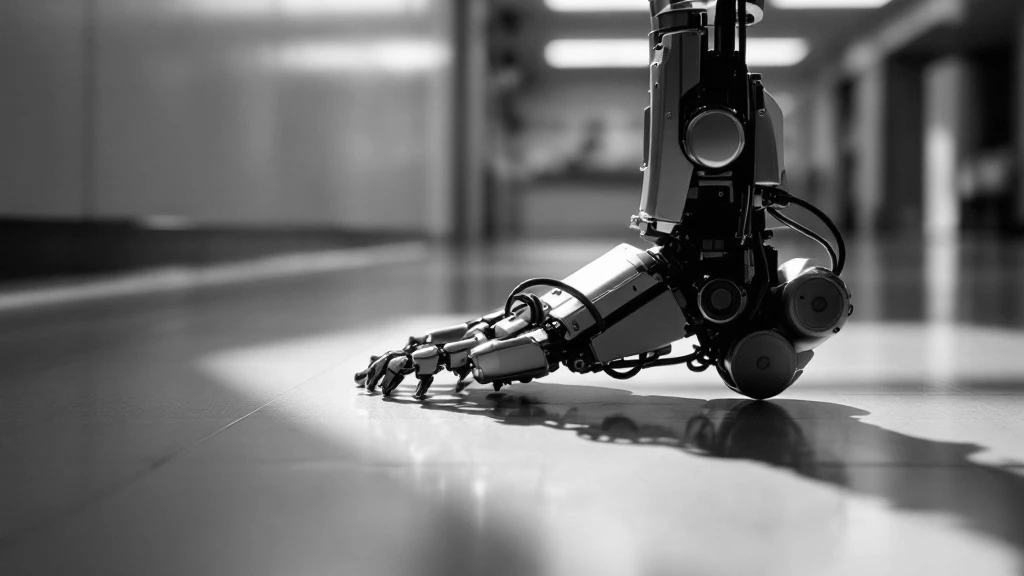

Early roboticists spent millions programming complex supercomputers to calculate every single joint angle in robot legs; Tad McGeer proved that a mechanical pair of legs can walk smoothly down a gentle hill powered by gravity alone with zero motors or computers. Published in 1990, this revolutionary paper shifted robotics from brute-force mathematical computation to natural mechanical resonance, inspiring modern bipedal humanoid robots like Boston Dynamics’ Atlas.
Ask this paper your own questions, or keep browsing the verified research catalogue.