Two radio astronomers thought an annoying persistent microwave hiss in their antenna was caused by pigeon droppings; Arno Penzias and Robert Wilson were actually listening to the dying thermal echo of the Big Bang. Awarded the 1978 Nobel Prize in Physics, this discovery of the Cosmic Microwave Background proved that our universe was born in a fiery cosmic explosion fourteen billion years ago.
In the 1960s, astronomy was deadlocked in a fierce cosmological war between two theories: the "Steady State" model (which said the universe was eternal and changeless) and the "Big Bang" model (which said the cosmos erupted from a single hot explosion). Science lacked physical proof to decide between them.
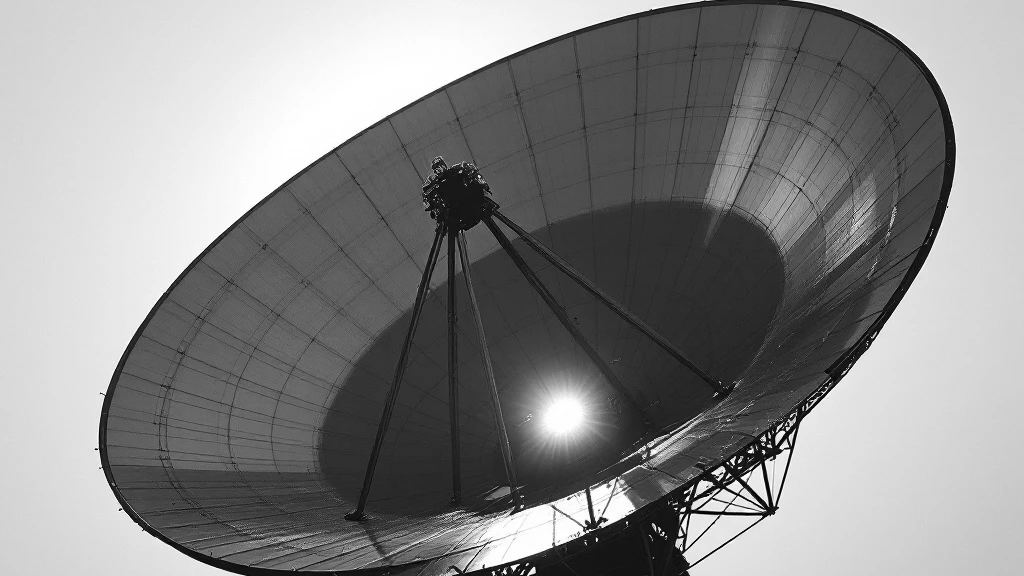
Bell Labs radio astronomers Arno Penzias and Robert Wilson pointed a giant 20-foot horn antenna at the sky. No matter where they aimed, they heard a steady, uniform microwave hiss at 3.5 Kelvin—a background noise so uniform they scrubbed the antenna clean of pigeon nests, only to realize the noise was the 13.8-billion-year-old afterglow of the Big Bang itself.
Their discovery definitively settled the origin of the cosmos. By proving the Big Bang theory, by providing the cosmic microwave background map that reveals the seeds of all galaxies, and by founding modern precision cosmology, this radio hiss changed human history.
A Measurement of Excess Antenna Temperature at 4080 Mc/s.
Measurements of the effective zenith noise temperature of the 20-foot horn-reflector antenna (Crawford, Hogg, and Hunt 1961) at the Crawford Hill Laboratory, Holmdel, New Jersey, at 4080 Mc/s have yielded a value of about 3.5 K higher than expected. This excess temperature is, within the limits of our observations, isotropic, unpolarized, and free from seasonal variations (July, 1964 - April, 1965). A possible explanation for the observed excess noise temperature is the one given by Dicke, Peebles, Roll, and Wilkinson (1965) in a companion letter in this issue.


People assumed that close friends and family members were the most important allies for finding a new job and getting ahead in life; Mark Granovetter proved that casual acquaintances you barely talk to are the single most valuable source of new career opportunities and fresh ideas. Published in 1973, "The Strength of Weak Ties" is one of the most influential sociology papers in history, providing the network blueprint that built LinkedIn and modern professional networking.


Physical sensors in rockets and satellites are constantly corrupted by noise, vibration, and sensor drift; Rudolf Kalman developed an optimal mathematical filter that predicts true position by fusing imperfect sensor readings with equations of motion in real time. Published in 1960, the Kalman Filter guided the Apollo spacecraft to the Moon and is the mathematical brain powering every GPS receiver, autonomous drone, and commercial jetliner on Earth.


Adam Smith taught that individuals acting in pure rational self-interest would automatically enrich society; Garrett Hardin proved that when everyone acts in their own self-interest on shared public land, they inevitably destroy the shared resource for everyone. Published in Science in 1968, "The Tragedy of the Commons" became the defining environmental manifesto of the modern era, guiding global ocean fisheries quotas, clean air regulations, and international climate agreements.


Cosmologists spent a century assuming that the mutual gravitational pull of galaxies was slowing down the expansion of the universe; two competing teams measuring exploding white dwarf stars discovered that cosmic expansion is speeding up faster and faster. Awarded the 2011 Nobel Prize in Physics, this discovery of Dark Energy proved that empty space contains a repulsive anti-gravity energy that makes up seventy percent of our universe.

For a century, humanity looked at the universe exclusively through telescopes that capture light; Advanced LIGO used four-kilometer laser beams to directly feel the physical vibration of two black holes colliding 1.3 billion light-years away. Awarded the 2017 Nobel Prize in Physics, the detection of GW150914 confirmed Einstein’s final prediction and gave human science ears to hear the sound of the cosmos.


For nearly fifty years, the greatest minds in quantum mechanics failed to explain why frozen metals lose all electrical resistance; John Bardeen, Leon Cooper, and Robert Schrieffer proved that electrons pair up into synchronized couples gliding through atomic lattices without a single collision. Awarded the 1972 Nobel Prize in Physics (giving Bardeen his historic second Nobel), BCS Theory solved the greatest mystery in solid-state physics, enabling MRI hospital scanners, fusion reactor magnets, and superconducting quantum computers.

Classical physics predicted that messy defects in a crystal would merely scatter moving electrons like pinballs; Philip Anderson proved that quantum wave interference traps electrons in place, freezing electrical currents completely. Awarded the 1977 Nobel Prize in Physics, Anderson Localization unlocked the physics of disordered materials, topological insulators, and light-trapping photonic metamaterials.

Albert Einstein spent his final decades insisting that quantum entanglement was an incomplete illusion masking hidden common-sense variables; John Stewart Bell devised a single mathematical inequality that allowed laboratory experiments to test whether Einstein or quantum mechanics was right. Published in an obscure, short-lived journal in 1964, Bell’s Theorem proved that the physical universe is fundamentally non-local—founding modern quantum computing, quantum cryptography, and quantum teleportation.
Ask this paper your own questions, or keep browsing the verified research catalogue.