Computer engineers thought that data was an abstract mathematical concept with zero physical weight; Rolf Landauer proved that erasing a single bit of digital memory produces an unavoidable puff of physical heat. Published in 1961 in an IBM research bulletin, Landauer’s Principle united information theory with the laws of thermodynamics, slaying the 100-year-old "Maxwell’s Demon" paradox and defining the ultimate physical speed and energy limits of modern microchips.

In early computing, software code was treated like pure abstract thought: whether a computer calculates 2+2 or deletes a document, engineers assumed the calculation had no direct physical connection to heat, believing microchip heating was merely an engineering flaw of copper wires.
IBM physicist Rolf Landauer proved the famous slogan: "Information is Physical." When a computer deletes a bit—compressing two possible memory states (0 or 1) down into a single reset state—that lost entropy must go somewhere, forcing the computer to release an exact, irreducible puff of heat into the room: k_B * T * ln(2).
Landauer's paper resolved the famous Maxwell's Demon paradox by showing the demon generates heat when erasing its memory. By inspiring reversible adiabatic computing architectures, by establishing the energy limits of supercomputers, and by anchoring quantum computation, Landauer’s principle underpins information physics.
Irreversibility and Heat Generation in the Computing Process
It is argued that computing machines inevitably involve devices which perform logical functions that do not have a single-valued inverse. This logical irreversibility is associated with physical irreversibility and requires a minimal heat generation, per machine cycle, typically of the order of kT for each irreversible function. This dissipation serves the purpose of standardizing signals and making them independent of their exact logical history. Two simple, but representative, models of bistable devices are subjected to a more detailed analysis of switching kinetics to yield the relationship between speed and energy dissipation, and to estimate the effects of errors induced by thermal fluctuations.


Physical sensors in rockets and satellites are constantly corrupted by noise, vibration, and sensor drift; Rudolf Kalman developed an optimal mathematical filter that predicts true position by fusing imperfect sensor readings with equations of motion in real time. Published in 1960, the Kalman Filter guided the Apollo spacecraft to the Moon and is the mathematical brain powering every GPS receiver, autonomous drone, and commercial jetliner on Earth.


Albert Einstein spent his final decades insisting that quantum entanglement was an incomplete illusion masking hidden common-sense variables; John Stewart Bell devised a single mathematical inequality that allowed laboratory experiments to test whether Einstein or quantum mechanics was right. Published in an obscure, short-lived journal in 1964, Bell’s Theorem proved that the physical universe is fundamentally non-local—founding modern quantum computing, quantum cryptography, and quantum teleportation.


Classical physics assumed physical interactions must obey local realism; quantum nonlocality proves entangled particles share correlations that shatter classical causal limits without signaling.


Network scientists long treated complex real-world graphs as abstract topological webs in flat space; mapping complex networks into negative-curvature hyperbolic space explains their natural scale-free hierarchies and clustering.

Classical Bell tests were strictly confined to simple two-level qubit pairs; the Collins-Gisin-Linden-Massar-Popescu (CGLMP) inequality extends quantum nonlocality verification to arbitrarily high-dimensional entangled states.
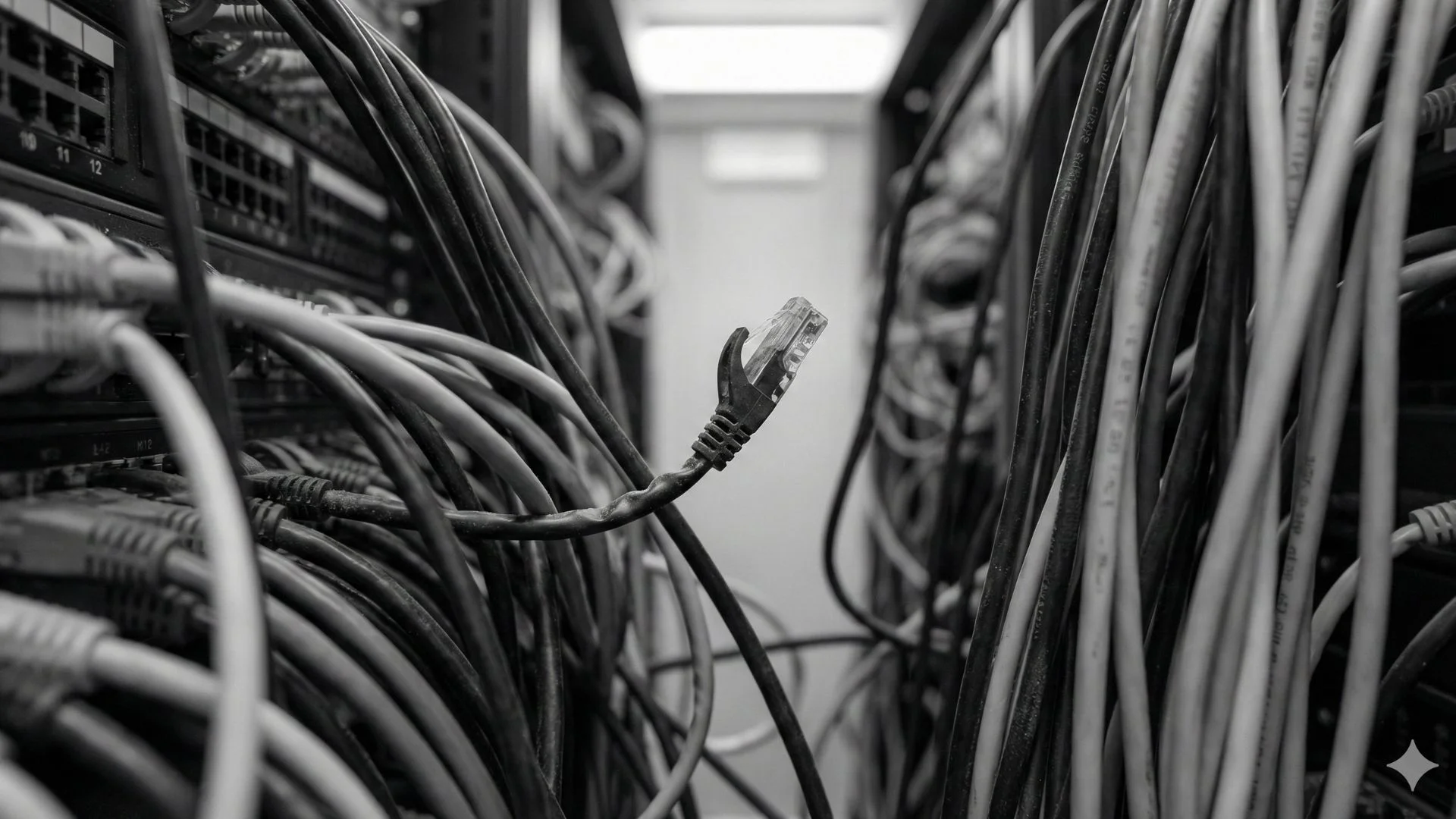
Legacy networks optimized exclusively for high throughput or low packet delay; the Age of Information (AoI) metric revolutionizes cyberphysical communication by quantifying the timeliness and freshness of data at the destination monitor.

Building global quantum networks requires converting stationary atomic quantum memories into flying photonic messengers; this breakthrough demonstrates high-fidelity spin-photon entanglement using a single neutral atom inside an optical cavity.
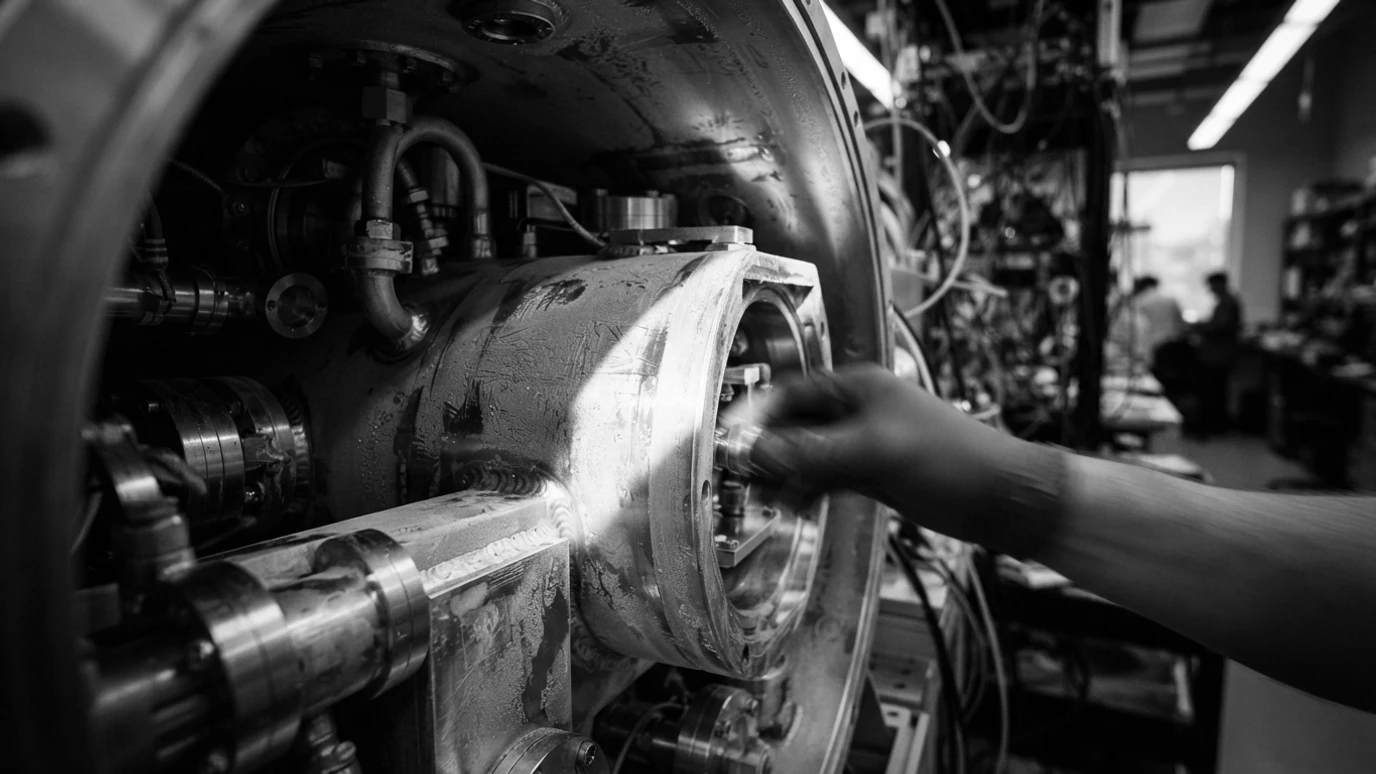
Quantum hardware has achieved multi-qubit coherence in laboratory environments, yet industrial translation remains bottlenecked; this strategic roadmap charts the critical path to scalable quantum utility across chemistry, logistics, and materials science.
Ask this paper your own questions, or keep browsing the verified research catalogue.