Chat
ChatLegacy networks optimized exclusively for high throughput or low packet delay; the Age of Information (AoI) metric revolutionizes cyberphysical communication by quantifying the timeliness and freshness of data at the destination monitor.
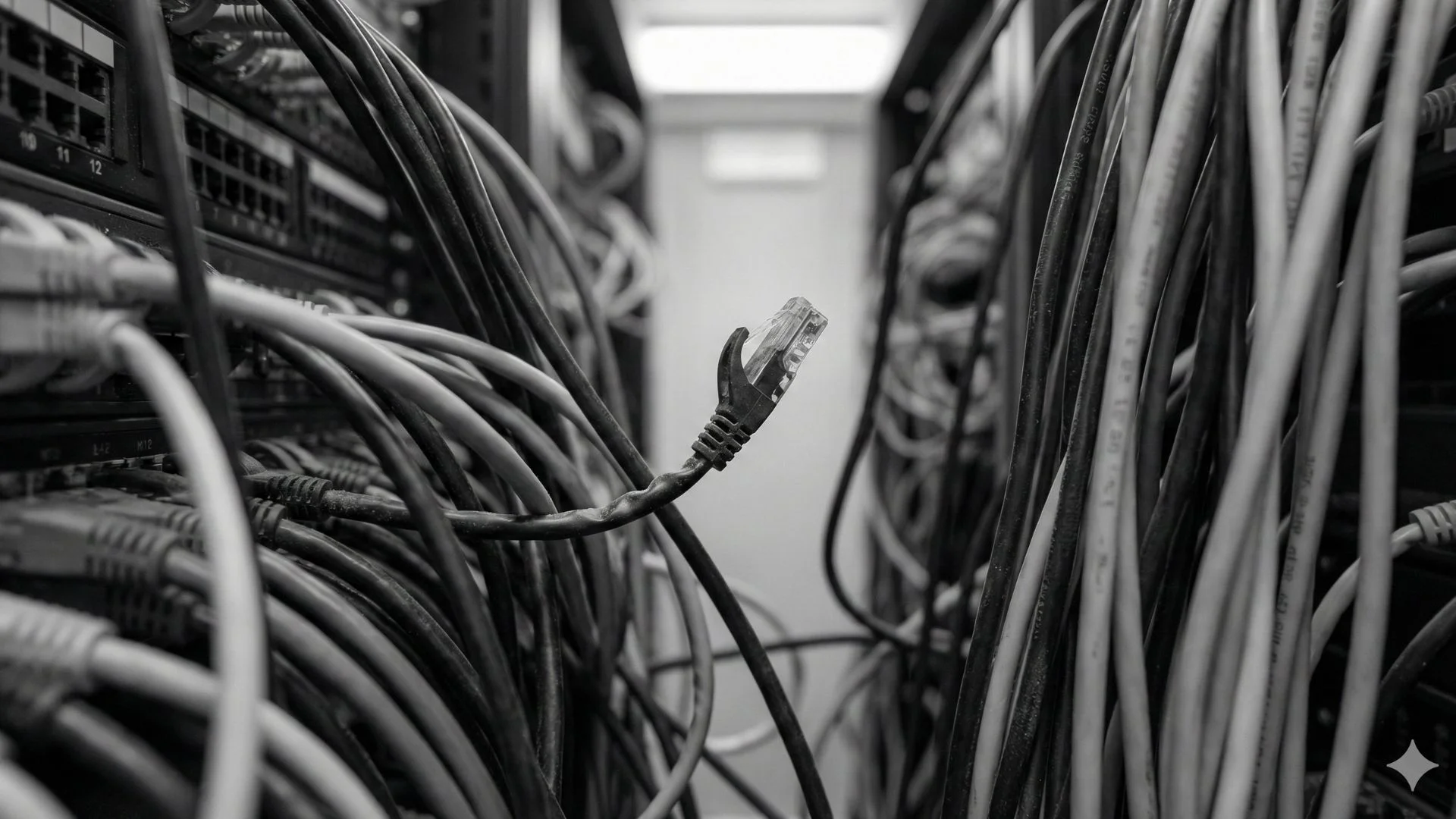
In classical telecommunications, network engineers designed systems to maximize throughput and minimize transmission delays. However, in autonomous driving, industrial robotics, and drone telemetry, receiving a massive stream of stale, queued data is worse than receiving a tiny update that is freshly minted.
Traditional latency measures the time a packet spends in flight, but fails to capture the receiver's perspective: if a sensor sends updates too frequently, packets queue up and become stale by the time they are decoded.
The Age of Information (AoI) metric formalizes the time elapsed since the most recently received update was generated at the source. This paradigm proves that optimal data freshness requires deliberately dropping queued packets and balancing sampling rates against transmission intervals.
AoI principles are now fundamentally reshaping 6G networks, autonomous vehicular platoons, and remote surgical telemetry, ensuring that robotic decision-makers always operate on fresh, timely situational intelligence.
Age of Information: An Introduction and Survey
We summarize recent contributions in the broad area of age of information (AoI). In particular, we describe the current state of the art in the design and optimization of low-latency cyberphysical systems and applications in which sources send time-stamped status updates to interested recipients. These applications desire status updates at the recipients to be as timely as possible; however, this is typically constrained by limited system resources. We describe AoI timeliness metrics and present general methods of AoI evaluation analysis that are applicable to a wide variety of sources and systems. Starting from elementary single-server queues, we apply these AoI methods to a range of increasingly complex systems, including energy harvesting sensors transmitting over noisy channels, parallel server systems, queueing networks, and various single-hop and multi-hop wireless networks. We also explore how update age is related to MMSE methods of sampling, estimation and control of stochastic processes. The paper concludes with a review of efforts to employ age optimization in cyberphysical applications.


Physical sensors in rockets and satellites are constantly corrupted by noise, vibration, and sensor drift; Rudolf Kalman developed an optimal mathematical filter that predicts true position by fusing imperfect sensor readings with equations of motion in real time. Published in 1960, the Kalman Filter guided the Apollo spacecraft to the Moon and is the mathematical brain powering every GPS receiver, autonomous drone, and commercial jetliner on Earth.


Albert Einstein spent his final decades insisting that quantum entanglement was an incomplete illusion masking hidden common-sense variables; John Stewart Bell devised a single mathematical inequality that allowed laboratory experiments to test whether Einstein or quantum mechanics was right. Published in an obscure, short-lived journal in 1964, Bell’s Theorem proved that the physical universe is fundamentally non-local—founding modern quantum computing, quantum cryptography, and quantum teleportation.

Computer engineers thought that data was an abstract mathematical concept with zero physical weight; Rolf Landauer proved that erasing a single bit of digital memory produces an unavoidable puff of physical heat. Published in 1961 in an IBM research bulletin, Landauer’s Principle united information theory with the laws of thermodynamics, slaying the 100-year-old "Maxwell’s Demon" paradox and defining the ultimate physical speed and energy limits of modern microchips.

Niels Bohr taught that observing a quantum particle mysteriously collapses all alternate possibilities out of existence; Hugh Everett III proved that the mathematical equations of quantum physics never collapse at all, meaning every possible outcome actually happens in a branching parallel universe. Published in 1957 to career-ending ridicule, Everett’s "Many-Worlds Interpretation" is now one of the dominant frameworks of theoretical physics, driving modern quantum cosmology and quantum computing theory.

Classical physics assumed physical interactions must obey local realism; quantum nonlocality proves entangled particles share correlations that shatter classical causal limits without signaling.


Continuous-wave nuclear magnetic resonance required hours of sluggish radiofrequency tuning to obtain noisy, low-resolution spectra; Richard Ernst hit atomic nuclei with a single broadband radio pulse and used Fourier mathematics to decode all resonances simultaneously. This sensitivity leap revolutionized structural biology and created the physical foundations of clinical MRI medical scanners.


Network scientists long treated complex real-world graphs as abstract topological webs in flat space; mapping complex networks into negative-curvature hyperbolic space explains their natural scale-free hierarchies and clustering.

Classical Bell tests were strictly confined to simple two-level qubit pairs; the Collins-Gisin-Linden-Massar-Popescu (CGLMP) inequality extends quantum nonlocality verification to arbitrarily high-dimensional entangled states.
Ask this paper your own questions, or keep browsing the verified research catalogue.