Autonomous delivery robots and hospital rovers frequently froze in place or cut off pedestrians in crowded corridors; integrating Helbing's social force dynamics into non-linear model predictive control enables natural, socially compliant robot navigation.

Autonomous service robots are increasingly deployed in airports, shopping malls, and hospitals to deliver medications, sanitize hallways, and transport luggage.
In dense human crowds, conventional robotic obstacle avoidance algorithms fail: robots perceive moving pedestrians as static obstacles, freezing in place (the 'freezing robot problem') or making erratic, uncomfortable maneuvers.
This robotics paper integrates Helbing's psychological social force model directly into a non-linear Model Predictive Control (NMPC) optimization framework. By treating pedestrians not as rigid barriers but as dynamic agents that respond to social repulsive and attractive forces, the robot anticipates crowd flow and navigates with human-like smoothness.
Socially compliant trajectory planning allows service robots to blend seamlessly into urban pedestrian spaces, fostering public trust and enabling safe human-robot coexistence in shared environments.
Navigating the Crowd: Non-linear MPC with Social Forces Dynamics for Human-Aware Robot Navigation
Safe and socially compliant navigation remains a fundamental challenge for autonomous robots operating in human-populated environments. Beyond collision avoidance, robots must anticipate human motion and respect personal space to ensure human comfort. Model Predictive Control (MPC) offers a robust alternative to classical and data-driven methods, although its effectiveness strongly depends on accurate human motion prediction and efficient computation. This paper introduces SFM-NMPC, a Social Force Model-based Non-linear Model Predictive Control framework that embeds human motion prediction directly within the optimization loop. By incorporating the Social Force Model into the dynamic model of surrounding agents, the controller jointly predicts the trajectories of humans and robots over the prediction horizon, thereby enabling socially-aware planning. A tailored set of social cost functions guides the optimization toward human-compliant behaviors. Despite the increased model complexity, the proposed formulation runs in real time at 20 Hz. Extensive simulated testing in crowded environments demonstrates that SFM-NMPC outperforms state-of-the-art baselines in social compliance metrics while maintaining efficient and smooth navigation. Visual trajectory analysis and an ablation study further highlight the contribution of the embedded SFM dynamics and social cost terms, confirming the effectiveness of the proposed approach for real-world social navigation.


Telecommunication engineers believed that static noise permanently corrupted electrical signals; Claude Shannon proved that information can be transmitted with zero errors across noisy channels by converting meaning into binary bits. Published in 1948, Shannon’s masterwork founded information theory and created the digital language of the modern world.


Mechanical scotch-tape peeling produces only microscopic flakes of pristine graphene; William Hummers’ 1958 chemical recipe exfoliates bulk graphite into tons of water-dispersible two-dimensional sheets. Dormant for nearly half a century, "Hummers' Method" is now the indispensable global manufacturing route for 2D water-purification membranes and conductive composites.


Computer scientists believed that mastering the ancient game of Go required human intuition that machines would not achieve for decades; DeepMind’s AlphaGo paired deep neural networks with Monte Carlo tree search to defeat the world champion. Published in 2016, AlphaGo proved that deep reinforcement learning could exhibit genuine creative intuition, sparking the modern Artificial General Intelligence revolution.


Theoretical physics predicted that glass and steel should withstand millions of pounds of pressure; Alan Arnold Griffith proved that microscopic surface scratches focus mechanical stress into catastrophic fractures. Published in 1921, Griffith’s energy balance theorem founded the discipline of fracture mechanics, explaining why Liberty Ships snapped in half during World War II and teaching modern engineers how to build shatter-proof materials.


Traditional mass spectrometry used harsh electron beams that shattered delicate biological proteins into unrecognizable debris; John Fenn used an electrified mist to gently levitate giant biomolecules intact into the vacuum chamber. By generating multiply charged ions from liquid droplets, Electrospray Ionization enabled precision mass spectrometry of entire intact proteins and founded modern proteomics.


Economics viewed labor as physical muscle and technical brainpower; Arlie Hochschild proved that millions of service workers are paid to manage and fake their inner human emotions for corporate profit. Published in 1979, Hochschild’s concept of "Emotional Labor" transformed workplace sociology, defining the invisible psychological exhaustion experienced by flight attendants, retail workers, and healthcare professionals in the modern service economy.

Standard automated flight and robotic controllers crash when unexpected external winds alter machine parameters; sliding mode control clamps the system’s behavior onto an unshakeable mathematical guardrail that ignores external disturbances. Developed in the Soviet Union and translated in 1977 by Vadim Utkin, this robust control architecture is the mathematical backbone steering rocket thrusters, robot arms, and industrial electric motors worldwide.
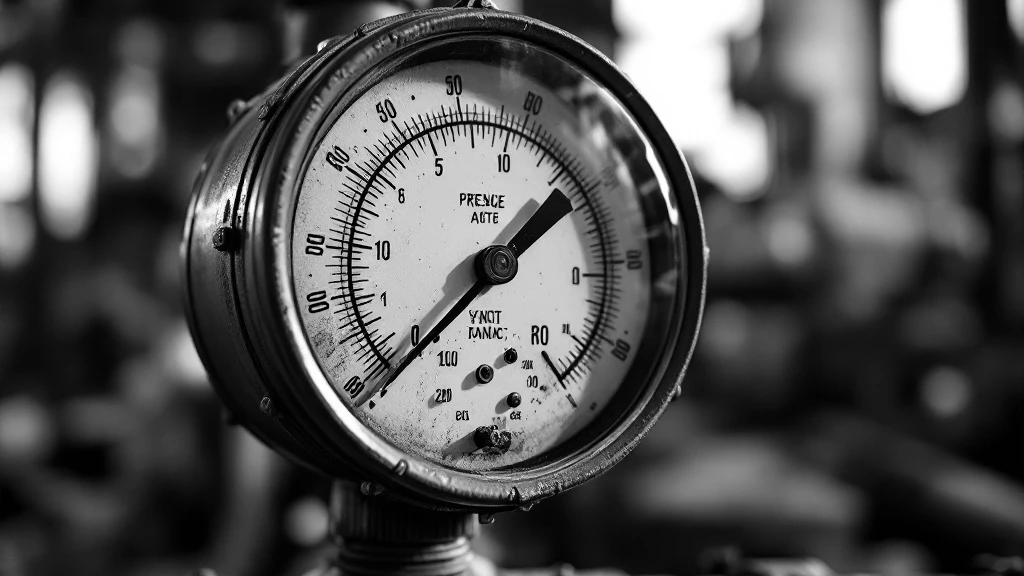

Factory engineers once tuned automatic industrial valves through stressful trial-and-error that frequently blew out boilers and ruined chemical batches; John Ziegler and Nathaniel Nichols created simple mathematical formulas to tune PID controllers for optimal stability. Published in 1942, the Ziegler-Nichols tuning rules established the operational foundation for modern industrial automation, controlling over ninety percent of all automated factory loops, chemical plants, and thermostats in the world.
Ask this paper your own questions, or keep browsing the verified research catalogue.