Chat
ChatQuantum chemists long puzzled over subtle energetic discrepancies between golden-standard coupled cluster calculations and diffusion quantum Monte Carlo; mapping fermionic nodal surfaces pinpoints the precise geometric origin of electron correlation errors.

Predicting exact molecular bonding energies requires solving the many-body electronic Schrödinger equation. Quantum chemists rely on two supreme gold standards: Coupled Cluster with triples (CCSD(T)) and Diffusion Quantum Monte Carlo (DMC).
In benchmark studies of transition metal complexes and non-covalent interactions, CCSD(T) and DMC occasionally yield conflicting predictions, leaving researchers unsure which theoretical calculation to trust when experimental data is unavailable.
This study analyzes the fixed-node approximation in DMC, demonstrating that subtle distortions in the multidimensional nodal surface of the trial wave function generate systemic energy offsets that account for discrepancies with coupled cluster calculations.
Pinpointing nodal surface errors provides a rigorous mathematical bridge between stochastic and deterministic quantum chemistry, establishing new protocols for ultra-accurate benchmark calculations of molecular catalysts and drug targets.
Nodal Error behind Discrepancies between Coupled Cluster and Diffusion Monte Carlo
The small magnitude and long-range character of noncovalent interactions pose a significant challenge for computational quantum chemical and electronic structure methods alike. State-of-the-art coupled cluster (CC) theory and benchmark-grade diffusion Monte Carlo (DMC) are ideally positioned to tackle these problems, but concerning differences between both methods have been reported in numerous studies of the interaction energy of noncovalently bound dimers. Given that the basic theoretical frameworks underpinning both methods are exact in principle, the error must arise from one or several of the approximations required to make the calculations computationally tractable. Here, we carry out a rigorous and systematic examination of the effect of each of these approximations using the acetic acid dimer and water–peptide systems as convenient testing grounds. Thanks to the use of stringently optimized backflow wave functions, we are able to find that the significant discrepancies are dominated by the fixed-node error incurred by the Slater-Jastrow DMC result, while errors in the CC calculations do not significantly alter the result. This finding, likely applicable to other hydrogen-bonded systems, helps establish that CC should be regarded as the benchmark for these systems and can potentially guide the search for pragmatic solutions to the fixed-node problem in the future.


Philosophy taught that human reason was an immaculate engine of pure logic and objective truth; Amos Tversky and Daniel Kahneman proved that our daily decisions are run by quick mental shortcuts that systematically trick our brains into predictable cognitive illusions. Published in Science in 1974, "Judgment under Uncertainty" mapped the universal cognitive biases governing the human mind, revolutionizing behavioral psychology, courtroom legal jury decisions, and medical diagnostics.


Classical fuzzy sets struggled to model real-world problems containing active contradictions and indeterminate information; single-valued neutrosophic relations provide a rigorous mathematical framework to compute truth, indeterminacy, and falsity independently.


Sensational psychology headlines long claimed that power poses and subtle subconscious nudges could instantly transform human behavior; a massive 300-study replication audit proved that nearly half of famous behavioral science findings disappear when tested in rigorous, transparent laboratories. Published in Nature, this definitive open-science audit establishes that preregistering hypotheses and sharing raw data is essential to restore public trust in the social sciences.


Prime numbers appear to scatter randomly across the number line; repeatedly subtracting adjacent prime numbers always produces a leading number 1 at the start of every row. By analyzing Gilbreath’s 1958 conjecture through probabilistic prime models, analytic number theorists proved that this magical pattern is a natural mathematical property of any sequence bounded by modest gaps.


Neoclassical economists spent two centuries assuming that humans calculate money like rational, emotionless computing robots; Daniel Kahneman and Amos Tversky proved that the human brain feels the pain of losing 100. Awarded the 2002 Nobel Prize in Economics, Prospect Theory shattered rational-choice theory and founded Behavioral Economics, revolutionizing financial markets, consumer design, and government policy worldwide.


Economists once believed that human competition was a pure zero-sum fight where one person’s win required another’s total loss; John Nash proved in a single page of mathematics that all competing systems reach a stable state of mutual balance. Published in 1950 when Nash was just twenty-one, the Nash Equilibrium earned him the Nobel Prize and created the strategic grammar governing global economics, geopolitics, and evolutionary biology.
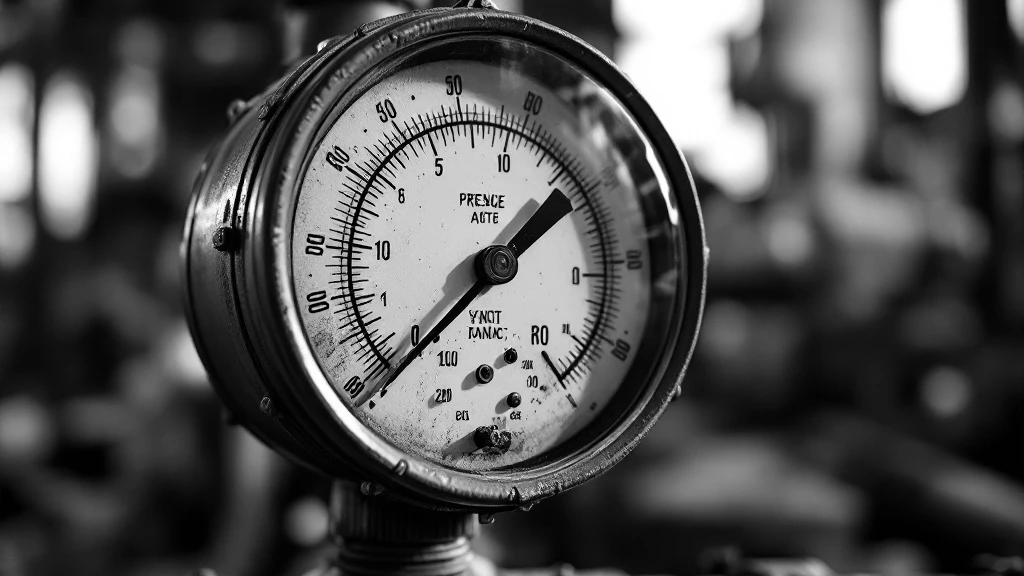

Factory engineers once tuned automatic industrial valves through stressful trial-and-error that frequently blew out boilers and ruined chemical batches; John Ziegler and Nathaniel Nichols created simple mathematical formulas to tune PID controllers for optimal stability. Published in 1942, the Ziegler-Nichols tuning rules established the operational foundation for modern industrial automation, controlling over ninety percent of all automated factory loops, chemical plants, and thermostats in the world.


People routinely lie when asked sensitive questions about tax cheating, drug use, or criminal behavior; Stanley Warner invented a private coin-flipping technique that gives every survey respondent total legal plausible deniability while allowing pollsters to measure the exact truth. Published in 1965, Warner’s "Randomized Response" became the foundational mathematical ancestor of modern Differential Privacy—the core algorithm protecting data privacy in Apple iPhones, Google search, and the US Census.
Ask this paper your own questions, or keep browsing the verified research catalogue.