Chat
ChatThe Second Law of Thermodynamics dictates that heat always flows from hot objects to cold objects and never in reverse; quantum physicists engineered entangled qubits to force heat to flow spontaneously backwards from cold to hot. Published in Physical Review Letters, this superconducting quantum processor experiment rewrites our understanding of the arrow of time, proving that quantum information can be spent like physical fuel to reverse thermal entropy locally.
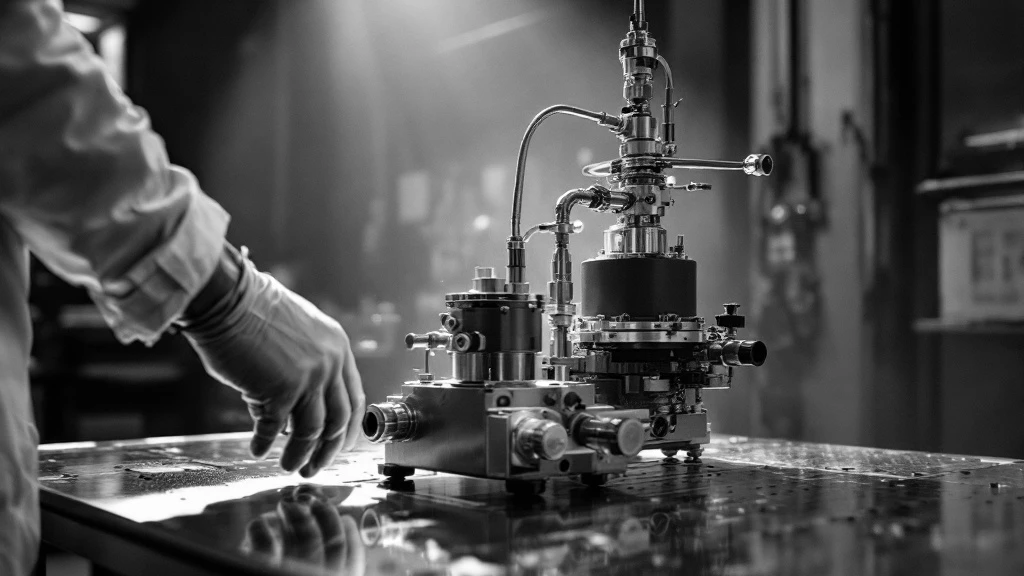
In classical physics, time flows in only one direction: hot coffee inevitably cools down to room temperature, and dropped eggs shatter into messy pieces. The Second Law of Thermodynamics says heat must always flow from hot to cold, defining our universe's "arrow of time."
Quantum physicists pulled off a thermodynamic magic trick inside an ultra-cold quantum computer. By linking two qubits together with quantum entanglement—which acts like a reservoir of stored information—the researchers watched thermal heat flow backwards from the colder qubit into the hotter qubit, effectively rewinding the thermodynamic arrow of time.
The experiment did not break the laws of physics; it proved that information is a form of fuel. By allowing quantum computers to recycle waste heat, by designing next-generation subatomic quantum refrigerators, and by deepening our philosophical grasp of time, quantum thermodynamics reshapes modern physics.
Reshaping the Quantum Arrow of Time
While the microscopic laws of physics are often symmetric under time reversal, most natural processes that we observe are not. The emergent asymmetry between typical and time-reversed processes is referred to as the arrow of time. In quantum physics, an arrow of time emerges when a sequence of measurements is performed on a system. We introduce quantum control tools that can yield dynamics more consistent with time flowing backward than forward. The control tools are based on the explicit construction of a Hamiltonian that can replicate the stochastic trajectories of a monitored quantum system. Such Hamiltonian can reverse the effect of monitoring and, via a feedback process, generate trajectories consistent with a reversed arrow of time. It can also be used to simulate the backward-in-time dynamics of an open quantum system. Finally, we design a feedback-driven continuous measurement engine powered by the energy pumped into the system by the monitoring process. We show the engine can operate under experimentally realizable conditions with feedback delay and finite-efficiency measurements.


People assumed that close friends and family members were the most important allies for finding a new job and getting ahead in life; Mark Granovetter proved that casual acquaintances you barely talk to are the single most valuable source of new career opportunities and fresh ideas. Published in 1973, "The Strength of Weak Ties" is one of the most influential sociology papers in history, providing the network blueprint that built LinkedIn and modern professional networking.


Physical sensors in rockets and satellites are constantly corrupted by noise, vibration, and sensor drift; Rudolf Kalman developed an optimal mathematical filter that predicts true position by fusing imperfect sensor readings with equations of motion in real time. Published in 1960, the Kalman Filter guided the Apollo spacecraft to the Moon and is the mathematical brain powering every GPS receiver, autonomous drone, and commercial jetliner on Earth.


Adam Smith taught that individuals acting in pure rational self-interest would automatically enrich society; Garrett Hardin proved that when everyone acts in their own self-interest on shared public land, they inevitably destroy the shared resource for everyone. Published in Science in 1968, "The Tragedy of the Commons" became the defining environmental manifesto of the modern era, guiding global ocean fisheries quotas, clean air regulations, and international climate agreements.


Cosmologists spent a century assuming that the mutual gravitational pull of galaxies was slowing down the expansion of the universe; two competing teams measuring exploding white dwarf stars discovered that cosmic expansion is speeding up faster and faster. Awarded the 2011 Nobel Prize in Physics, this discovery of Dark Energy proved that empty space contains a repulsive anti-gravity energy that makes up seventy percent of our universe.
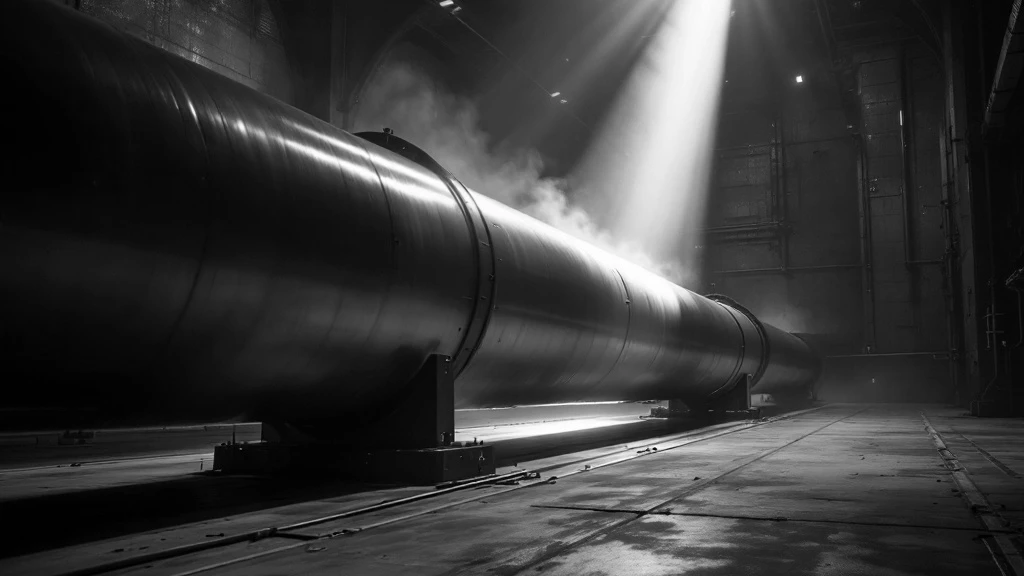
For a century, humanity looked at the universe exclusively through telescopes that capture light; Advanced LIGO used four-kilometer laser beams to directly feel the physical vibration of two black holes colliding 1.3 billion light-years away. Awarded the 2017 Nobel Prize in Physics, the detection of GW150914 confirmed Einstein’s final prediction and gave human science ears to hear the sound of the cosmos.

For nearly fifty years, the greatest minds in quantum mechanics failed to explain why frozen metals lose all electrical resistance; John Bardeen, Leon Cooper, and Robert Schrieffer proved that electrons pair up into synchronized couples gliding through atomic lattices without a single collision. Awarded the 1972 Nobel Prize in Physics (giving Bardeen his historic second Nobel), BCS Theory solved the greatest mystery in solid-state physics, enabling MRI hospital scanners, fusion reactor magnets, and superconducting quantum computers.

Classical physics predicted that messy defects in a crystal would merely scatter moving electrons like pinballs; Philip Anderson proved that quantum wave interference traps electrons in place, freezing electrical currents completely. Awarded the 1977 Nobel Prize in Physics, Anderson Localization unlocked the physics of disordered materials, topological insulators, and light-trapping photonic metamaterials.

Albert Einstein spent his final decades insisting that quantum entanglement was an incomplete illusion masking hidden common-sense variables; John Stewart Bell devised a single mathematical inequality that allowed laboratory experiments to test whether Einstein or quantum mechanics was right. Published in an obscure, short-lived journal in 1964, Bell’s Theorem proved that the physical universe is fundamentally non-local—founding modern quantum computing, quantum cryptography, and quantum teleportation.
Ask this paper your own questions, or keep browsing the verified research catalogue.