Chat
ChatTraditional plastic recycling requires tedious manual sorting and produces low-grade downcycled goods; alkaline thermal treatment converts unsorted plastic trash directly into pure green hydrogen. By trapping greenhouse carbon into solid carbonate rock during the heating phase, this process produces clean energy while permanently burying carbon emissions.
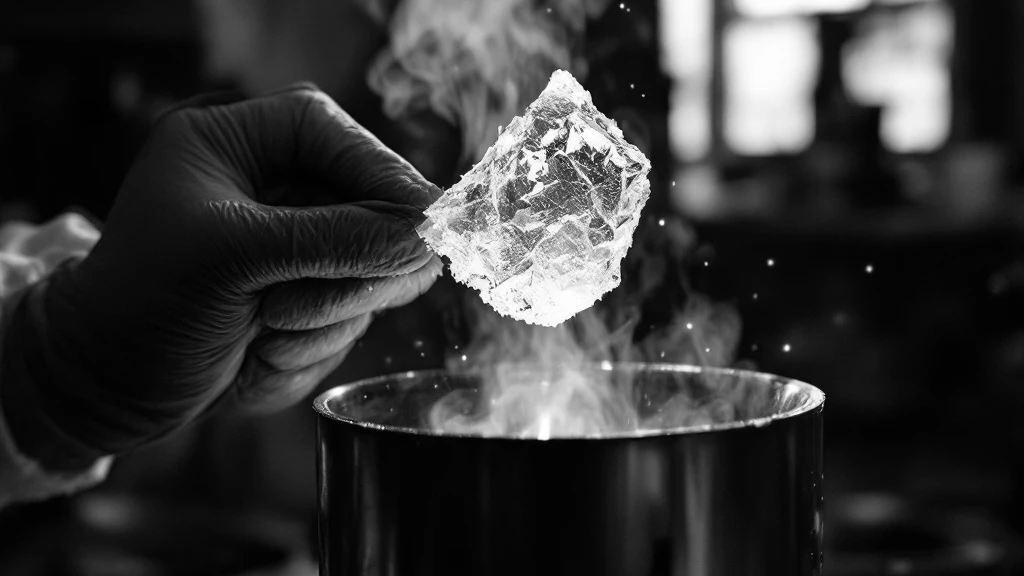
Choked by hundreds of millions of tons of unsorted municipal plastic waste, and struggling to manufacture green hydrogen without consuming enormous amounts of fresh water and renewable electricity, the modern recycling economy is at a standstill. Traditional chemical recycling degrades rapidly when contaminated by mixed plastic polymers.
Chemical engineers bypassed sorting entirely by dropping mixed plastic waste directly into a molten alkaline salt bath. The molten hydroxide acts like a chemical sponge, cracking polymer chains apart and locking carbon atoms permanently into solid carbonate rock while bubbling out pure hydrogen gas.
This single-step reaction turns landfill waste into zero-emission fuel. By eliminating expensive plastic sorting plants, by preventing greenhouse gas release, and by generating high-purity hydrogen on-demand, alkaline recycling creates a true circular economy.
Selective and direct hydrogen generation from mixed plastic waste via alkaline thermal treatment with inherent carbon storage
Significance Plastic waste is difficult to recycle because mixed plastics typically require sorting and high-temperature gasification that emits CO2. We demonstrate an alkaline thermal treatment (ATT) that converts common mixed plastics such as polyethylene terephthalate (PET), polyethylene (PE), and polypropylene (PP) into high-purity hydrogen at substantially lower temperatures while suppressing carbon-containing byproducts. A simple thermal-oxidation pretreatment activates PE and PP by introducing oxygen functional groups, making them reactive in ATT. First-principles calculations reveal that the introduced oxygen functional groups lower reaction barriers in alkaline media, explaining the activation of oxidized PE and PP. By combining lower-temperature operation, carbon capture capability, and advantages of mixed plastics, the ATT offers a practical pathway to upcycle plastic waste into clean hydrogen fuel.


Telecommunication engineers believed that static noise permanently corrupted electrical signals; Claude Shannon proved that information can be transmitted with zero errors across noisy channels by converting meaning into binary bits. Published in 1948, Shannon’s masterwork founded information theory and created the digital language of the modern world.

Mechanical scotch-tape peeling produces only microscopic flakes of pristine graphene; William Hummers’ 1958 chemical recipe exfoliates bulk graphite into tons of water-dispersible two-dimensional sheets. Dormant for nearly half a century, "Hummers' Method" is now the indispensable global manufacturing route for 2D water-purification membranes and conductive composites.
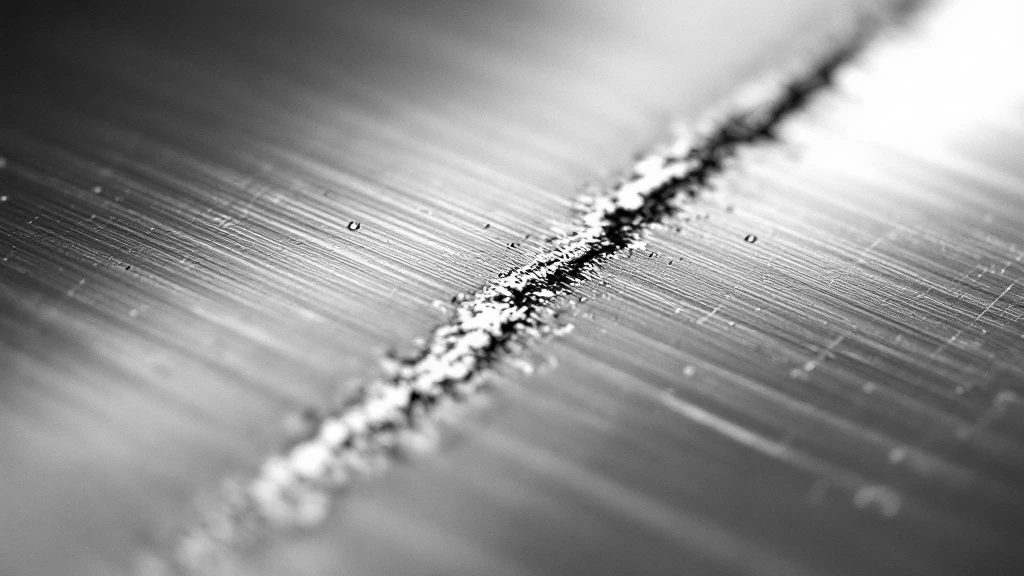

Theoretical physics predicted that glass and steel should withstand millions of pounds of pressure; Alan Arnold Griffith proved that microscopic surface scratches focus mechanical stress into catastrophic fractures. Published in 1921, Griffith’s energy balance theorem founded the discipline of fracture mechanics, explaining why Liberty Ships snapped in half during World War II and teaching modern engineers how to build shatter-proof materials.

Traditional mass spectrometry used harsh electron beams that shattered delicate biological proteins into unrecognizable debris; John Fenn used an electrified mist to gently levitate giant biomolecules intact into the vacuum chamber. By generating multiply charged ions from liquid droplets, Electrospray Ionization enabled precision mass spectrometry of entire intact proteins and founded modern proteomics.

Standard automated flight and robotic controllers crash when unexpected external winds alter machine parameters; sliding mode control clamps the system’s behavior onto an unshakeable mathematical guardrail that ignores external disturbances. Developed in the Soviet Union and translated in 1977 by Vadim Utkin, this robust control architecture is the mathematical backbone steering rocket thrusters, robot arms, and industrial electric motors worldwide.
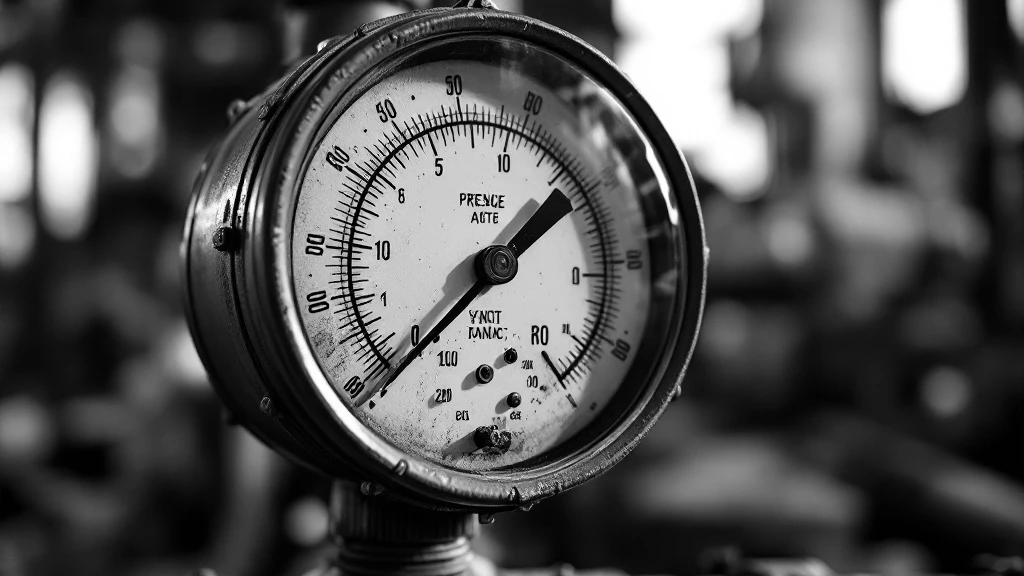

Factory engineers once tuned automatic industrial valves through stressful trial-and-error that frequently blew out boilers and ruined chemical batches; John Ziegler and Nathaniel Nichols created simple mathematical formulas to tune PID controllers for optimal stability. Published in 1942, the Ziegler-Nichols tuning rules established the operational foundation for modern industrial automation, controlling over ninety percent of all automated factory loops, chemical plants, and thermostats in the world.

Calculating the position of complex robotic joints in 3D space once required messy trigonometry that became impossible as mechanical links were added; Jacques Denavit and Richard Hartenberg standardized all mechanical motion into four elegant numbers per joint. Published in 1955 before modern robotics even existed, the Denavit-Hartenberg convention is the universal mathematical grammar controlling every industrial robotic arm, surgical manipulator, and planetary rover in existence.


Early roboticists spent millions programming complex supercomputers to calculate every single joint angle in robot legs; Tad McGeer proved that a mechanical pair of legs can walk smoothly down a gentle hill powered by gravity alone with zero motors or computers. Published in 1990, this revolutionary paper shifted robotics from brute-force mathematical computation to natural mechanical resonance, inspiring modern bipedal humanoid robots like Boston Dynamics’ Atlas.
Ask this paper your own questions, or keep browsing the verified research catalogue.