Classical catalysts place tiny metal nanoparticles on top of inert oxide supports; inverse catalysts flip this geometry by depositing oxide nanostructures over metal surfaces to unlock unprecedented perimeter catalytic reactivity.

For over a century, heterogeneous catalyst design followed a single immutable formula: synthesize high-surface-area metal oxide supports and disperse active metallic nanoparticles across their exterior surfaces.
Under high-temperature industrial operating conditions, traditional metal nanoparticles undergo sintering—coalescing into large, inactive clumps that destroy catalytic surface area and require costly plant shutdowns.
The inverse catalyst paradigm flips this conventional geometry upside-down: depositing ultrathin oxide islands or nanoclusters onto planar metal surfaces creates extensive metal-oxide perimeter interfaces. These inverse boundaries generate unique charge-transfer states that stabilize reactive intermediates while mechanically pinning the metal surface against sintering.
Inverse catalysts provide a revolutionary platform for selective carbon dioxide hydrogenation into methanol, low-temperature water-gas shift reactions, and durable fuel cell anodes that resist chemical degradation.
Beyond Conventional Catalyst Design: A Perspective on the Inverse Catalyst Strategy in Ammonia Synthesis and Decomposition
The development of heterogeneous catalysts for industrial reactions, such as ammonia synthesis and decomposition, is approaching the limits set by conventional design strategies that primarily aim to improve metal dispersion. In kinetically constrained reactions, however, catalytic performance is more strongly influenced by the structure and electronic properties at the interface between the metal and the support, or the metal and the promoter; thus, simply increasing metal dispersion does not necessarily lead to improved catalytic activity. This has spurred growing interest in inverse catalyst architectures, in which the traditional metal-on-support configuration is structurally inverted, and the metallic surface is loaded with promoters. Such architectures enable control of active-site structure, allowing high densities of efficient active sites even at lower specific surface areas. Importantly, inverse systems are especially attractive for catalysts based on earth-abundant metals, as they maximize metal utilization while requiring only a small amount of promoter species. In this perspective, we highlight and discuss the structural and electronic aspects of inverse catalyst design and outline interface engineering as a direction for next-generation catalysts.


Electrochemical reduction of carbon dioxide typically produced only simple toxic carbon monoxide; Yoshio Hori discovered that plain metallic copper possessed the unique ability to forge multi-carbon hydrocarbons at room temperature. Dormant for a quarter century when oil was cheap, this 1985 breakthrough is now the foundational engine of the synthetic e-fuel industry.


Heterogeneous industrial catalysis long struggled with the Sabatier principle, where metals that bind reactants strongly refuse to release products; dispersing isolated single metal atoms across inert hosts decouples chemical binding from activation barriers.

Fuel cell catalyst development focused almost exclusively on transition metal coordination centers; this surface chemistry study proves that non-coordinated edge carbon sites drive surprisingly high oxygen reduction reaction activity.

Mechanical scotch-tape peeling produces only microscopic flakes of pristine graphene; William Hummers’ 1958 chemical recipe exfoliates bulk graphite into tons of water-dispersible two-dimensional sheets. Dormant for nearly half a century, "Hummers' Method" is now the indispensable global manufacturing route for 2D water-purification membranes and conductive composites.
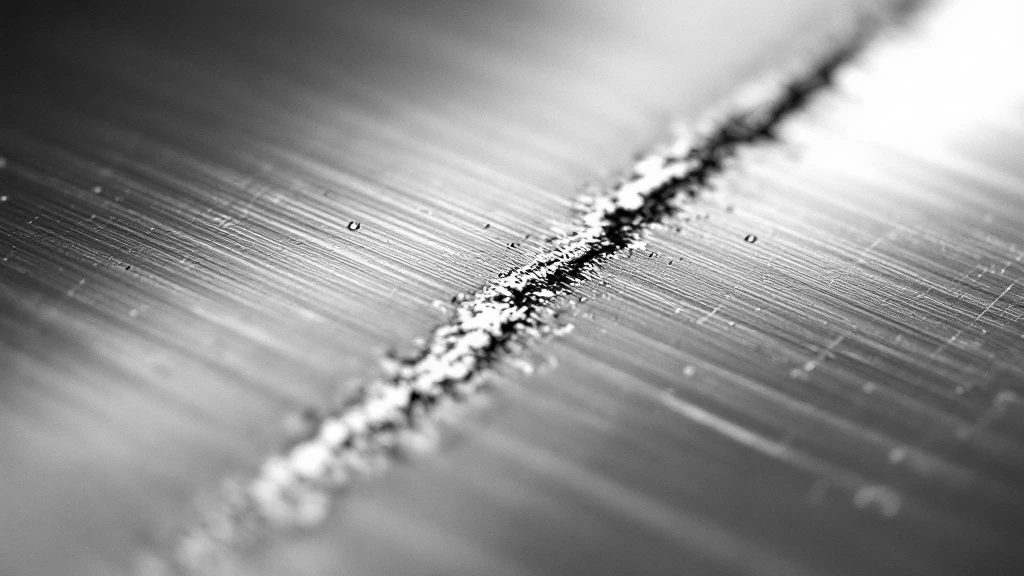

Theoretical physics predicted that glass and steel should withstand millions of pounds of pressure; Alan Arnold Griffith proved that microscopic surface scratches focus mechanical stress into catastrophic fractures. Published in 1921, Griffith’s energy balance theorem founded the discipline of fracture mechanics, explaining why Liberty Ships snapped in half during World War II and teaching modern engineers how to build shatter-proof materials.


Simulating electronic structures of complex molecules historically stalled under crushing computational scaling bottlenecks; ORCA 5.0 unlocks multi-scale quantum chemistry through domain-based pair natural orbitals and ultra-fast linear-scaling solvers.

Traditional porous minerals like zeolites were limited by rigid silicon geometries; Bernard Hoskins and Richard Robson envisioned infinite crystalline lattices built from modular metal nodes and organic struts. Ignored for a decade as an impractical chemical oddity, this 1990 paper provided the structural foundation for modern metal-organic frameworks that trap carbon directly from thin air.

Silicon solar panels require expensive, energy-intensive cleanrooms and high-temperature furnaces; hybrid organic-inorganic perovskites absorb light across the entire solar spectrum and can be printed like ink. Published in 1978 as a basic crystallographic record, Dieter Weber’s hybrid crystal is now the fastest-advancing solar technology in history.
Ask this paper your own questions, or keep browsing the verified research catalogue.