Heterogeneous industrial catalysis long struggled with the Sabatier principle, where metals that bind reactants strongly refuse to release products; dispersing isolated single metal atoms across inert hosts decouples chemical binding from activation barriers.

Industrial chemical manufacturing relies on heterogeneous transition-metal catalysts to synthesize fertilizers, plastics, and fuels. However, catalytic efficiency is bound by the Sabatier principle: a good catalyst must bind reactant molecules strongly enough to react, but weakly enough to release products.
In bulk nanoparticles, adjacent metal atoms enforce scaling relations: improving activation energy for bond-breaking automatically strengthens product binding, causing catalyst poisoning and massive energy waste.
Single-Atom Alloys (SAAs) circumvent this fundamental bottleneck by embedding isolated, catalytically active metal atoms (such as palladium or platinum) into the surface of a less reactive host metal like copper or gold. The solitary atom dissociates chemical bonds with near-zero energy barrier, while the host metal readily releases products.
This single-atom design principle enables ultra-selective hydrogenation reactions, sustainable green hydrogen production, and energy-efficient chemical manufacturing that operates at temperatures hundreds of degrees lower than conventional industrial processes.
Why Single-Atom Alloys (SAAs) Outperform Their Individual Metal Components in Catalysis
ConspectusMuch industrial catalysis employs noble metals such as Pt, Pd, and Rh to facilitate the activation of key diatomic reactants such as H2 and O2, a requisite for the promotion of hydrogenation and oxidation reactions, respectively. However, these metals are often unselective for the conversion of organic feedstocks, so the addition of another, moderating metal is usually needed. The resulting bimetallics have gained prominence recently with an emphasis on so-called single-atom alloys (SAAs), in which the active component (the guest; Pt, Pd) is highly diluted within a matrix of a milder second metal (the host; Cu, Au, Ag). Empirically, SAAs have been shown to improve the selectivity of many catalytic reactions, but a full explanation of how this occurs is still lacking. A simple model has been advanced, based on "modern surface-science" studies using model surfaces under ultrahigh vacuum (UHV), where the guest atoms are isolated on the surface of the host and are presumed to not be significantly affected by it. They are proposed to promote the activation of the diatomic molecule (H2, O2), after which the resulting atoms (H, O) spill over onto the host surface where the rest of the catalytic conversion takes place. Unfortunately, this mechanism fails to explain certain observations from studies of SAAs under catalytic conditions, where the metals exist as nanoparticles (NPs) dispersed on high-surface-area supports, typically porous oxides, and where the surfaces are exposed to atmospheric pressures of the reactants. Our studies have focused on bridging these materials and pressure gaps, using the selective hydrogenation of unsaturated aldehydes with Pt-Cu alloys as a prototypical system. We have determined that, in the very dilute limit, the Pt atoms are located not on the exposed NP surface but rather at the interface between the metal NP and the oxide support, where they are inaccessible to the reactants. Furthermore, their effect on catalytic performance was found to be indirect, via the remote modification of the electronic properties of the surface Cu atoms where the reactions take place. Specifically, the activation barrier for molecular hydrogen dissociation at the Cu sites is decreased, thereby facilitating the production of the atomic hydrogen required for the hydrogenation of the organic adsorbates. Moreover, the added Pt modifies both the adsorption mode and the energetics of the reactants and products on Cu sites and the rate constants of the hydrogenation steps; like pure Cu once it is provided with atomic hydrogen, the Cu-Pt SAAs enhance the production of the desired products (unsaturated alcohols from unsaturated aldehydes), likely by favoring a unique reactant adsorption geometry through the oxygen atom. Our findings contradict the proposed independence of the two metals that constitutes the essence of the current working model for SAA and provide a new explanation of how SAAs function that may lead to better formulations of new bimetallic catalysts.


Electrochemical reduction of carbon dioxide typically produced only simple toxic carbon monoxide; Yoshio Hori discovered that plain metallic copper possessed the unique ability to forge multi-carbon hydrocarbons at room temperature. Dormant for a quarter century when oil was cheap, this 1985 breakthrough is now the foundational engine of the synthetic e-fuel industry.
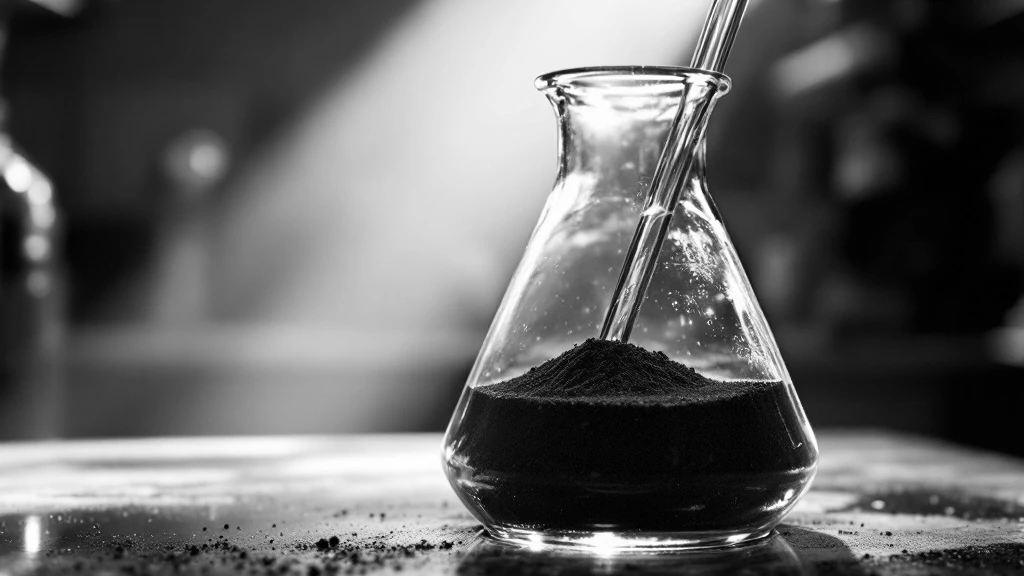

Layered cobalt cathodes suffer from severe supply-chain bottlenecks and thermal instability; spinel manganese dioxide provides a three-dimensional cubic lattice that shuttles lithium ions safely without cobalt. Discovered as a novel synthetic method in 1981, Hunter’s spinel crystal is now the ethical foundation of low-cost electric vehicle and grid batteries.


Giant direct air capture machines are celebrated as futuristic climate saviors; powering them with scarce renewable electricity allows nearby coal and gas power plants to keep polluting the air. By analyzing twenty-two regional power grids through 2050, energy systems engineers proved that investing clean energy into shutting down fossil power plants saves far more lives and reduces more emissions than vacuuming carbon from thin air.


Classical catalysts place tiny metal nanoparticles on top of inert oxide supports; inverse catalysts flip this geometry by depositing oxide nanostructures over metal surfaces to unlock unprecedented perimeter catalytic reactivity.


Telecommunication engineers believed that static noise permanently corrupted electrical signals; Claude Shannon proved that information can be transmitted with zero errors across noisy channels by converting meaning into binary bits. Published in 1948, Shannon’s masterwork founded information theory and created the digital language of the modern world.
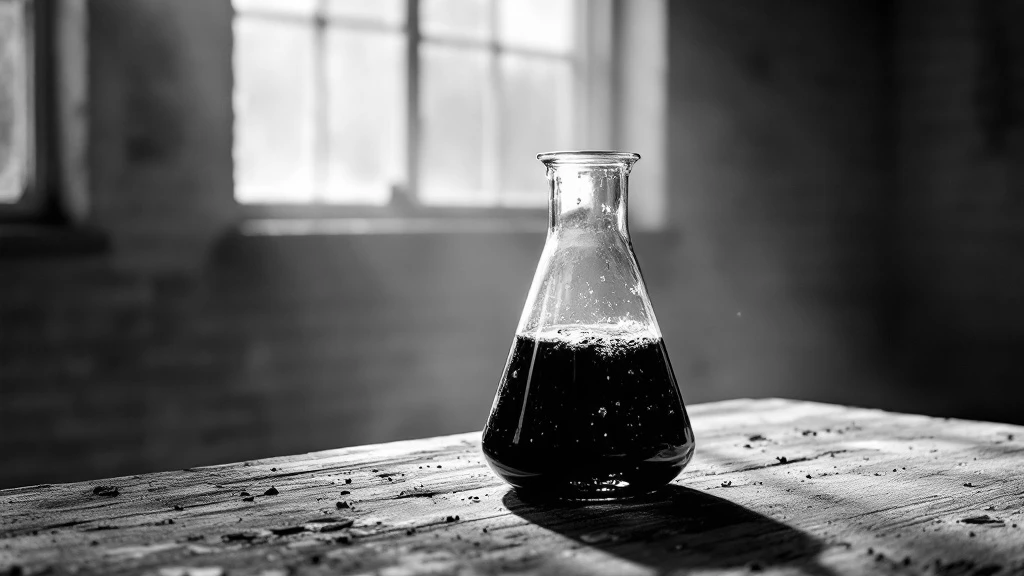
Mechanical scotch-tape peeling produces only microscopic flakes of pristine graphene; William Hummers’ 1958 chemical recipe exfoliates bulk graphite into tons of water-dispersible two-dimensional sheets. Dormant for nearly half a century, "Hummers' Method" is now the indispensable global manufacturing route for 2D water-purification membranes and conductive composites.
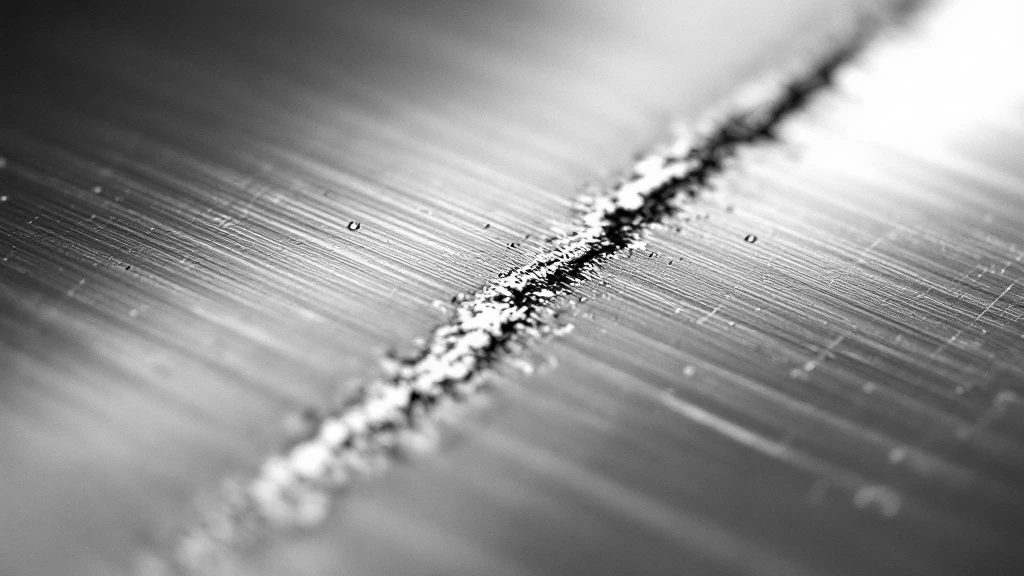

Theoretical physics predicted that glass and steel should withstand millions of pounds of pressure; Alan Arnold Griffith proved that microscopic surface scratches focus mechanical stress into catastrophic fractures. Published in 1921, Griffith’s energy balance theorem founded the discipline of fracture mechanics, explaining why Liberty Ships snapped in half during World War II and teaching modern engineers how to build shatter-proof materials.


Traditional mass spectrometry used harsh electron beams that shattered delicate biological proteins into unrecognizable debris; John Fenn used an electrified mist to gently levitate giant biomolecules intact into the vacuum chamber. By generating multiply charged ions from liquid droplets, Electrospray Ionization enabled precision mass spectrometry of entire intact proteins and founded modern proteomics.
Ask this paper your own questions, or keep browsing the verified research catalogue.