Chat
ChatFinding new superconducting materials traditionally took human chemists decades of slow trial-and-error laboratory cooking; graph neural networks screened millions of geometric crystal structures to predict and synthesize two brand-new star-patterned superconductors in weeks. Published in Physical Review Materials, this machine-learning discovery proves that AI can systematically unlock exotic quantum materials for lossless power grids and quantum computers.

Superconductors—materials that conduct electrical current with zero energy loss and levitate powerful magnets—are essential for MRI machines, fusion energy reactors, and quantum supercomputers. However, discovering new superconducting crystals in the lab has always been a grueling, multi-year guessing game.
Materials scientists trained an AI neural network on the quantum physics of "kagome" lattices—materials with atoms arranged in the triangular star patterns of traditional Japanese woven baskets. The AI screened over two hundred thousand candidate formulas, identified two previously unknown ruthenium boride compounds, and guided laboratory robots to cook the exact crystals into reality.
Lab measurements confirmed both new crystals were genuine zero-resistance superconductors. By compressing decades of quantum chemistry into weeks, by discovering exotic topological electronics, and by accelerating the race for room-temperature superconductors, AI-driven materials science creates future physics.
Machine-learning-guided discovery of kagome superconductors YRu 3 B 2 and LuRu 3 B 2
We report the experimental discovery of bulk superconductivity in two kagome lattice compounds, YRu 3 B 2 and LuRu 3 B 2 , which were predicted through machine-learning-accelerated high-throughput screening combined with first-principles calculations. These materials crystallize in the hexagonal CeCo 3 B 2 -type structure with planar kagome networks formed by Ru atoms. We observe superconducting critical temperatures of T c = 0.81 K for YRu 3 B 2 and T c = 0.95 K for LuRu 3 B 2 , confirmed through magnetization, specific heat, and electrical transport measurements. Both compounds exhibit nearly 100% superconducting volume fractions, demonstrating bulk superconductivity. Compared with isostructural LaRu 3 Si 2 , YRu 3 B 2 and LuRu 3 B 2 show a more dispersive Ru local d x 2 − y 2 quasiflat band [and thus a reduced density of states (DOS) at E F ] together with an overall hardening of the phonon spectrum, both of which lower the electron-phonon coupling (EPC) constant λ . Meanwhile, the dominant real-space EPC between Ru local d x 2 − y 2 states and the low-frequency Ru in-plane local x branch remains nearly unchanged, indicating that the reduction of λ originates from the d x 2 − y 2 DOS reduction and the overall phonon hardening. Superfluid weight calculations show that conventional contributions dominate over quantum geometric effects due to the dispersive nature of bands near the Fermi level. This work demonstrates the effectiveness of integrating machine-learning screening, first-principles theory, and experimental synthesis for accelerating the discovery of new superconducting materials.


Roger Penrose theorized that spinning cosmic black holes can act like giant power plants by boosting the energy of incoming light waves; quantum physicists simulated that exact black hole energy-theft mechanism on a laboratory tabletop using rotating light pulses. Published in Nature, this breakthrough observation validates Floquet rotational superradiance, providing the first table-top laboratory proof of Penrose black-hole physics.


People assumed that close friends and family members were the most important allies for finding a new job and getting ahead in life; Mark Granovetter proved that casual acquaintances you barely talk to are the single most valuable source of new career opportunities and fresh ideas. Published in 1973, "The Strength of Weak Ties" is one of the most influential sociology papers in history, providing the network blueprint that built LinkedIn and modern professional networking.


Physical sensors in rockets and satellites are constantly corrupted by noise, vibration, and sensor drift; Rudolf Kalman developed an optimal mathematical filter that predicts true position by fusing imperfect sensor readings with equations of motion in real time. Published in 1960, the Kalman Filter guided the Apollo spacecraft to the Moon and is the mathematical brain powering every GPS receiver, autonomous drone, and commercial jetliner on Earth.
Mechanical scotch-tape peeling produces only microscopic flakes of pristine graphene; William Hummers’ 1958 chemical recipe exfoliates bulk graphite into tons of water-dispersible two-dimensional sheets. Dormant for nearly half a century, "Hummers' Method" is now the indispensable global manufacturing route for 2D water-purification membranes and conductive composites.


Adam Smith taught that individuals acting in pure rational self-interest would automatically enrich society; Garrett Hardin proved that when everyone acts in their own self-interest on shared public land, they inevitably destroy the shared resource for everyone. Published in Science in 1968, "The Tragedy of the Commons" became the defining environmental manifesto of the modern era, guiding global ocean fisheries quotas, clean air regulations, and international climate agreements.

Cosmologists spent a century assuming that the mutual gravitational pull of galaxies was slowing down the expansion of the universe; two competing teams measuring exploding white dwarf stars discovered that cosmic expansion is speeding up faster and faster. Awarded the 2011 Nobel Prize in Physics, this discovery of Dark Energy proved that empty space contains a repulsive anti-gravity energy that makes up seventy percent of our universe.
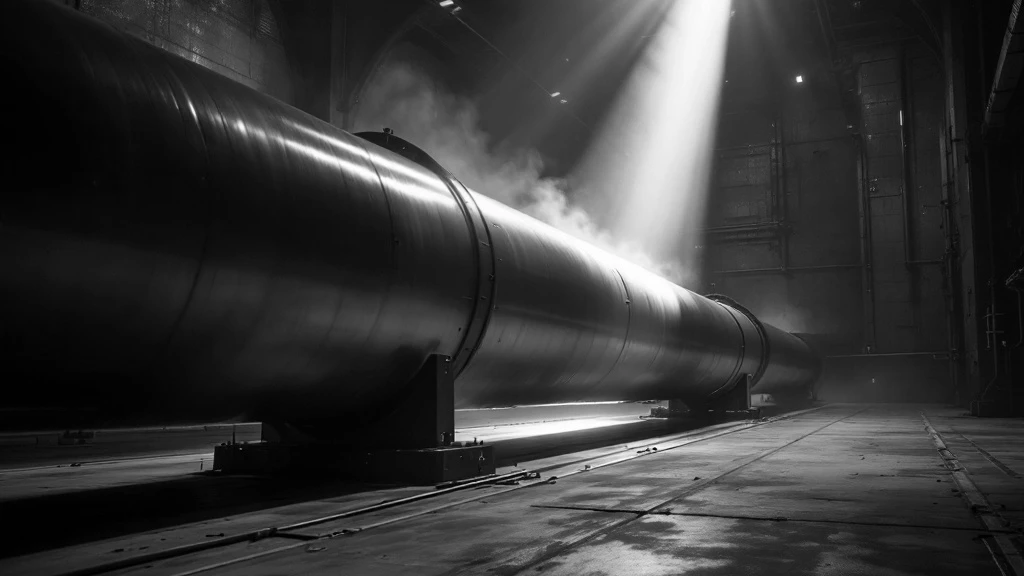
For a century, humanity looked at the universe exclusively through telescopes that capture light; Advanced LIGO used four-kilometer laser beams to directly feel the physical vibration of two black holes colliding 1.3 billion light-years away. Awarded the 2017 Nobel Prize in Physics, the detection of GW150914 confirmed Einstein’s final prediction and gave human science ears to hear the sound of the cosmos.
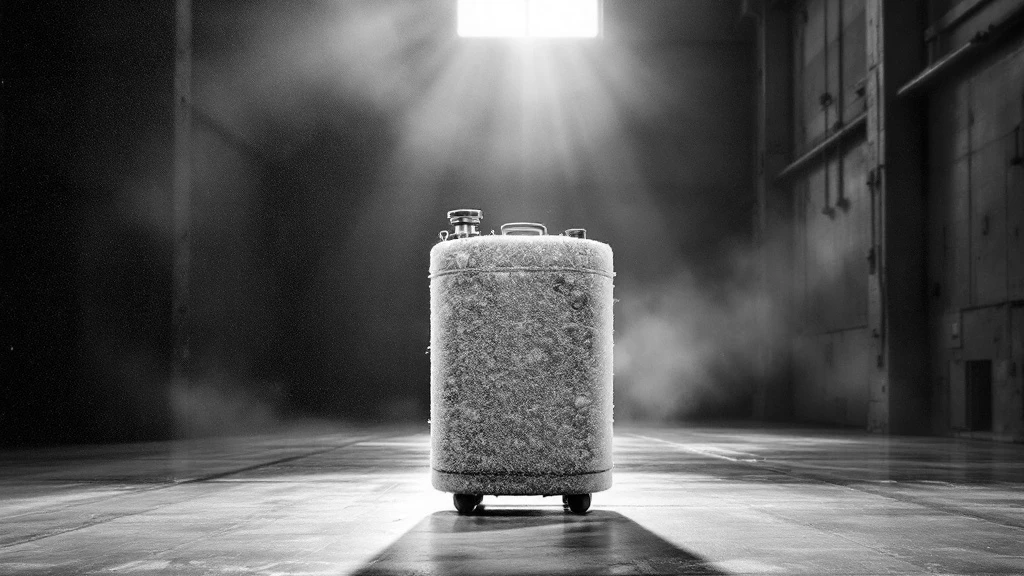

For nearly fifty years, the greatest minds in quantum mechanics failed to explain why frozen metals lose all electrical resistance; John Bardeen, Leon Cooper, and Robert Schrieffer proved that electrons pair up into synchronized couples gliding through atomic lattices without a single collision. Awarded the 1972 Nobel Prize in Physics (giving Bardeen his historic second Nobel), BCS Theory solved the greatest mystery in solid-state physics, enabling MRI hospital scanners, fusion reactor magnets, and superconducting quantum computers.
Ask this paper your own questions, or keep browsing the verified research catalogue.