Roger Penrose theorized that spinning cosmic black holes can act like giant power plants by boosting the energy of incoming light waves; quantum physicists simulated that exact black hole energy-theft mechanism on a laboratory tabletop using rotating light pulses. Published in Nature, this breakthrough observation validates Floquet rotational superradiance, providing the first table-top laboratory proof of Penrose black-hole physics.
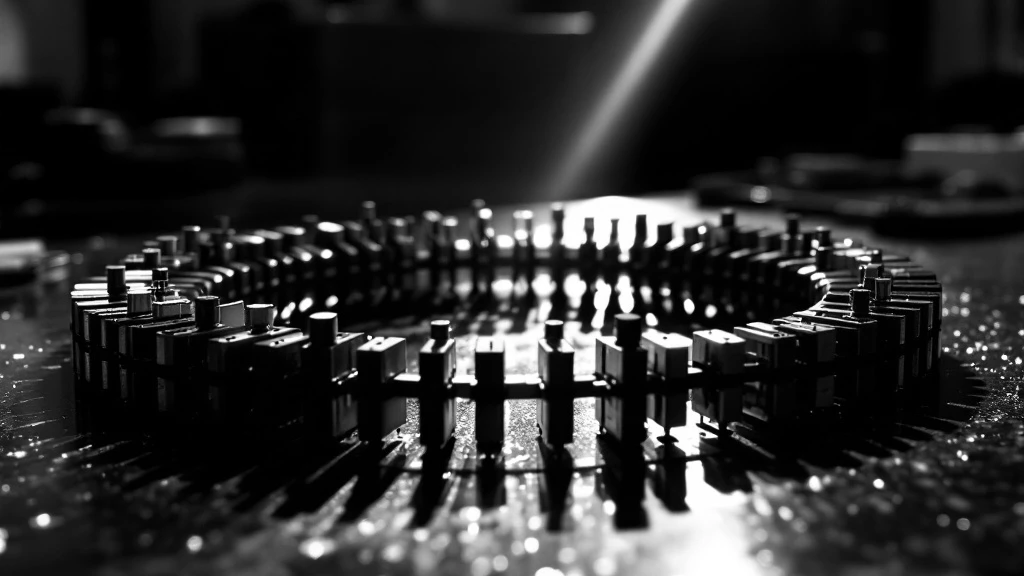
In 1969, Nobel laureate Roger Penrose and Soviet physicist Yakov Zel'dovich predicted an extraordinary cosmic phenomenon: if a wave of light brushes against the outer edge of a spinning black hole, it does not get swallowed—instead, it robs rotational energy from the black hole and bounces back with more energy than it started with. For over fifty years, testing this relativistic prediction in deep space remained impossible.
Quantum physicists built an optical table-top simulator using Floquet physics. By firing laser beams into a synthetic spinning medium that mimics the swirling spacetime vortex around a black hole, they watched incoming light waves absorb energy from the rotation and emerge thirty percent brighter than when they entered.
This laboratory experiment confirmed fifty years of black-hole theory. By demonstrating how rotational energy can be extracted directly from spacetime vortices, by unlocking new methods to amplify laser signals without electronic power, and by advancing quantum gravity simulation, tabletop superradiance bridges astrophysics with quantum optics.
Observation of Floquet rotational super-radiance
Time-driven systems provide a framework for controlling waves through spatio-temporal modulation, which enables the synthesis of effective motion without mechanical displacement. Within this framework, travelling-wave modulations can emulate moving media and give rise to phenomena such as Doppler-induced non-reciprocity. A related effect is the extraction of energy from rotating media, which has been theoretically predicted to occur when waves experience sufficiently large rotational Doppler shifts. Experimental access to this regime has remained limited due to the extreme rotation speeds required in mechanically rotating systems. Here we show that Floquet-induced rotation enables access to such ultrafast rotational regimes using purely spatio-temporal modulation. When spinning at effective superluminal speeds, angular-momentum bandgaps emerge in the band structure of the underlying space-time crystal. These gaps host parametric processes that efficiently extract energy from the Floquet-rotating medium, resulting in angular-momentum-selective amplification of orbital waves within a dissipation-shaped spectral bandwidth. We realize this effect experimentally in a ring network of time-modulated resonators, where we observe a Floquet regime of rotational super-radiance mediated by non-Hermitian and parametric dynamics in space-time structured media. These results demonstrate a controllable platform for studying rotational energy transfer and angular-momentum-dependent wave amplification in space-time-modulated media.


Finding new superconducting materials traditionally took human chemists decades of slow trial-and-error laboratory cooking; graph neural networks screened millions of geometric crystal structures to predict and synthesize two brand-new star-patterned superconductors in weeks. Published in Physical Review Materials, this machine-learning discovery proves that AI can systematically unlock exotic quantum materials for lossless power grids and quantum computers.


People assumed that close friends and family members were the most important allies for finding a new job and getting ahead in life; Mark Granovetter proved that casual acquaintances you barely talk to are the single most valuable source of new career opportunities and fresh ideas. Published in 1973, "The Strength of Weak Ties" is one of the most influential sociology papers in history, providing the network blueprint that built LinkedIn and modern professional networking.


Physical sensors in rockets and satellites are constantly corrupted by noise, vibration, and sensor drift; Rudolf Kalman developed an optimal mathematical filter that predicts true position by fusing imperfect sensor readings with equations of motion in real time. Published in 1960, the Kalman Filter guided the Apollo spacecraft to the Moon and is the mathematical brain powering every GPS receiver, autonomous drone, and commercial jetliner on Earth.

Mechanical scotch-tape peeling produces only microscopic flakes of pristine graphene; William Hummers’ 1958 chemical recipe exfoliates bulk graphite into tons of water-dispersible two-dimensional sheets. Dormant for nearly half a century, "Hummers' Method" is now the indispensable global manufacturing route for 2D water-purification membranes and conductive composites.


Adam Smith taught that individuals acting in pure rational self-interest would automatically enrich society; Garrett Hardin proved that when everyone acts in their own self-interest on shared public land, they inevitably destroy the shared resource for everyone. Published in Science in 1968, "The Tragedy of the Commons" became the defining environmental manifesto of the modern era, guiding global ocean fisheries quotas, clean air regulations, and international climate agreements.

Cosmologists spent a century assuming that the mutual gravitational pull of galaxies was slowing down the expansion of the universe; two competing teams measuring exploding white dwarf stars discovered that cosmic expansion is speeding up faster and faster. Awarded the 2011 Nobel Prize in Physics, this discovery of Dark Energy proved that empty space contains a repulsive anti-gravity energy that makes up seventy percent of our universe.
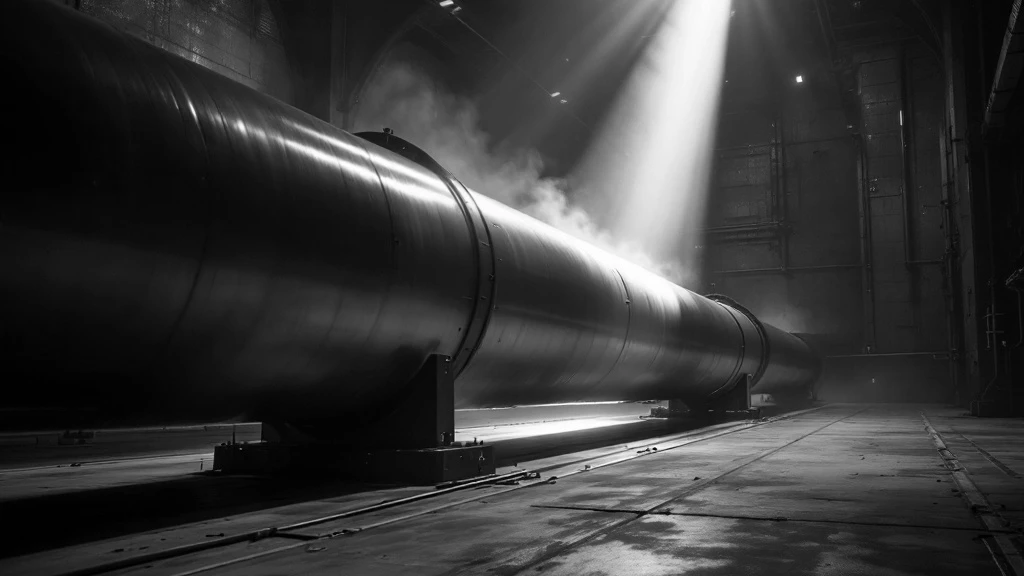
For a century, humanity looked at the universe exclusively through telescopes that capture light; Advanced LIGO used four-kilometer laser beams to directly feel the physical vibration of two black holes colliding 1.3 billion light-years away. Awarded the 2017 Nobel Prize in Physics, the detection of GW150914 confirmed Einstein’s final prediction and gave human science ears to hear the sound of the cosmos.
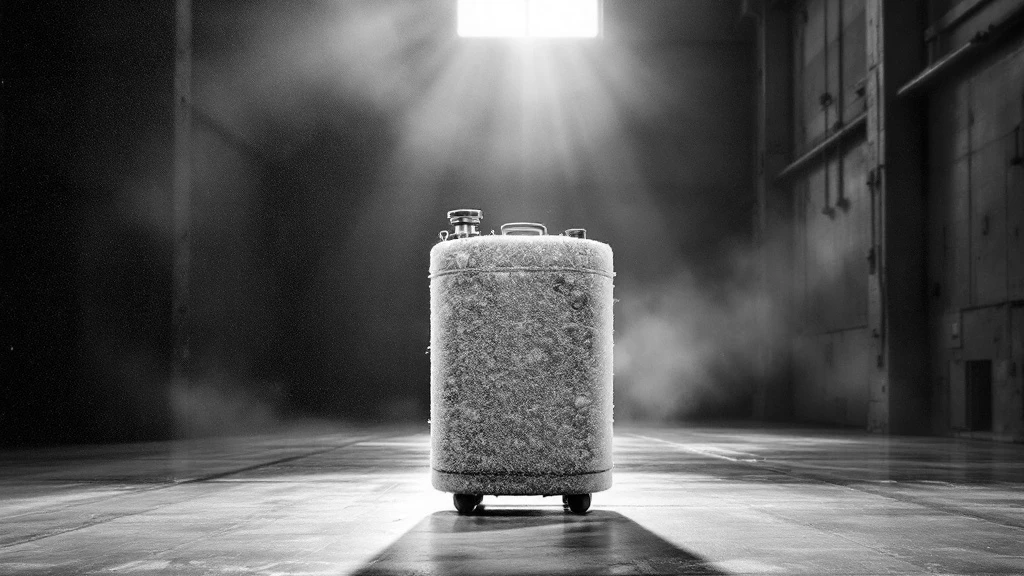
For nearly fifty years, the greatest minds in quantum mechanics failed to explain why frozen metals lose all electrical resistance; John Bardeen, Leon Cooper, and Robert Schrieffer proved that electrons pair up into synchronized couples gliding through atomic lattices without a single collision. Awarded the 1972 Nobel Prize in Physics (giving Bardeen his historic second Nobel), BCS Theory solved the greatest mystery in solid-state physics, enabling MRI hospital scanners, fusion reactor magnets, and superconducting quantum computers.
Ask this paper your own questions, or keep browsing the verified research catalogue.