Chat
ChatGiant direct air capture machines are celebrated as futuristic climate saviors; powering them with scarce renewable electricity allows nearby coal and gas power plants to keep polluting the air. By analyzing twenty-two regional power grids through 2050, energy systems engineers proved that investing clean energy into shutting down fossil power plants saves far more lives and reduces more emissions than vacuuming carbon from thin air.
In global climate policy debates, corporate carbon-offset programs have poured billions of dollars into constructing massive industrial fans to suck carbon dioxide directly from ambient air. However, these giant air vacuum machines consume immense amounts of electrical and heat energy to operate.
Energy systems researchers calculated the hidden opportunity cost of powering direct air capture. Because the electricity grid is still heavily powered by fossil fuels, diverting scarce renewable wind and solar power into air capture machines forces municipal power grids to burn more coal and natural gas to keep home lights on.
The study proves that cleaning the power grid must come before building air capture machines. By prioritizing clean energy to replace dirty fossil generators, by preventing thousands of respiratory deaths from urban smog, and by guiding rational climate investments, energy systems engineering optimizes carbon removal policy.
Direct air capture has substantial health and climate opportunity costs
Direct air capture has been increasingly proposed as a necessary complement to rapid greenhouse gas emissions reductions, yet climate mitigation resources are limited and investment decisions involve trade-offs. Existing studies have largely evaluated the net climate impacts or technoeconomics of direct air capture in isolation, leaving unclear how investments in direct air capture compare to alternative mitigation strategies when both climate and public health outcomes are considered. Here, we use established grid models to quantify the regional climate and health opportunity costs of allocating capital to direct air capture rather than to renewable electricity generation. Using cost-equivalent deployment scenarios across 22 U.S. grid regions from 2020 through 2050, we compare direct air capture to utility-scale wind and solar under multiple grid and technology scenarios. We find that renewable energy deployment yields greater combined climate and public health benefits than direct air capture across nearly all scenarios and regions, with direct air capture approaching cost-effectiveness only under highly optimistic assumptions about future technological breakthroughs. Renewable energy remains more cost effective for climate and health outcomes than direct air capture except under highly optimistic technology improvements, according to cost equivalent modeling across twenty two United States grid regions

Heterogeneous industrial catalysis long struggled with the Sabatier principle, where metals that bind reactants strongly refuse to release products; dispersing isolated single metal atoms across inert hosts decouples chemical binding from activation barriers.

Telecommunication engineers believed that static noise permanently corrupted electrical signals; Claude Shannon proved that information can be transmitted with zero errors across noisy channels by converting meaning into binary bits. Published in 1948, Shannon’s masterwork founded information theory and created the digital language of the modern world.

Early nucleotide analysis relied on slow radioactive degradation techniques that could only decipher a dozen genetic letters per year; Fred Sanger designed chemical "terminator" nucleotides that freeze DNA replication at precise atomic coordinates. By sorting the resulting fragments by length on a gel, Sanger sequencing allowed scientists to read the exact chemical sequence of entire genomes.

Mechanical scotch-tape peeling produces only microscopic flakes of pristine graphene; William Hummers’ 1958 chemical recipe exfoliates bulk graphite into tons of water-dispersible two-dimensional sheets. Dormant for nearly half a century, "Hummers' Method" is now the indispensable global manufacturing route for 2D water-purification membranes and conductive composites.
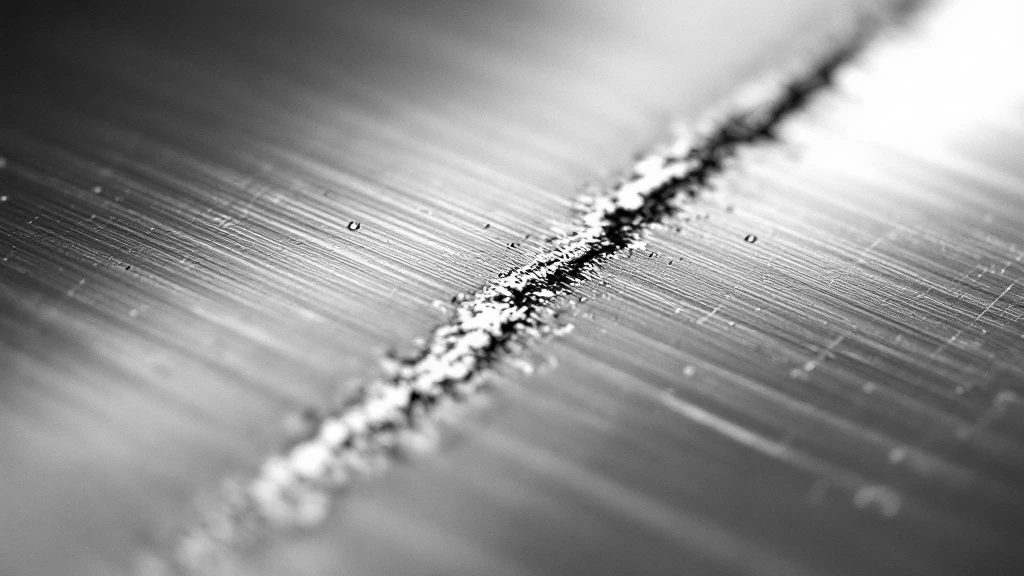

Theoretical physics predicted that glass and steel should withstand millions of pounds of pressure; Alan Arnold Griffith proved that microscopic surface scratches focus mechanical stress into catastrophic fractures. Published in 1921, Griffith’s energy balance theorem founded the discipline of fracture mechanics, explaining why Liberty Ships snapped in half during World War II and teaching modern engineers how to build shatter-proof materials.


Traditional mass spectrometry used harsh electron beams that shattered delicate biological proteins into unrecognizable debris; John Fenn used an electrified mist to gently levitate giant biomolecules intact into the vacuum chamber. By generating multiply charged ions from liquid droplets, Electrospray Ionization enabled precision mass spectrometry of entire intact proteins and founded modern proteomics.
Standard automated flight and robotic controllers crash when unexpected external winds alter machine parameters; sliding mode control clamps the system’s behavior onto an unshakeable mathematical guardrail that ignores external disturbances. Developed in the Soviet Union and translated in 1977 by Vadim Utkin, this robust control architecture is the mathematical backbone steering rocket thrusters, robot arms, and industrial electric motors worldwide.
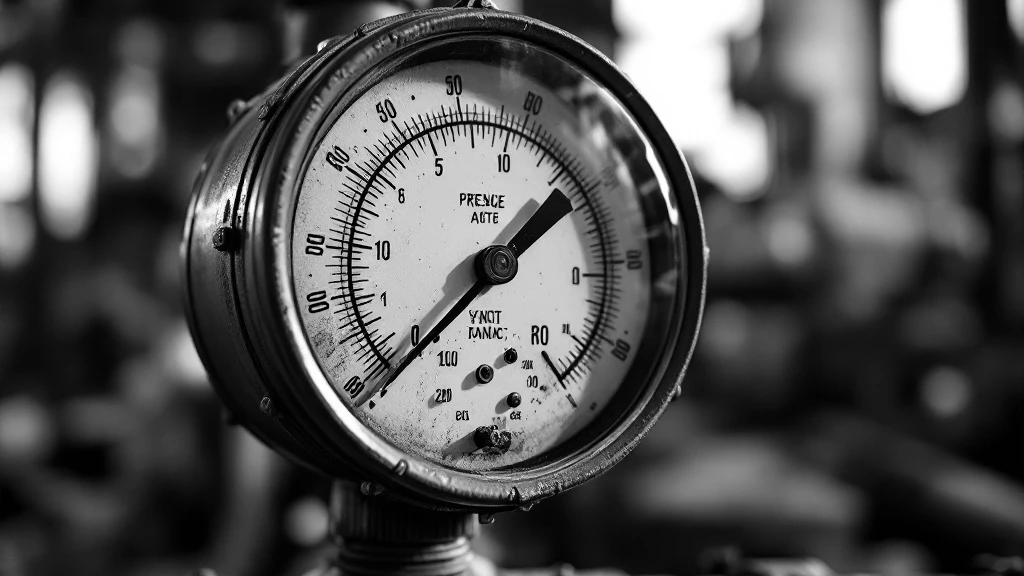

Factory engineers once tuned automatic industrial valves through stressful trial-and-error that frequently blew out boilers and ruined chemical batches; John Ziegler and Nathaniel Nichols created simple mathematical formulas to tune PID controllers for optimal stability. Published in 1942, the Ziegler-Nichols tuning rules established the operational foundation for modern industrial automation, controlling over ninety percent of all automated factory loops, chemical plants, and thermostats in the world.
Ask this paper your own questions, or keep browsing the verified research catalogue.