Thermal melting degrades recycled plastics into brittle, low-value textiles; bacterial cutinases disassemble rigid synthetic polymers back into pure, virgin-grade chemical building blocks. Initially overlooked as a slow academic oddity in 2005, this enzymatic breakdown process now powers commercial bio-recycling plants that digest plastic waste in hours.
Every year, hundreds of millions of tons of plastic water bottles and polyester fabrics end up in landfills because traditional mechanical recycling degrades plastic quality with every melt cycle. Clear plastic bottles could only be downcycled once or twice before turning into useless, brittle waste.
In 2005, microbiologists discovered that soil bacteria from compost heaps possessed a natural protein capable of cutting plastic. The bacterial enzyme behaves like a pair of molecular scissors, selectively snipping synthetic polyester bonds and disassembling complex plastics into pristine liquid chemical ingredients.
This dormant biological discovery enables infinitely circular recycling. By digesting mixed colored fabrics without manual sorting, by producing virgin-grade plastic bottles from landfill waste, and by operating in room-temperature water baths, enzyme bio-recycling eliminates plastic pollution.
Enzymatic Degradation of Poly(ethylene terephthalate): Rapid Hydrolyse using a Hydrolase from T. fusca
Abstract Summary: It is demonstrated that PET, which is usually regarded as ‘non‐biodegradable’, can effectively be depolymerized by a hydrolase from the actinomycete Thermobifida fusca . Erosion rates of 8 to 17 µm per week were obtained upon incubation at 55 °C. Lipases from Pseudomonas sp. and Candida antarctica did not degrade PET under comparable conditions. The influences of crystallinity, melting point, and glass transition temperature on the enzymatic attack on PET, PBT, and PHB are discussed. Outline of the degradation of PET. image Outline of the degradation of PET.

Intense industrial oxidizers require hazardous chemical handling; concentrated solar rays can cleave stubborn synthetic bonds using pure electromagnetic energy. By tuning ultraviolet wavelengths to generate highly active hydrogen radicals, this solar photolysis process strips toxic fluorine from industrial runoff without chemical consumables.

Early nucleotide analysis relied on slow radioactive degradation techniques that could only decipher a dozen genetic letters per year; Fred Sanger designed chemical "terminator" nucleotides that freeze DNA replication at precise atomic coordinates. By sorting the resulting fragments by length on a gel, Sanger sequencing allowed scientists to read the exact chemical sequence of entire genomes.
Mechanical scotch-tape peeling produces only microscopic flakes of pristine graphene; William Hummers’ 1958 chemical recipe exfoliates bulk graphite into tons of water-dispersible two-dimensional sheets. Dormant for nearly half a century, "Hummers' Method" is now the indispensable global manufacturing route for 2D water-purification membranes and conductive composites.
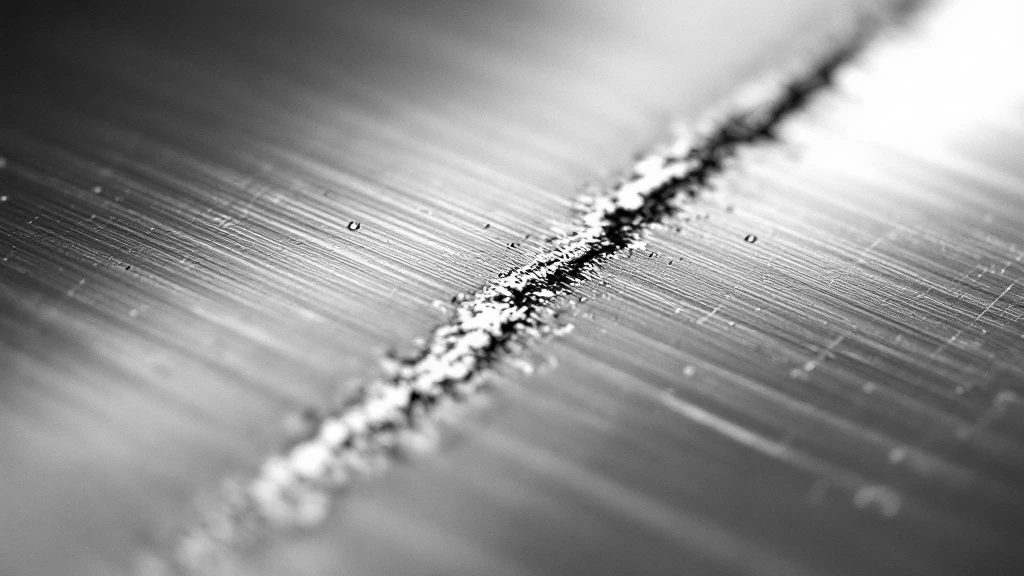

Theoretical physics predicted that glass and steel should withstand millions of pounds of pressure; Alan Arnold Griffith proved that microscopic surface scratches focus mechanical stress into catastrophic fractures. Published in 1921, Griffith’s energy balance theorem founded the discipline of fracture mechanics, explaining why Liberty Ships snapped in half during World War II and teaching modern engineers how to build shatter-proof materials.

Simulating electronic structures of complex molecules historically stalled under crushing computational scaling bottlenecks; ORCA 5.0 unlocks multi-scale quantum chemistry through domain-based pair natural orbitals and ultra-fast linear-scaling solvers.
Standard chemical synthesis produced equal mixtures of left-handed and right-handed molecular twins, where one enantiomer healed while the mirror image caused severe side effects; Sharpless epoxidation selectively synthesizes pure, single-handed chiral molecules using catalytic titanium complexes. This monumental catalytic breakthrough unlocked the safe, industrial manufacturing of single-enantiomer pharmaceuticals.

Climate skeptics long argued that global warming patterns fell within historical planetary noise; comprehensive physical observations confirm that anthropogenic greenhouse gases are warming the biosphere at rates unprecedented in two millennia. By unifying ice-core records, satellite telemetry, and advanced thermodynamic simulations, the latest physical science synthesis delivers an irrefutable diagnosis of planetary heat accumulation.

Mysterious repeating DNA sequences in bacteria were dismissed for decades as useless junk DNA; Francisco Mojica discovered that bacteria store stolen snippets of viral DNA like a "Most Wanted" gallery to recognize and destroy invading viruses. Published in 2005 after being rejected by four leading journals, Mojica’s paper unlocked the biological secret of CRISPR, unleashing the greatest gene-editing revolution in human history.
Ask this paper your own questions, or keep browsing the verified research catalogue.