Chat
ChatPhysicists universally believed that the laws of nature look completely identical when viewed in a mirror; Chien-Shiung Wu proved that radioactive atoms preferentially shoot electrons in only one direction, proving that nature has an intrinsic left-handed bias. Executed at cryogenic temperatures in 1957, the "Wu Experiment" shattered the sacred law of Parity Conservation, revolutionizing particle physics and laying the foundation for the electroweak Standard Model.

In 1950s physics, symmetry was considered the sacred law of the universe: whether a physical reaction happens right-handed or left-handed, looking in a mirror should produce an identical, valid physical process. No physicist imagined nature would have a built-in preference for one hand over the other.
Experimental physicist Chien-Shiung Wu designed a masterwork experiment. She froze radioactive Cobalt-60 atoms down to near absolute zero and aligned their magnetic spins with a strong magnet. When the cobalt atoms decayed, they shot electrons almost exclusively downward out the south pole—proving that the weak nuclear force violates mirror symmetry completely.
The result stunned the world and earned theorists Lee and Yang the Nobel Prize. By proving that our universe is fundamentally left-handed, by establishing the V-A theory of weak interactions, and by anchoring the Standard Model of subatomic particles, the Wu experiment changed fundamental physics.
Experimental Test of Parity Conservation in Beta Decay
The branching ratio of the two modes of decay of Fm'", i.e. , E.C. /n, was found to be about 8.5which gives 89.5% decay by electron capture and 10.5% by alpha emission. It was not possible to measure the cross section for the Cf'"(n, 3n)Fm'" reaction because Fm'" could also be produced from other californium isotopes in the target.


Most fast-conducting solid electrolytes corrode into useless sludge when they touch pure metallic lithium; garnet-type ceramic crystals conduct lithium ions rapidly while remaining completely impervious to corrosive lithium metal. Discovered in 2003 by Thangadurai and Weppner, this sleeping beauty crystal is now the foundational solid electrolyte behind multi-billion-dollar solid-state battery startups like QuantumScape.
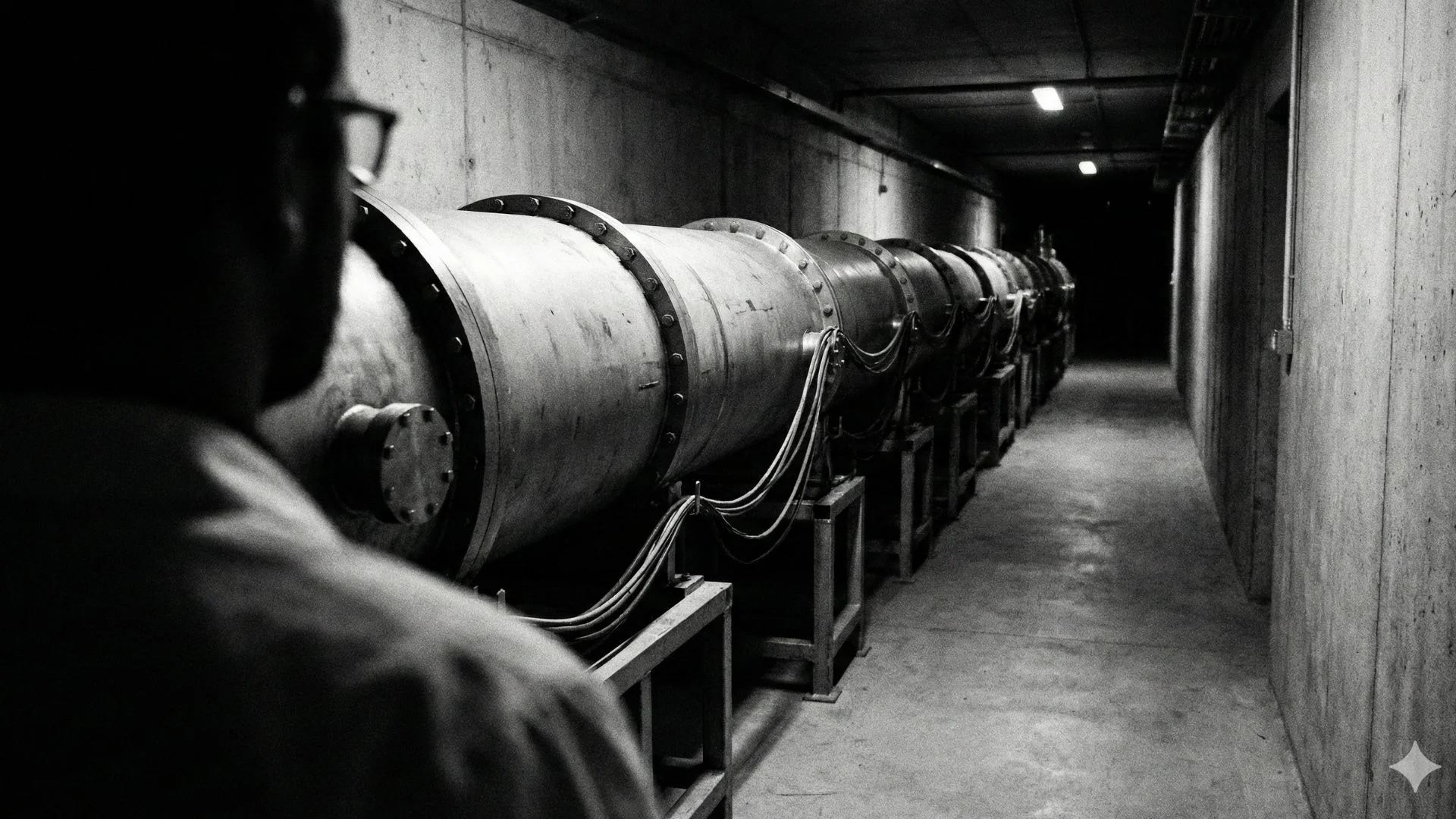

Direct dark matter detection experiments were historically deaf to low-mass particle interactions; XENON1T's ultra-pure liquid xenon time projection chamber uncovered a tantalizing excess of low-energy electronic recoils deep beneath an Italian mountain.

Traditional optical chipmaking lenses become completely opaque to deep ultraviolet wavelengths; Hiroo Kinoshita carved microchip circuits using extreme ultraviolet soft X-rays reflected off atomic-precision multilayer mirrors. Published in 1989 when the industry deemed X-ray lithography an impossible fantasy, Kinoshita’s experimental setup became the physical foundation of the multi-billion-dollar ASML EUV machines that print the world's most advanced computer chips.
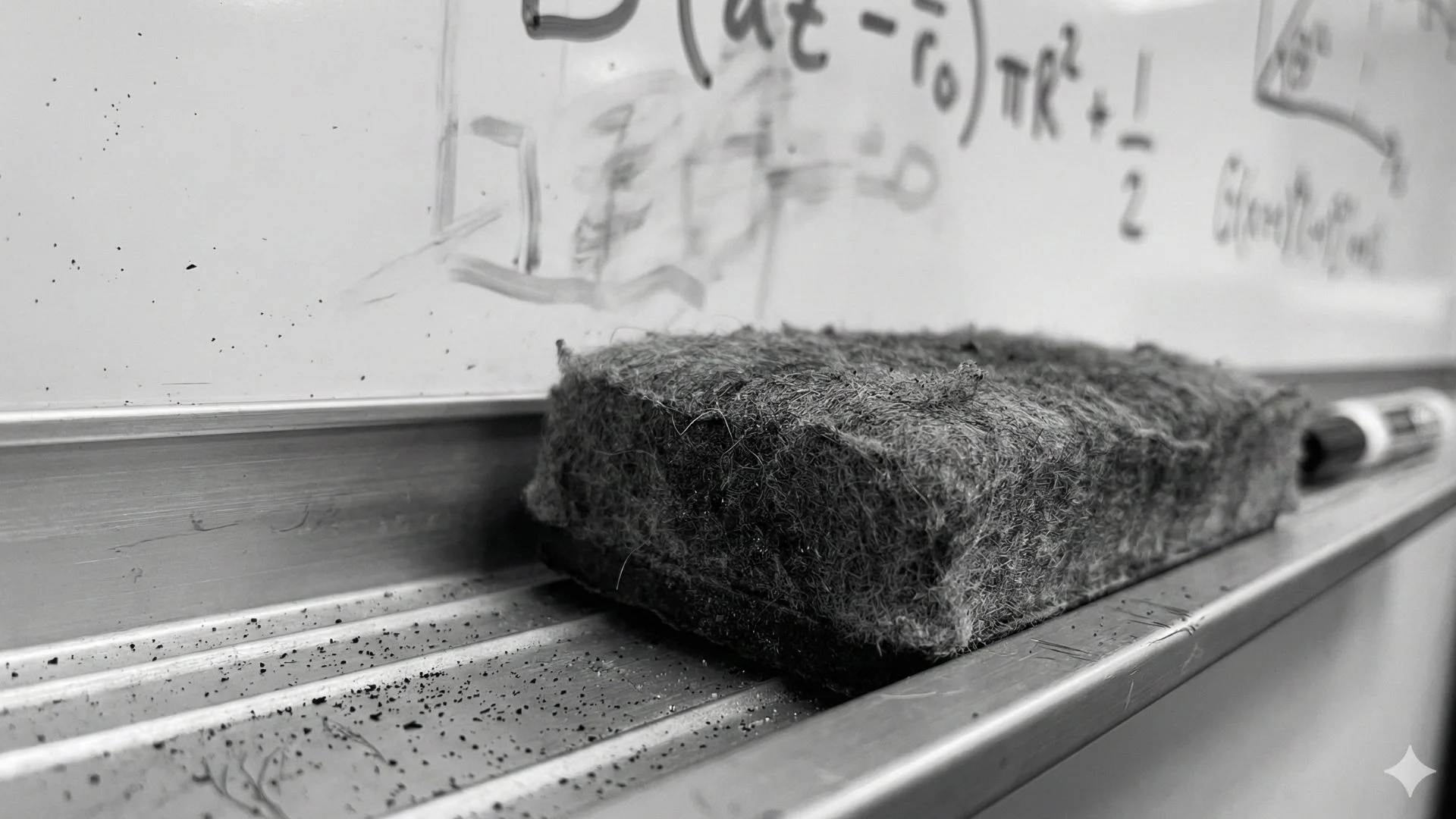

First-order cosmological phase transitions in the early universe expand as seething vacuum bubbles whose speed determines gravitational wave signatures; first-principles hydrodynamic calculations establish exact bubble wall velocity benchmarks without phenomenological friction.

The James Webb Space Telescope stunned astronomers by discovering thousands of mysterious glowing red dots that appeared to be impossibly massive galaxies formed right after the Big Bang; deep infrared imaging proved that these dots are dense cosmic cocoons where baby supermassive black holes are rapidly devouring gas. Published in The Astrophysical Journal, this discovery solves JWST’s "Little Red Dot" mystery, explaining how giant supermassive black holes grew in the early universe without breaking cosmological laws.

Telecommunication engineers believed that static noise permanently corrupted electrical signals; Claude Shannon proved that information can be transmitted with zero errors across noisy channels by converting meaning into binary bits. Published in 1948, Shannon’s masterwork founded information theory and created the digital language of the modern world.


People assumed that close friends and family members were the most important allies for finding a new job and getting ahead in life; Mark Granovetter proved that casual acquaintances you barely talk to are the single most valuable source of new career opportunities and fresh ideas. Published in 1973, "The Strength of Weak Ties" is one of the most influential sociology papers in history, providing the network blueprint that built LinkedIn and modern professional networking.


Physical sensors in rockets and satellites are constantly corrupted by noise, vibration, and sensor drift; Rudolf Kalman developed an optimal mathematical filter that predicts true position by fusing imperfect sensor readings with equations of motion in real time. Published in 1960, the Kalman Filter guided the Apollo spacecraft to the Moon and is the mathematical brain powering every GPS receiver, autonomous drone, and commercial jetliner on Earth.
Ask this paper your own questions, or keep browsing the verified research catalogue.