Wildfire destruction is visible in burned forest canopies; the most insidious threat is the microscopic chemical ash that washes into city drinking reservoirs. By tracking molecular shifts in dissolved organic matter after major fires, environmental chemists have revealed how burnt carbon triggers toxic disinfection byproducts during chlorination.

Months after massive wildfires are extinguished, municipal water utilities experience mysterious spikes in regulated toxins when treating drinking water. Standard water filters remove soot and sediment, but invisible dissolved ash compounds slip straight through into municipal distribution systems.
Ultra-high-resolution chemical fingerprinting revealed that burned timber releases thousands of dissolved aromatic molecules into mountain streams. These microscopic carbon fragments act like chemical landmines, reacting instantly with standard chlorine disinfectants to produce harmful chemical byproducts.
By understanding this molecular shift, water treatment plants can alter their purification recipes before ash runoff arrives. By deploying real-time spectral sensors, by switching to ozone filtration during storm runoff, and by protecting downstream communities, environmental chemistry shields public water supplies.
Molecular-Level Perturbations of Dissolved Organic Matter Driven by Episodic Firecracker Residue Leaching
Firework festivities are widely associated with transient atmospheric pollution, yet postcombustion firecracker residues remain an overlooked source of environmental contamination. These residues, accumulated in riparian and lakeshore zones due to fire safety regulations, can continuously release pollutants into adjacent waters via leaching. However, their effects on dissolved organic matter (DOM) in aquatic systems remain poorly understood. Here, we examined DOM responses to leaching of firecracker residues in river, lake, and ultrapure waters using optical and high-resolution mass spectrometry (HRMS) analyses. Firecracker residues released DOM enriched in low-molecular-weight, sulfur-containing, and aliphatic compounds, resulting in decreased molecular weight, oxidation state, and unsaturation in natural waters. In parallel, aromatic and highly unsaturated DOM was selectively removed, indicating coupled release-adsorption processes. The extent of DOM changes induced by firecracker residues strongly depended on the initial water chemistry, with higher conductivity suppressing DOM release, whereas humic-rich waters promoted greater molecular redistribution. Our findings reveal that these solid-phase residues transform episodic festive celebrations into extended postevent perturbations in aquatic biogeochemistry. Recognizing firecracker residues not merely as physical litter, but as geochemically active drivers of DOM dynamics, is essential for managing aquatic systems affected by intensive festive activities.
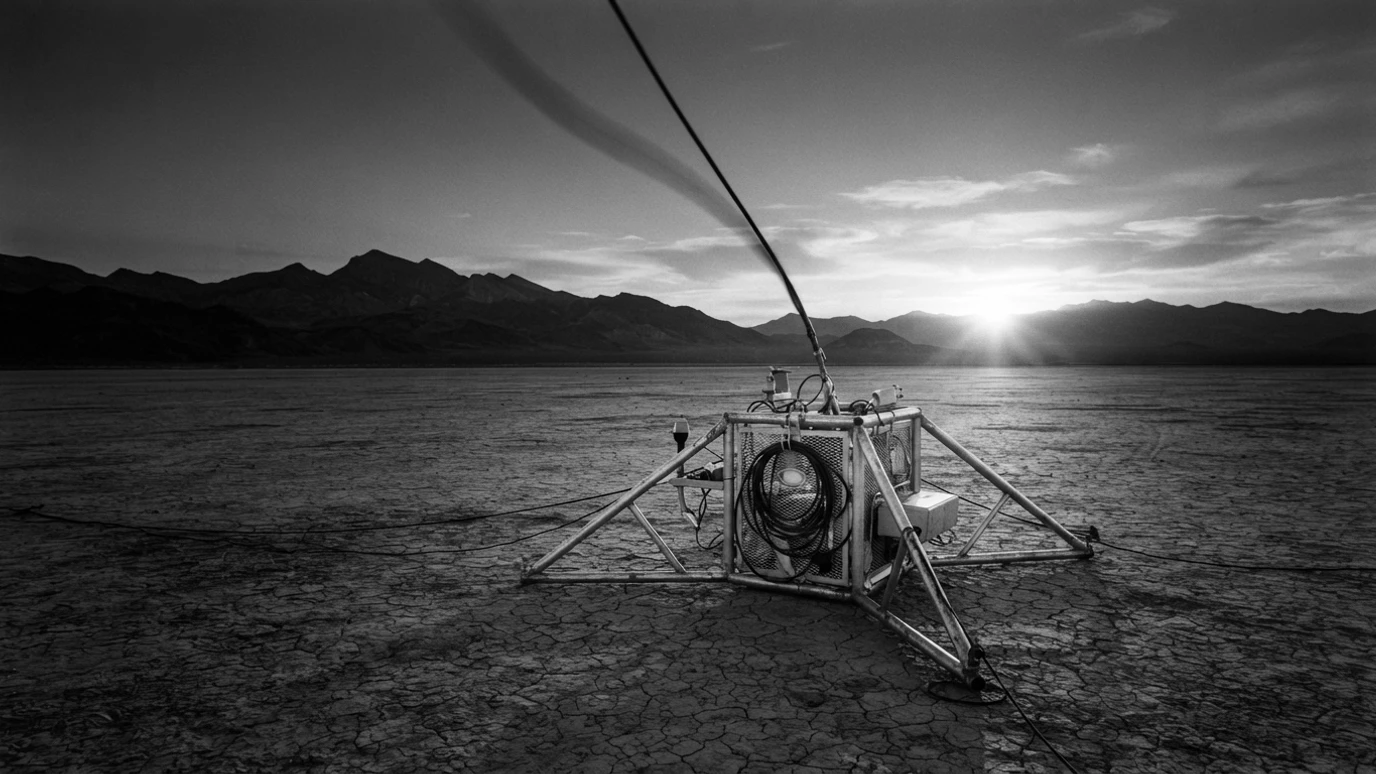

Climate skeptics long argued that global warming patterns fell within historical planetary noise; comprehensive physical observations confirm that anthropogenic greenhouse gases are warming the biosphere at rates unprecedented in two millennia. By unifying ice-core records, satellite telemetry, and advanced thermodynamic simulations, the latest physical science synthesis delivers an irrefutable diagnosis of planetary heat accumulation.

Standard carbon filtration only transfers toxic PFAS from groundwater into solid waste; anodic electrochemical oxidation tears the fluorocarbon spine apart at the electrode surface. Published in 2008 before federal drinking-water standards existed, this paper established the electrochemical blueprint for total forever-chemical destruction.


Underwater heatwaves are wiping out global coral reefs and crashing commercial fisheries; spraying reflective mineral aerosols into the upper stratosphere acts as an atmospheric sunshade to cool ocean waters. By running high-resolution climate simulations across tropical oceans, geoengineers proved that targeted solar radiation management could reduce the severity of destructive ocean heatwaves by over half.


Early nucleotide analysis relied on slow radioactive degradation techniques that could only decipher a dozen genetic letters per year; Fred Sanger designed chemical "terminator" nucleotides that freeze DNA replication at precise atomic coordinates. By sorting the resulting fragments by length on a gel, Sanger sequencing allowed scientists to read the exact chemical sequence of entire genomes.

Standard chemical synthesis produced equal mixtures of left-handed and right-handed molecular twins, where one enantiomer healed while the mirror image caused severe side effects; Sharpless epoxidation selectively synthesizes pure, single-handed chiral molecules using catalytic titanium complexes. This monumental catalytic breakthrough unlocked the safe, industrial manufacturing of single-enantiomer pharmaceuticals.

Atmospheric climate models struggled to quantify how trace gases dissolve into clouds and aerosol droplets; this comprehensive compendium of thousands of Henry's law solubility constants establishes the international standard for multi-phase atmospheric modeling.

Mysterious repeating DNA sequences in bacteria were dismissed for decades as useless junk DNA; Francisco Mojica discovered that bacteria store stolen snippets of viral DNA like a "Most Wanted" gallery to recognize and destroy invading viruses. Published in 2005 after being rejected by four leading journals, Mojica’s paper unlocked the biological secret of CRISPR, unleashing the greatest gene-editing revolution in human history.

Thermal melting degrades recycled plastics into brittle, low-value textiles; bacterial cutinases disassemble rigid synthetic polymers back into pure, virgin-grade chemical building blocks. Initially overlooked as a slow academic oddity in 2005, this enzymatic breakdown process now powers commercial bio-recycling plants that digest plastic waste in hours.
Ask this paper your own questions, or keep browsing the verified research catalogue.